

Last Updated: September 7, 2026
- Why Saw Orientation Matters for Safety and Accuracy
- Top Left-Handed Circular Saws
- Circular Saw Spec Comparison Table
- Worm Drive Saws: The Natural Left-Handed Circular Saw
- Cordless Blade-Right Circular Saws
- Safe Operation for Left-Handed Circular Saw Users
- What About Other Power Tools for Left-Handed Users?
- More Left-Handed Tool and Workshop Resources
- Frequently Asked Questions
- Related Guides
- Related Articles
As an Amazon Associate, Label Our Lefty earns from qualifying purchases. This article contains affiliate links — if you buy through them we may earn a small commission at no extra cost to you. We only recommend products we believe in.

TL;DR: Standard circular saws put the blade on the left side of the motor — which is ideal for right-handed users but obstructs the cut line for left-handed operators. A left-handed circular saw (worm drive or blade-right design) gives lefty woodworkers a clear sight line, better balance, and safer operation. This guide covers the key options, safety considerations, and everything lefty DIYers need to know.
As an Amazon Associate we earn from qualifying purchases at no extra cost to you.


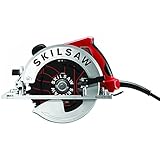


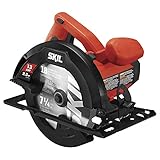
Best Left Handed Circular Saw: Power Tools for Lefty Woodworkers
Most power tools are designed with right-handed users as the default. Nowhere is this more consequential than with circular saws. On a standard sidewinder circular saw, the blade sits to the left of the motor. Right-handed operators look across the top of the motor to see the cut line clearly. Left-handed operators using the same saw have the motor body directly in their line of sight — they cannot see where the blade is going without awkwardly leaning over the tool or adopting an unsafe grip position.
This is not a minor inconvenience. On a power tool spinning a blade at 5,000+ RPM, obscured sight lines and compensatory grip changes are genuine safety risks. A left handed circular saw — or a worm-drive saw, which places the blade on the right side of the motor — gives lefty operators the clear sight line and natural grip they need to cut accurately and safely.
🛒 Best Price Today on Amazon
Prime members get fast, free shipping on everything above, plus member-only deals. New members get a 30-day free trial — cancel anytime.
Why Saw Orientation Matters for Safety and Accuracy
On a standard sidewinder (direct-drive) circular saw, the motor sits to the right of the blade when you hold the saw in operating position. Right-handed users look over the top-right of the motor directly at the blade guide and the cut line marked on the workpiece. Everything aligns naturally.
Left-handed users holding the same saw have their dominant left hand on the main handle, which pulls the motor body into their direct field of view. The blade is now behind the obstruction. They must either lean their head to the right (awkward, fatiguing), twist their wrist into a non-neutral position (reduces grip security), or estimate the cut line by feel (inaccurate and dangerous).
Over a long workday — framing a deck, ripping plywood, cutting trim — these compensations accumulate into real fatigue, reduced accuracy, and elevated risk. The solution is a saw where the blade sits to the right of the motor, giving the left-handed operator the same clear sight line that right-handers take for granted.
Top Left-Handed Circular Saws
28
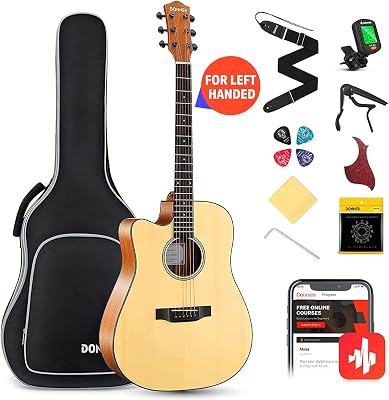
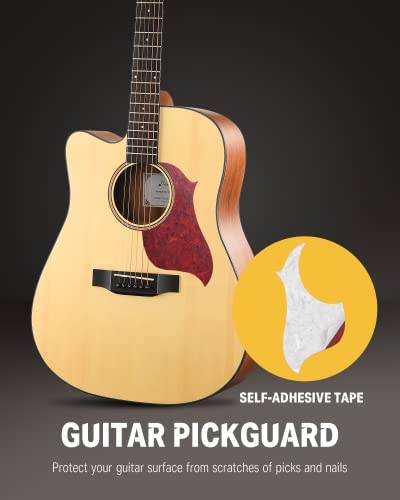
Donner Left Handed Acoustic Guitar Kit for Beginner Adult Full Size Cutaway Lefty Acustica Guitarra Bundle Set with Bag Strap Tuner Capo Pickguard String, 41 Inch, DAG-1CL
In Stock









As an Amazon Associate we earn from qualifying purchases. Product prices and availability are accurate as of the date/time indicated.

19
Prime
Fiskars Left-Handed Scissors, Precision Cutting for Craft Fabric Paper, Ergonomic Comfort Grip, Stainless Steel, 8", Red
In Stock


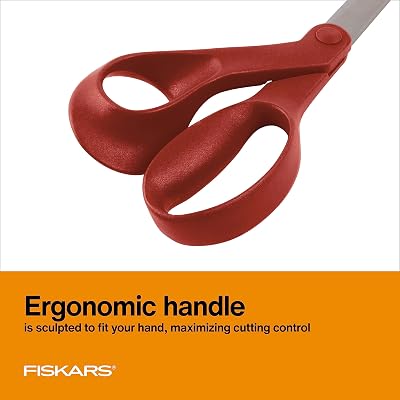


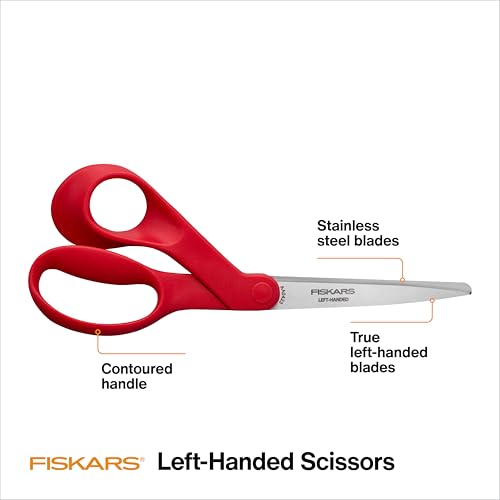
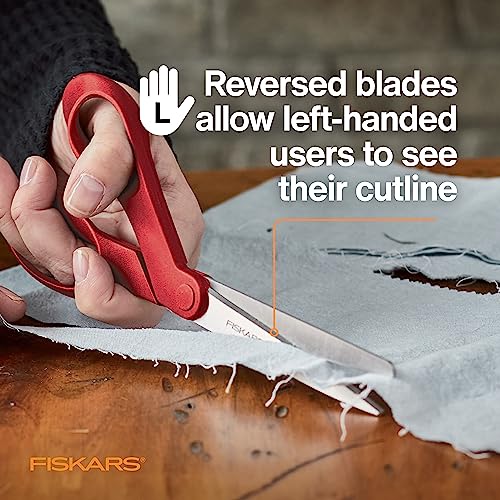

As an Amazon Associate we earn from qualifying purchases. Product prices and availability are accurate as of the date/time indicated.

5
Lefty’s Left Handed Chef Knife – Stainless Steel Durable Blade – Extra Sharp – Great for Cutting, General Purpose, Kitchen items – Gifts for Left-Handed People, Lefty, Adults, Man, and Women
In Stock




As an Amazon Associate we earn from qualifying purchases. Product prices and availability are accurate as of the date/time indicated.
For additional blade-right and worm-drive options, search Amazon for blade-right circular saws — this is the search term that returns left-hand-friendly designs most reliably.
Circular Saw Spec Comparison Table
| Spec | What to Look For | LH Relevance |
|---|---|---|
| Blade Position | Right of motor (blade-right) | Core requirement — clear sight line for LH operator |
| Drive Type | Worm drive or hypoid | Both place blade on right; worm adds torque |
| Blade Size | 7-1/4″ (most versatile) | Standard; compatible with most blades |
| Motor Power | 15A corded / 60V+ cordless | More power = less blade deflection mid-cut |
| Bevel Capacity | 0–56° (or 0–45° minimum) | Bevel adjustment lever position varies by model |
| Cut Depth at 90° | 2-3/8″ minimum | Handles standard framing lumber |
| Weight | Under 12 lb (corded worm) | Lower weight reduces fatigue in LH grip |
| Dust Port | Right-side or top exhaust | Avoid models that blow dust toward operator face |
| Blade Guard | Retractable, smooth operation | Snag-free guard critical for one-handed starts |
Worm Drive Saws: The Natural Left-Handed Circular Saw
The worm drive circular saw — typified by the Skilsaw worm drive, long the tool of choice for West Coast framers — places the blade on the right side of the motor by design. This is not a concession to left-handed users; it is a consequence of the worm drive gear arrangement. But the result is exactly what left-handed operators need: a full, unobstructed view of the blade and cut line from the natural left-hand operating position.
Worm drive saws also have two additional advantages for left-handed operators: they are longer (the motor sits behind rather than beside the blade), which naturally positions the operator’s body further from the blade; and they produce more torque at the blade, which means less bogging under load and cleaner cuts through dense material. The tradeoff is weight — worm drives run heavier than sidewinders, typically 14-16 lb versus 10-12 lb for a comparable sidewinder.
Hypoid saws are a sealed-gearbox variant of the worm drive concept, requiring no oil maintenance and slightly lighter in weight. They share the blade-right orientation and are an excellent option for left-handed users who want worm-drive sightline benefits without the periodic gear oil changes of traditional worm drives.
Cordless Blade-Right Circular Saws
The cordless tool market has expanded blade-right options significantly in recent years. Several major tool platforms now offer 7-1/4″ blade-right circular saws in the 18V-60V range. For left-handed DIYers who are already invested in a cordless battery platform (DEWALT, Milwaukee, Makita, Ridgid, etc.), checking whether that platform offers a blade-right variant is worth doing before switching brands.
Cordless worm drives are also now available from multiple manufacturers — they combine the sightline advantage of blade-right orientation with the freedom of no cord. These tools are heavier than standard cordless sidewinders due to the battery plus gear system weight, but for serious lefty woodworkers they represent the premium option.
Safe Operation for Left-Handed Circular Saw Users
Regardless of saw orientation, circular saw safety practices are non-negotiable. For left-handed operators specifically:
- Always use a rip fence or straight edge guide. Left-handed operators sometimes over-correct for sightline issues with standard saws by steering freehand — a blade-right saw with a proper fence eliminates the need for steering entirely.
- Keep the off-cut (waste) side free. On a left-handed (blade-right) saw, the waste piece falls to the left. Ensure it can fall freely without grabbing the blade and causing kickback.
- Use a sharp blade. Dull blades require more feed pressure and deflect more — both increase kickback risk. Left-handed operators already managing a non-standard tool should not compound the risk with a worn blade.
- Two-hand operation is mandatory. The auxiliary front handle exists for a reason. Left-handed operators using a blade-right saw have a natural dominant-hand-forward position that pairs well with standard two-handle grips.
- Wear eye and ear protection. Non-negotiable at any skill level with any hand dominance.
Lefty tool use extends beyond power tools. For hand tools in the workshop, our left-handed measuring tape guide covers the marking and measurement tools that complement a proper power tool setup. For garden and outdoor work, see our left-handed garden tools and pruners roundup.
What About Other Power Tools for Left-Handed Users?
The circular saw is the most impactful tool to get right-handed for lefties because it has the clearest safety implication. Other power tools worth considering:
Jigsaw: Most jigsaws are relatively ambidextrous — the blade is centered under the shoe, and both hands are used symmetrically. Left-handed users generally do not need a special jigsaw.
Reciprocating saw: Similar to jigsaw — symmetric tool, no dominant orientation. Left-handers use the same saws without meaningful disadvantage.
Miter saw / table saw: Stationary tools where the operator feeds from a fixed position. Left-handed users can adjust their feed direction and body position to get a clear sight line without a different tool. Fence and stop block placement may need adjustment.
Drill / driver: Fully ambidextrous — the drill chuck is centered, and bit rotation is the same regardless of which hand holds the tool. Left-handed users need no special drill.
More Left-Handed Tool and Workshop Resources
- Left-handed measuring tape and tools guide
- Left-handed garden tools and pruners
- Left-handed ergonomic workspace setup — for the planning and design phase before you pick up the saw
- Left-handed keychain multitool picks — everyday carry for the lefty craftsperson
Frequently Asked Questions
What exactly makes a circular saw “left-handed”?
A left-handed circular saw has the blade positioned to the right of the motor when held in operating position. This gives a left-handed operator — whose dominant hand is on the main rear handle — a clear, unobstructed view of the blade and the cut line marked on the workpiece. Worm drive, hypoid, and some sidewinder designs achieve this blade-right orientation. Standard direct-drive sidewinders place the blade on the left, which is optimal for right-handed users but obstructs the sight line for lefties.
Can a left-handed person just learn to use a standard right-handed circular saw?
Yes, and many do — but at a cost to accuracy, comfort, and safety. The most common adaptation is leaning the head to the right to see past the motor, which introduces neck strain during long sessions and takes attention away from safe two-hand operation. A blade-right saw eliminates the need for adaptation entirely. For occasional use, a standard saw is workable. For regular DIY or professional work, the right tool makes a meaningful difference in both output quality and physical wellbeing.
Are worm drive saws significantly harder to use than sidewinders?
Worm drives are heavier and longer, which takes getting used to. The extended length means the operator stands further back from the cut, and the extra weight shifts balance toward the rear. Most users adapt within a few sessions. The payoff is more torque, less bogging in dense material, and — critically for left-handers — a natural blade-right sight line. For framing-scale work (cutting lumber, plywood, OSB), worm drives are considered by many professional framers to be superior to sidewinders regardless of hand dominance.
Do blade-right circular saws use different blades than standard saws?
No. Circular saw blades are standardized by arbor size (typically 5/8″) and blade diameter (7-1/4″ is most common). A blade-right saw uses the same blades as a blade-left sidewinder — they are interchangeable. The blade rotation direction is the same; only the physical position of the blade relative to the motor differs. This means left-handed users face no extra cost or sourcing difficulty for replacement blades.
Should a left-handed beginner start with a corded or cordless circular saw?
For a beginner, corded is simpler: consistent power, no battery management, and typically lower cost for equivalent cutting performance. A 15-amp corded worm drive or blade-right sidewinder is an excellent starting point. Once you understand your cutting needs and usage patterns, adding a cordless blade-right saw to your kit makes sense for the portability and convenience. Do not let battery platform lock-in push you toward a blade-left cordless saw — getting the orientation right is more important than staying within a single brand ecosystem.
Related Guides
Related Reviews & Guides


Lefty Tools Every Southpaw Needs
4 Best Left Handed Garden Tools & Pruners


