

Last Updated: September 7, 2026
- Understanding Left Stick vs. Right Stick: The Fast Version
- Top Left-Handed Hockey Sticks
- Hockey Stick Spec Table: Junior vs. Adult
- Flex Rating: The Most Overlooked Spec for Left-Handed Players
- Blade Curve: How It Affects Left-Handed Puck Handling
- Sizing a Left-Handed Stick for Junior Players
- One-Piece vs. Two-Piece Sticks for Left-Handed Players
- More Left-Handed Sports Gear
- Frequently Asked Questions
- Related Guides
- Related Articles
- Related Guides
As an Amazon Associate, Label Our Lefty earns from qualifying purchases. This article contains affiliate links — if you buy through them we may earn a small commission at no extra cost to you. We only recommend products we believe in.

TL;DR: Buying a hockey stick for a left-handed player means getting a stick with the blade curved to the right — the opposite of what most stores stock. This guide explains the difference clearly, covers junior and adult sizing, and points you to the best options available right now.
As an Amazon Associate we earn from qualifying purchases at no extra cost to you.


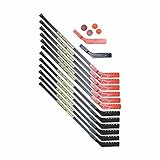

Best Left Handed Hockey Stick: Junior and Adult Buyer’s Guide
Hockey stick handedness is one of the most confusing topics in sports equipment — and left-handed players pay for that confusion with the wrong stick, poor puck control, and wasted money. Let’s clear it up immediately: in hockey, a left handed hockey stick refers to a stick where the blade curves to the right when the stick is held upright. This is because a left-handed player holds the stick with their left hand on top of the shaft, and the blade curves toward their dominant side for optimal control.
Counter-intuitively, many natural right-handers shoot left in hockey, and many natural left-handers shoot right. The top-hand grip matters more than writing dominance. But for players who are both left-hand dominant in daily life and shoot left in hockey, getting the correct stick is non-negotiable for developing proper technique.
🛒 Best Price Today on Amazon
Prime members get fast, free shipping on everything above, plus member-only deals. New members get a 30-day free trial — cancel anytime.
Understanding Left Stick vs. Right Stick: The Fast Version
Stand a hockey stick upright with the blade flat on the floor. Look at which direction the blade curves:
- Blade curves to the left = right-handed stick (right hand on top)
- Blade curves to the right = left-handed stick (left hand on top)
Roughly 60-65% of NHL players shoot left, making left-handed sticks actually the majority in professional play — yet retail stores stock a disproportionate number of right-handed sticks. Left-handed players at the junior level especially can struggle to find appropriate options in local sports stores, which is why online sourcing matters.
Top Left-Handed Hockey Sticks

7
Prime
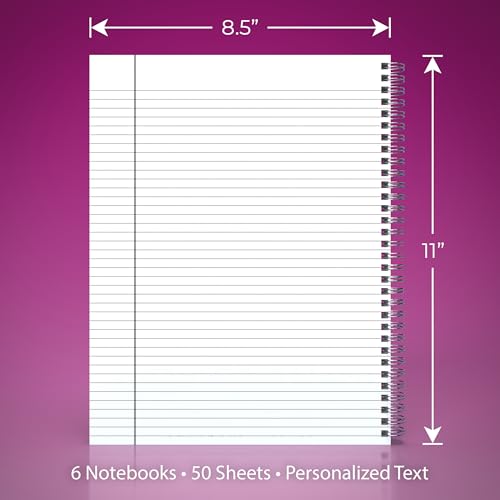
Custom Left Handed Spiral Notebook Journals with Professional Colored Covers – 6 Pack of 8.5" x 11" – College Ruled, Hard Cover, 50 Sheets Per Book – For Journaling, Office, School Supplies, etc.
In Stock


As an Amazon Associate we earn from qualifying purchases. Product prices and availability are accurate as of the date/time indicated.
28
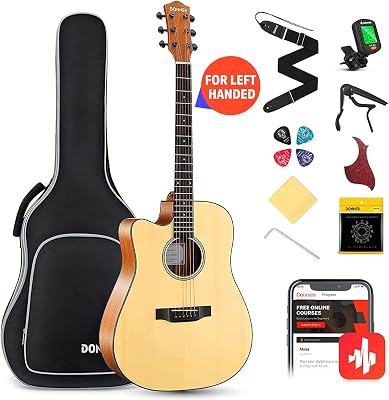
Donner Left Handed Acoustic Guitar Kit for Beginner Adult Full Size Cutaway Lefty Acustica Guitarra Bundle Set with Bag Strap Tuner Capo Pickguard String, 41 Inch, DAG-1CL
In Stock
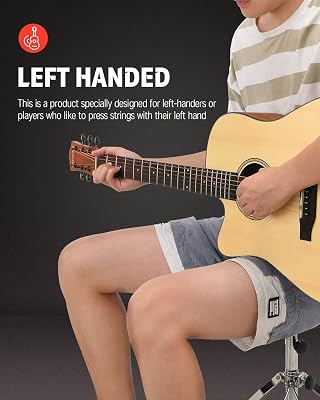
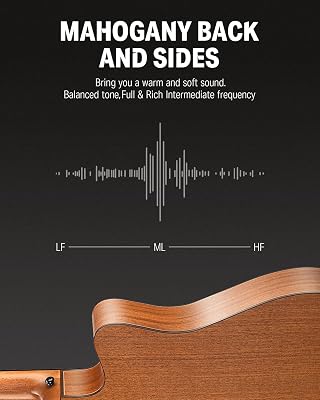


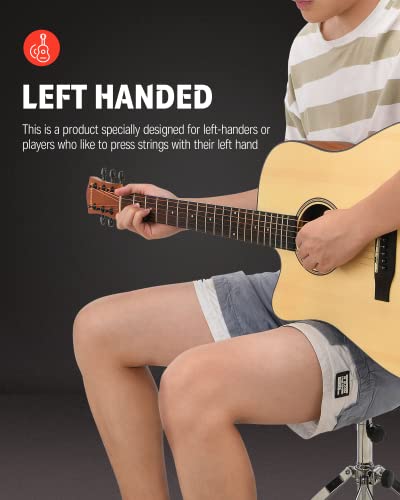
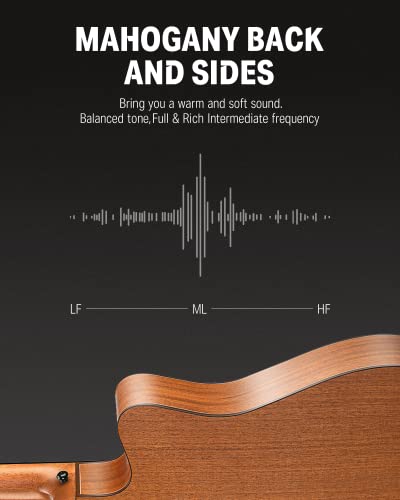
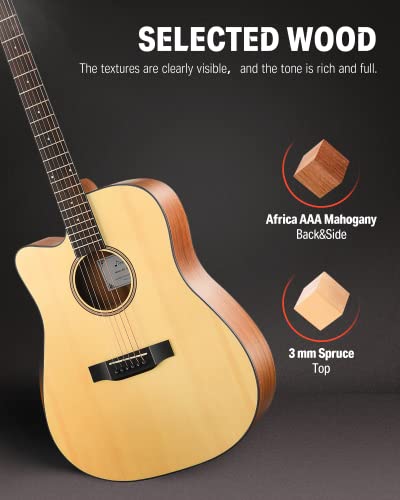
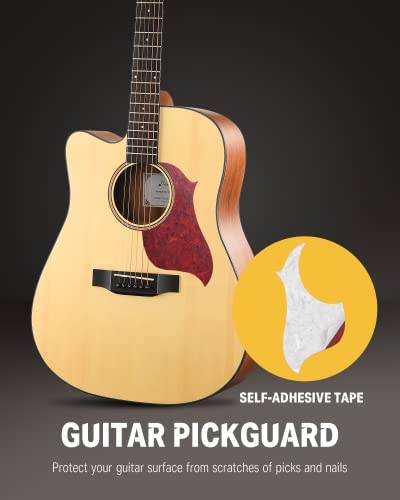
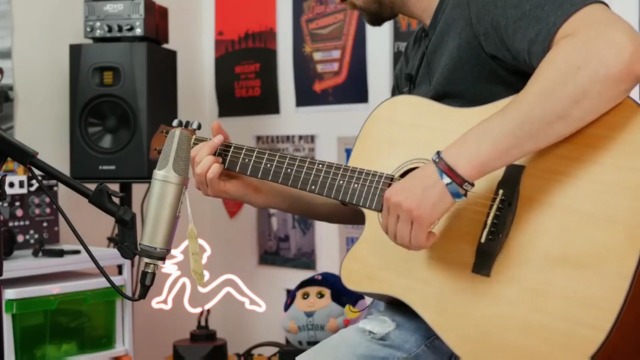
As an Amazon Associate we earn from qualifying purchases. Product prices and availability are accurate as of the date/time indicated.

19
Prime
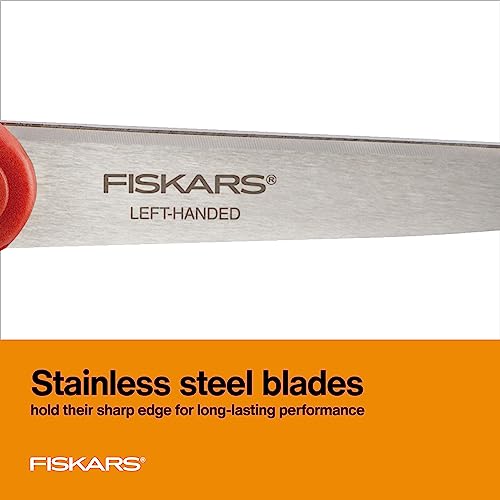
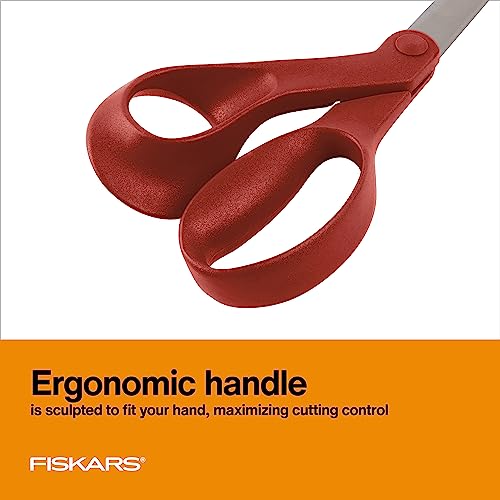
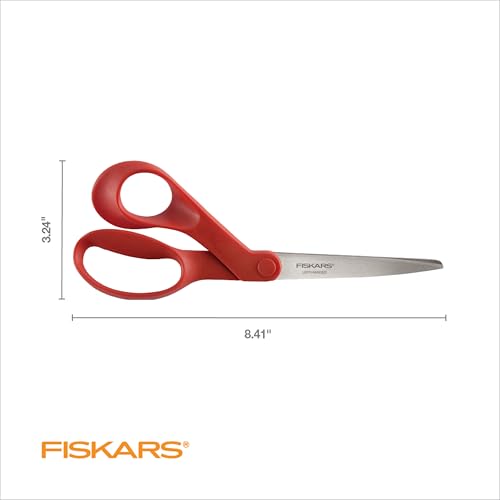
Fiskars Left-Handed Scissors, Precision Cutting for Craft Fabric Paper, Ergonomic Comfort Grip, Stainless Steel, 8", Red
In Stock


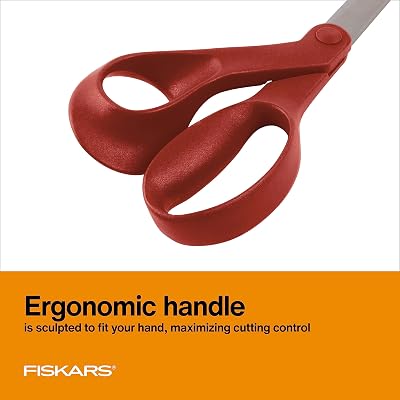


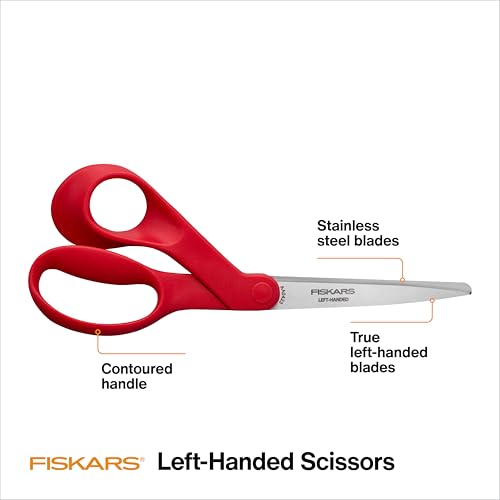
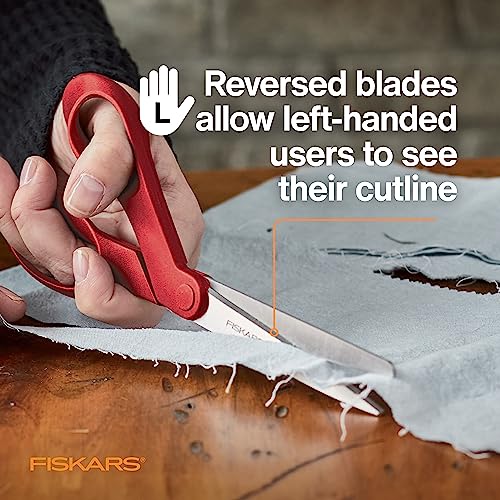
As an Amazon Associate we earn from qualifying purchases. Product prices and availability are accurate as of the date/time indicated.
Need more options? Search Amazon for left-handed hockey sticks to browse full selection across junior and senior sizes.
Hockey Stick Spec Table: Junior vs. Adult
| Spec | Junior (Ages 4-9) | Youth (Ages 9-12) | Intermediate (Ages 12-14) | Senior / Adult |
|---|---|---|---|---|
| Length (cut to chin) | 38″–44″ | 46″–54″ | 54″–57″ | 57″–63″ |
| Flex Rating | 20–35 | 40–50 | 55–65 | 70–110+ |
| Blade Curve | Shallow (easier puck control) | Shallow-mid | Mid | Mid-deep (personal preference) |
| Shaft Material | ABS / aluminum | Composite entry | Mid-grade composite | Full carbon composite |
| Weight | 400-500g | 380-450g | 360-420g | 310-390g |
| Blade Material | ABS plastic | ABS or wood core | Composite | Full composite |
Flex Rating: The Most Overlooked Spec for Left-Handed Players
Flex refers to how much force (in pounds) is needed to bend the shaft one inch. A higher number means a stiffer stick. The general rule is simple: use a flex rating that is approximately half your body weight in pounds. A 160 lb player should use an 80 flex stick as a starting point.
Why does this matter specifically for left-handed players? Because stick flex interacts with your shooting motion — specifically the load-and-release of a slap shot or wrist shot. Left-handed players who use a flex that is too stiff get no “kick” from the shaft at release, producing a flat, powerless shot. Too whippy (low flex) and the stick fires before you intend, reducing accuracy. Getting flex right is as important as getting blade curve right.
Junior players should always err toward lower flex — young players do not have the body weight or technique to load a stiff stick, and a too-stiff junior stick actively impedes skill development.
Blade Curve: How It Affects Left-Handed Puck Handling
Blade curve affects everything: shot trajectory, backhand ease, passing accuracy, and puck pickup. For left-handed beginners and junior players, a mid-toe curve is the most forgiving — it helps elevate the puck on shots while still allowing adequate backhand control. Deep heel curves produce high-velocity wrist shots but make backhand passes significantly harder, not ideal until a player has mastered fundamentals.
Left-handed players choosing a replacement blade (for two-piece stick systems) should double-check that the replacement blade is specifically the left-handed (right-curve) version. Blades for two-piece sticks are sold in left and right variants, and selecting the wrong one wastes both money and time.
Sizing a Left-Handed Stick for Junior Players
The universal sizing guide: hold the stick upright in front of you in street clothes (no skates). The stick should reach your chin. With skates on (which add about 1.5 inches of height), the stick should reach your nose. Cut the stick if needed — composite sticks can be cut with a hacksaw, and most junior sticks come with some extra length for this reason.
A too-long stick for a junior player is the number one cause of poor technique development. The child compensates by bending at the waist, widening their stance, or choke-gripping the stick — all of which become bad habits that are harder to unlearn than learning correct form from the start. Cut the stick. It takes five minutes and makes an enormous difference.
For more on setting up a left-handed child for success in their activities, see our comprehensive left-handed school supplies guide and our ergonomic lefty desk setup for the homework hours between practices.
One-Piece vs. Two-Piece Sticks for Left-Handed Players
Modern composite hockey sticks are almost exclusively one-piece construction, where shaft and blade are bonded together. Older two-piece systems (separate wooden shaft with interchangeable blades) are still used at the junior recreational level for cost reasons — blades wear out faster than shafts, and replacing just the blade is cheaper than replacing the whole stick.
For serious development players and adults, one-piece composite is the clear choice: consistent flex profile across the entire stick, lighter weight, and better energy transfer on shots. For a rec-league adult who breaks sticks frequently, a two-piece wood shaft with composite blade is a cost-effective alternative — just be meticulous about confirming the left-handed (right-curve) blade variant.
More Left-Handed Sports Gear
- Best left-handed golf clubs for 2026 — another sport where equipment orientation is critical
- Left-handed recurve bow guide — draw-arm matters as much as stick-hand in hockey
- Left-handed bowling ball guide — full sport-specific left-hand equipment breakdown
Frequently Asked Questions
My child is left-handed in daily life — does that mean they should use a left-handed hockey stick?
Not necessarily, and this is the most common confusion in youth hockey. Many natural left-handers shoot right in hockey because their dominant left hand ends up on the bottom of the shaft (where control and power originate), rather than the top. The best approach: let a young player try both orientations before committing to equipment. Most coaches can identify within a few minutes which feels more natural for a specific child. Do not assume writing-hand dominance predicts hockey stick handedness.
Can I use a street hockey stick on ice and vice versa?
Not interchangeably. Street/ball hockey sticks have a blade designed for smooth surfaces — the blade plastic is harder and the curve is optimized for a ball, not a puck. Ice hockey sticks have softer blade materials that allow better puck feel on ice but wear rapidly on pavement. Using an ice stick on pavement destroys the blade quickly. If your left-handed player does both, buy separate sticks for each surface.
How often should a left-handed hockey player replace their stick?
Recreational adult players typically get 1-2 seasons from a composite stick with regular use (2-3 ice times per week). Junior players in developmental programs may go through sticks faster due to growth (sizing needs change) and the wear from learning slap shots on the blade. Inspect the shaft regularly for cracks at the blade junction — a cracked composite stick can shatter dangerously mid-play.
Is it harder to find left-handed hockey sticks than right-handed?
Counterintuitively, no — left-handed sticks are actually the majority in professional play and are well-stocked at most major hockey equipment retailers. The confusion comes from the naming convention: shoppers who are left-hand dominant in daily life sometimes buy right-handed sticks because those are labeled “right.” Online shopping with a clear understanding of blade curve direction solves the problem entirely. Searching specifically for “left shot” or “left flex” in hockey terminology ensures you get the correct orientation.
What is the difference between a left-handed stick for ice hockey vs. field hockey?
Field hockey is a completely different situation — all field hockey sticks are right-handed by rule (the flat face of the blade is always on the left side), so left-handed players must learn to play with what is effectively a right-handed instrument. There is no left-handed field hockey stick available for sanctioned play. This guide covers ice hockey and inline/street hockey only, where left-handed equipment is fully legal, widely available, and used by the majority of professional players.


