Last Updated: September 1, 2026
- Top Left-Handed Planner Picks
- The Spiral Problem, Explained
- Planner Binding Types Compared
- What to Look For in a Left-Handed Planner Layout
- Dated vs. Undated: Which Works Better for Lefties
- Digital Planner Alternative
- More Left-Handed Stationery Picks
- Frequently Asked Questions
- Related Guides
- Related Articles
- Top Pick: The Left-Hander's 2027 Weekly Planner Calendar
- Best Value: The Left-Hander's 12-Month 2026 Weekly Planner Calendar
- Premium Choice: Jutom 2 Pads Jumbo Left Handed Notebook 11" x 8.5" Lefty Wire Bound Notebooks 200 Pages Inspirational Left Handed Journal Spiral for Lefties School Office(Macaron Blue, Macaron Pink,Cute)
As an Amazon Associate, Label Our Lefty earns from qualifying purchases. This article contains affiliate links — if you buy through them we may earn a small commission at no extra cost to you. We only recommend products we believe in.

TL;DR: Standard spiral planners are designed for right-handed writers — the coil sits exactly where a lefty’s hand rests. Left-handed spiral planners flip the binding to the right or use twin-ring systems that sit flat. One small change, massive difference in daily usability.
As an Amazon Associate we earn from qualifying purchases.


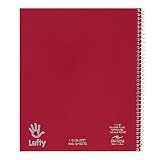

Best Left Handed Spiral Planner: No More Writing Around the Coil
Ask any left-handed planner user what they hate most and the answer is universal: the spiral. Standard coil binding sits on the left edge, which is exactly where your writing hand rests. You’re either contorting your wrist to avoid it, leaving your palm indented with metal coil marks, or writing at an uncomfortable angle just to use a planner you paid good money for. Left-handed planners solve this with a single elegant fix that the stationery industry took too long to figure out.
🛒 Best Price Today on Amazon
Prime members get fast, free shipping on everything above, plus member-only deals. New members get a 30-day free trial — cancel anytime.
Top Left-Handed Planner Picks

5
Lefty’s Left Handed Chef Knife – Stainless Steel Durable Blade – Extra Sharp – Great for Cutting, General Purpose, Kitchen items – Gifts for Left-Handed People, Lefty, Adults, Man, and Women
In Stock




As an Amazon Associate we earn from qualifying purchases. Product prices and availability are accurate as of the date/time indicated.
The Spiral Problem, Explained
Right-handed writers open a spiral notebook and their writing hand naturally moves away from the binding — they write right, binding is left, hand never touches coil. Left-handed writers have the opposite experience: the coil is right at the heel of the hand throughout every line. Over a full planner year, this means thousands of writing sessions with metal digging into your wrist.
The fix is conceptually simple: move the binding to the right side of the page (which becomes the top when the book is flipped) or use a twin-ring system that sits low enough to write over. Some left-handed planners use a disc binding system that allows pages to be removed and reinserted, keeping the writing surface completely flat with no coil anywhere near the hand. Each solution has tradeoffs in cost, page replacement flexibility, and lay-flat quality.
Beyond the coil, left-handed planners sometimes address a second frustration: page layout orientation. Weekly spreads designed for right-to-left reading flow, time blocks that start on the right side of the spread, and task lists positioned on the right page all make more ergonomic sense for left-handed users. The best left-handed planners consider the whole writing experience, not just binding placement.
Planner Binding Types Compared
| Binding Type | Left-Handed Experience | Lay-Flat Quality | Page Replacement |
|---|---|---|---|
| Right-side coil (true LH) | Excellent — coil away from writing hand | Good | No |
| Top-bound spiral | Very good — hand clears coil completely | Good with fold-back | No |
| Disc/arc binding | Excellent — no coil anywhere near hand | Perfect flat lay | Yes — add/remove pages |
| Twin-wire (low profile) | Good — wire sits lower, less interference | Very good | No |
| Standard left coil | Poor — coil under writing hand always | Good | No |
| Perfect bound (glue) | Good — no coil, but won’t lay flat | Poor | No |
What to Look For in a Left-Handed Planner Layout
Binding is the first filter, but layout is what makes a planner actually work for daily use. Weekly spreads that run Monday–Sunday left-to-right work fine for lefties. The issue arises with two-page weekly spreads where Monday–Wednesday are on the left page and Thursday–Sunday on the right: left-handers filling in the left page have their hand covering the right page entirely. Layouts that pack the full week on one page or use vertical weekly formats avoid this.
Daily page layouts matter too. Task lists positioned on the left margin force lefties to write right-to-left across the line and then arc back — the worst possible flow. Task lists and priority boxes positioned in the center or right side of the page are far more comfortable. A few left-handed planners are designed with this in mind; most aren’t. Reading layout reviews specifically from left-handed users before purchasing saves significant frustration.
Paper quality inside the planner interacts with the smear problem. If you use fountain pens or gel pens, 80gsm paper or above is worth seeking out — thinner planner paper is more transparent and takes longer to dry. Many left-handed writers end up using specific pen types for their planners: ballpoint for speed and no smear, or fast-dry gels for color-coding without leaving smears across the day’s schedule. See our left-handed pen guide for the fastest-drying options by category.
Dated vs. Undated: Which Works Better for Lefties
Undated planners offer a significant advantage for left-handed users specifically: you can orient the planner however works best for your grip. Flip it upside down, start from the back (which becomes the front for a lefty-friendly top-to-bottom flow), or use only the right-hand pages of a spread. Dated planners lock you into the intended orientation, which may or may not align with your natural writing position.
For productivity systems like bullet journaling, starting from the “back” of the book converts a standard spiral notebook into a functional right-side binding experience. The index just runs in reverse. Many left-handed bullet journalists use this technique with standard dotted notebooks rather than buying specialty planners. It’s a free solution that works well enough for casual users, though a dedicated left-handed binding is still preferable for daily planner use.
Students who need a planner specifically for school organization might also benefit from our left-handed spiral notebook for college guide, which covers similar binding considerations for academic notebooks alongside planners.
Digital Planner Alternative
Worth mentioning: digital planners on iPads with Apple Pencil or Android tablets with stylus completely eliminate the binding problem. The screen is flat, there’s no coil, and left-handed writing mode in many apps reverses the palm-rejection zone to protect against accidental inputs from a resting left hand. GoodNotes and Notability both have left-hand mode. For lefties who genuinely struggle with physical planners, the switch to digital is worth considering — especially for anyone who already uses a tablet for other work.
Physical planner users who also work extensively at a desk should look at our left-handed ergonomic desk setup guide — proper desk positioning significantly reduces the wrist strain that makes bad planner binding worse.
More Left-Handed Stationery Picks
Rounding out your left-handed desk: the best pens for lefties in 2026 covers fast-dry gel and ballpoint options that pair perfectly with any planner. For broader lefty gift ideas for stationery lovers, see our left-handed gifts guide.
Frequently Asked Questions
What makes a planner “left-handed”?
Primarily binding placement: the spiral or coil is on the right side of the page (or top) rather than the left, so it doesn’t sit under the writing hand. Some left-handed planners also adjust internal layouts — moving task lists and priority boxes to more ergonomic positions for right-to-left hand movement. At minimum, a true left-handed planner moves the binding away from where a lefty’s hand rests.
Can I just flip a regular spiral planner upside down?
Yes, and it works reasonably well. Flipping a standard top-spiral planner gives you a right-side binding when oriented for reading. The downside: dates and pre-printed layouts will appear upside down. Works best with undated or minimally pre-printed planners. It’s a useful budget solution but not as clean as a purpose-designed left-handed planner.
Are disc-bound planners worth the extra cost for left-handers?
For heavy planner users, yes. Disc binding (Levenger Circa, Arc by Staples, Happy Planner system) puts zero coil anywhere near the hand — pages attach to discs along the spine and the writing surface is completely flat. The added benefit is page customization: add, remove, and rearrange pages freely. The cost premium (typically $30–60 vs. $15–25 for a standard spiral) is worth it if you use your planner daily.
What pen types work best to avoid smearing in a planner?
Quick-dry ballpoints (Pentel R.S.V.P., Paper Mate InkJoy) are the fastest-drying and essentially smear-proof. Among gel pens, Pilot G2 dries slower than average; Zebra Sarasa and Pentel EnerGel dry significantly faster. For color-coding, felt-tip pens with water-based ink (Staedtler triplus fineliners) dry near-instantly. Avoid rollerball pens — they use liquid ink and smear badly for lefties.
Do left-handed planners cost more than standard planners?
Specialty left-handed planners from small stationery brands typically run $5–15 more than comparable right-handed planners. However, many standard planners can be adapted with the flip technique at no extra cost. The disc-bound systems have a higher upfront cost but replace the consumable pages annually at lower cost than a new planner. For budget-conscious lefties, top-bound spiral planners (designed for flip-top use) are widely available at standard prices.
Related Guides
Related Reviews & Guides




Best Marvel Ice Maker in 2026: Buying Guide

4 Best Left Handed Bullet Journal Planners