Last Updated: September 18, 2026
Choosing between left handed kitchen shears and utility scissors is less about which tool looks more versatile and more about where, how, and by whom it will be used. A left-handed cook may struggle with ordinary kitchen scissors because the blades overlap in the wrong direction, obscuring the cut line and making the handles feel awkward. Utility scissors, meanwhile, can handle cardboard, packaging, twine, fabric, and light household repairs better than food-focused shears.
The real decision is whether you need a dedicated, comfortable cutting tool for food preparation or one general-purpose pair for chores around the home. Both can be useful, but they solve different problems. Here is how to compare left handed kitchen shears vs utility scissors for everyday home use in 2026.
As an Amazon Associate we earn from qualifying purchases at no extra cost to you. Product prices and availability are accurate as of the date shown and are subject to change.


Quick Verdict
Choose left handed kitchen shears if you regularly cut poultry, herbs, meat packaging, vegetables, or food containers with your left hand. The reversed blade orientation gives you a clearer view of the cutting line, while ergonomic handles reduce wrist twisting. Many kitchen shears also include features such as bottle openers, nutcrackers, herb strippers, or detachable blades for cleaning.
Choose utility scissors if you want one robust pair for opening packages, trimming carpet edges, cutting tape, snipping garden twine, handling craft materials, and making occasional household repairs. Their thicker blades and serrated edges are generally better suited to abrasive or nonfood materials.
For many homes, the best answer is not either-or: use left handed kitchen shears in the kitchen and utility scissors in a drawer, workshop, or utility closet. If you can buy only one, prioritize the task you perform most often rather than the longest feature list.
Side by Side
| Factor | Left Handed Kitchen Shears | Utility Scissors |
|---|---|---|
| Primary use | Food preparation, poultry, herbs, packaging, and kitchen tasks | Cardboard, plastic packaging, tape, fabric, twine, and household chores |
| Left-hand comfort | Designed for left-handed cutting; usually provides better visibility and alignment | Varies; many are ambidextrous, but blade orientation may favor right-handed use |
| Typical length and weight | About 7 to 9 inches long and roughly 4 to 8 ounces | About 8 to 10 inches long and roughly 5 to 12 ounces |
| Durability | Strong enough for food bones, joints, and packaging when properly designed | Usually better for abrasive materials and repeated general-purpose cutting |
| Price range | Approximately $10 to $25 per pair; multipacks may cost $15 to $30 | Approximately $9 to $30, depending on blade steel, handles, and construction |
| Maintenance | Needs prompt washing and thorough drying after food contact; detachable designs simplify cleaning | Usually wipe-clean; serrations can hold tape residue, fibers, and adhesive |
| Space needed | One standard kitchen drawer slot, often with a sheath for safer storage | One drawer, pegboard hook, toolbox compartment, or utility-cabinet slot |
| Look | Kitchen-oriented, often stainless steel with compact, rounded handles | More industrial, with larger grips and visibly thicker or serrated blades |
| Resale and replacement | Lower resale value; replacement is usually inexpensive | Modest resale value, especially for recognizable heavy-duty brands |
| Best for | Left-handed cooks who want precision and comfort around food | Households needing one tough pair for mixed, nonfood tasks |
Where Left Handed Kitchen Shears Wins
The most important advantage is control. In a true left-handed pair, the upper blade is positioned so your left hand naturally presses the blades together as you cut. With many right-handed scissors, that same motion can force the blades apart slightly, causing paper, skin, packaging, or meat to slide instead of cutting cleanly.
Blade visibility also matters. Left-handed users can see the cutting line more easily when the blade orientation matches their hand. That is especially helpful when trimming chicken skin, snipping herbs directly over a bowl, or cutting the sealed edge from a food package. Better visibility can mean fewer uneven cuts and less repositioning.
Kitchen shears are also shaped for food-related work. Broad finger loops accommodate wet or slippery hands, while short, sturdy blades provide leverage. Some models separate into two halves, allowing you to wash around the pivot rather than leaving food residue trapped near the screw. A protective sheath is useful if the shears share a drawer with knives.
Budget options make the category accessible. The Left Handed Scissors Kitchen Shears, Meat Scissors Poultry Shears 2 Pack is listed at $16.99, which illustrates how a household can keep one pair in the kitchen and another in a second prep area. The Sairps Left Handed Scissors, described as multifunctional heavy-duty food scissors, is listed at $11.99. These prices are relatively low compared with the cost of replacing an uncomfortable tool or buying specialty poultry scissors later.
For food safety, keep kitchen shears separate from scissors used on cardboard, soil, chemical packaging, or pet-related materials. Even stainless steel is not self-cleaning, and a blade that looks clean may retain grease or fibers around the pivot.
Where Utility Scissors Wins
Utility scissors are the stronger all-around household tool. Their blades are often longer, thicker, and more aggressively edged than kitchen shears. That makes them useful for breaking down shipping boxes, cutting blister packs, trimming shelf liner, opening bags of potting soil, cutting twine, and handling craft materials.
Serrated utility blades can grip slippery materials that smooth blades push away. This is useful for plastic strapping, mesh, rope, and layered packaging. The trade-off is that serrations are harder to sharpen and more difficult to clean when adhesive or fibers become lodged in the grooves.
Utility scissors are also a better choice for a shared household where several people may use the same tool. A large, high-contrast handle is easier for children under supervision, older adults, and users wearing work gloves to identify and grasp. However, “utility” does not mean safe for every job. Do not use household scissors as a substitute for wire cutters, pruning shears, or a tool rated for electrical work.
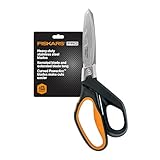
The iBayam Kitchen Scissors Shears All Purpose Heavy Duty with Protective Sheath, listed at $8.99, sits near the low end of the broader kitchen-and-utility category and may appeal to buyers who want general household versatility plus covered storage. At the more rugged end, the Fiskars Pro 8-inch PowerArc Shop Shears with heavy-duty serrated utility blades is listed at $14.99. An 8-inch length is compact enough for a drawer but substantial enough for packaging and workshop chores.
Cost Over 5 Years
The purchase price is only part of the cost. A basic pair in either category commonly costs about $9 to $20. Assuming one purchase lasts five years, that works out to roughly $1.80 to $4 per year. A $25 premium pair costs about $5 per year over the same period.
A realistic five-year budget might look like this:
- One budget pair: $9 to $15 upfront, or about $1.80 to $3 per year.
- One sturdier pair: $16 to $30 upfront, or about $3.20 to $6 per year.
- Kitchen shears plus utility scissors: approximately $20 to $45 total, or $4 to $9 per year.
- Replacement allowance: add $10 to $20 if frequent misuse, rust, lost tools, or adhesive buildup shortens the first pair’s life.
Maintenance affects value. Dry kitchen shears immediately after washing, avoid soaking ordinary pivot screws, and use the correct cutting surface for packages or food. Utility scissors should be wiped after cutting adhesive materials and stored dry. Spending a few extra dollars on a covered or detachable design may be worthwhile if the shears will be used daily.
Which One for Your Home
Small apartment
Choose based on your storage limits and routine. If you cook frequently and use your left hand, left handed kitchen shears offer the greatest daily benefit in the smallest footprint. If you rarely prepare meat and mostly open deliveries or cut household packaging, compact utility scissors are more versatile. A pair around 8 inches long should fit most kitchen drawers or a narrow utility bin.
Family with kids or pets
A utility pair is usually the better shared household tool because it can stay in a clearly labeled utility area rather than moving between food prep and messy chores. Store it high or in a locked drawer, regardless of the handle color. For pet owners, reserve kitchen shears for food and keep utility scissors for bags, cardboard, and nonfood materials. Never let children use either type without direct supervision.
Rental home
Renters often benefit from one utility pair because it can handle moving boxes, shelf liner, packing tape, curtain adjustments, and small repairs without requiring a full toolbox. If left-handed cooking comfort is a persistent issue, add an affordable left-handed kitchen pair rather than tolerating awkward cuts every day. A sheath is especially helpful when drawer space is limited.
Long-term home
Buy both if the budget allows. Keep left handed kitchen shears in the kitchen and utility scissors with household tools. Separating their jobs improves hygiene, protects cutting edges, and makes each pair last longer. Choose stainless steel and a comfortable handle for the kitchen; prioritize thick blades, a strong pivot, and a secure grip for utility work.
FAQ
Are left handed kitchen shears different from regular scissors?
Yes, when they are genuinely left-handed. The blade overlap is reversed to suit a left-handed cutting motion, improving visibility and helping the blades stay together. Some products labeled “left-handed” only have ambidextrous handles, so inspect the blade orientation and return policy before buying.
Can utility scissors be used to cut meat?
They can physically cut some food, but they are not automatically suitable for food preparation. Serrated blades may trap residue, and scissors used for cardboard, tape, or chemicals should not contact food. Use dedicated kitchen shears that can be washed thoroughly and, ideally, separated for cleaning.
Are kitchen shears dishwasher safe?
Some stainless-steel models are dishwasher safe, but the manufacturer’s instructions control. High heat and repeated detergent exposure can dull edges, damage coatings, or encourage corrosion around the pivot. Hand-wash, rinse, and dry promptly when in doubt.
What size scissors should a left-handed cook buy?
For most kitchens, 7 to 9 inches overall is a practical range. Shorter blades offer control for herbs and packaging; longer blades provide more leverage for poultry and heavier tasks. Handle comfort matters as much as length, so check that the finger loops fit your hand without forcing your thumb or wrist into an angle.
Ready to decide? Our #1 pick for 2026 is the Primary use.
Live price & availability on Amazon.
Related Reviews & Guides


Left Handed Apron for Cooking and Grilling

Left Handed Fabric Scissors Cutting