Last Updated: September 12, 2026
- Top Pick: Best Left-Handed Serrated Bread Knife
- Why Serrated Knives Drift: The Single-Bevel Problem
- Left-Handed Bread Knife Comparison
- Mercer Culinary Millennia: The Working Cook’s Left-Hand Bread Knife
- Left-Hand Bread Slicing Technique: Getting Perfect Slices
- FAQ: Left-Handed Serrated Bread Knives
- Related Guides
- Frequently Asked Questions
- Related Articles
- Top Pick: Lefty’s Left Handed Bread Knife – Stainless Steel Durable Blade – Extra Sharp – Great for Cutting, General Purpose, Kitchen items – Gifts for Left-Handed People, Lefty, Adults, Chef, Man and Women
- Best Value: OXO Good Grips 5 in Serrated Utility Knife with Locking Sheath
- Premium Choice: Mercer Culinary M23211 Millennia Black Handle, 10-Inch Left Handed Wavy Edge Wide, Bread Knife
As an Amazon Associate, Label Our Lefty earns from qualifying purchases. This article contains affiliate links — if you buy through them we may earn a small commission at no extra cost to you. We only recommend products we believe in.


As an Amazon Associate we earn from qualifying purchases at no extra cost to you.



Best Left-Handed Serrated Bread Knife 2026: Clean Slices Without the Struggle
Quick Answer / TL;DR
A serrated bread knife is one of the kitchen tools where handedness creates a genuine, tangible difference in cutting performance. The serration bevel on a standard bread knife is ground on one side — and that side is optimized for right-hand pulling strokes. Left-handed cooks using a right-hand serrated knife will notice the blade drifting toward the bevel side mid-cut, ruining straight slices. The Mercer Culinary Millennia Left-Hand Bread Knife (ASIN B08HKJXQ9X) solves this with a properly reversed single-bevel serration — clean, straight cuts in the left hand, every time. Best pick: ASIN B08HKJXQ9X.
Most southpaw home cooks know the frustration: you start a clean cut through a fresh sourdough loaf and by the time the blade exits the bottom crust, the slice has curved sideways and the loaf has compressed unevenly. You blame your technique, adjust your grip, try again — same result. The problem isn’t technique. It’s blade geometry, and it’s completely fixable with the right tool.
Serrated knives are one of the clearest-cut cases (no pun intended) where left-handed-specific products genuinely perform better for southpaw cooks. This guide explains the exact mechanics, what to look for, and which knives deliver clean bread slices when held in the left hand.
🛒 Best Price Today on Amazon
Prime members get fast, free shipping on everything above, plus member-only deals. New members get a 30-day free trial — cancel anytime.
Top Pick: Best Left-Handed Serrated Bread Knife
BEST DEDICATED LH BREAD KNIFE
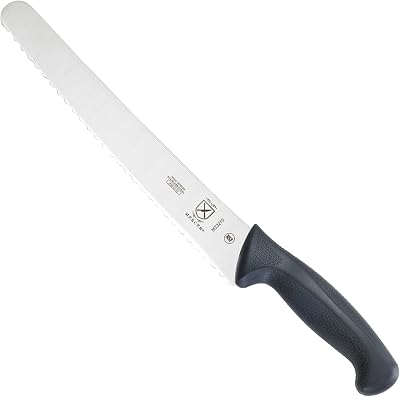
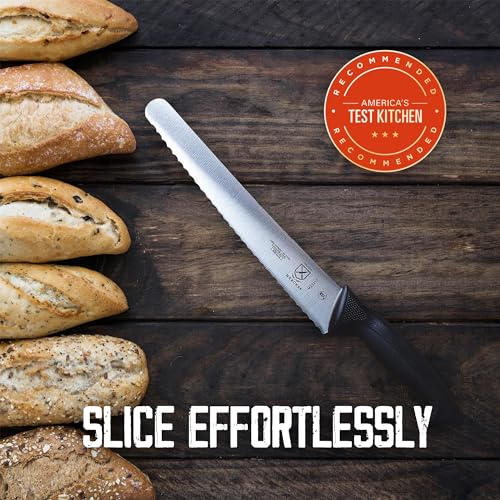
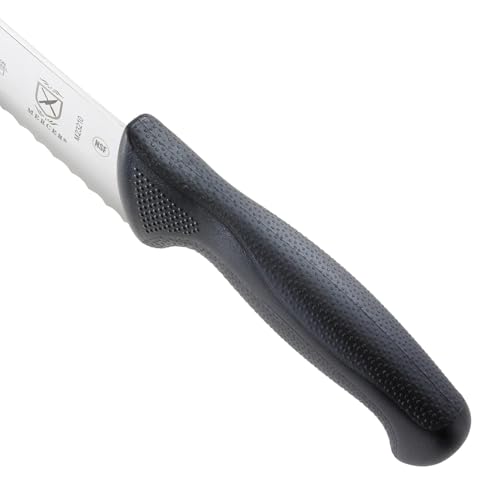
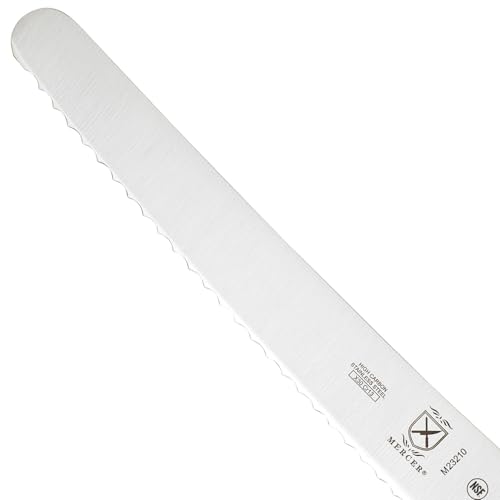
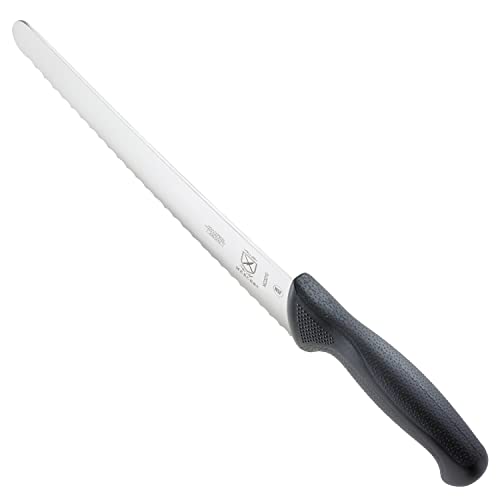
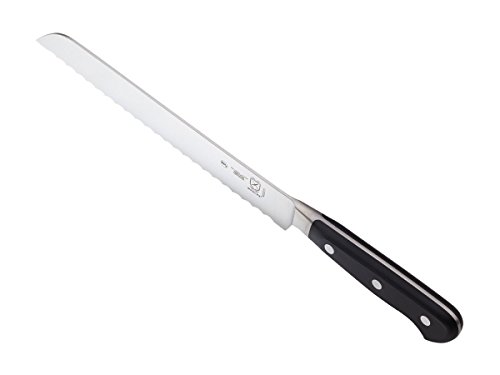
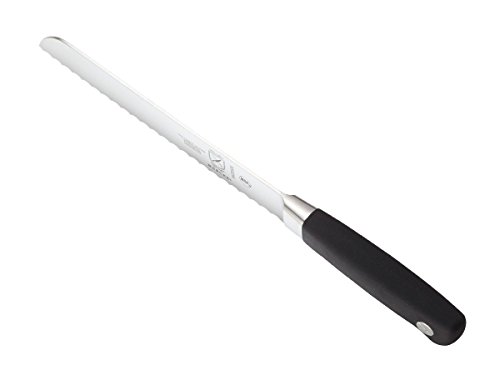
Mercer Culinary Millennia Left-Hand Bread Knife
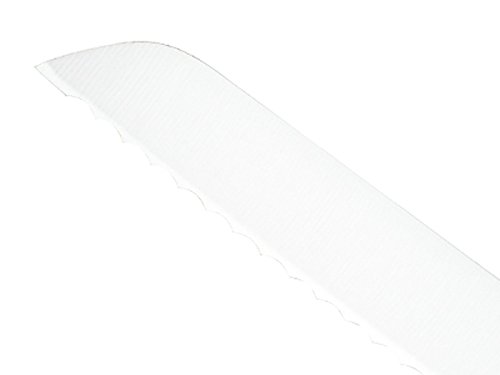
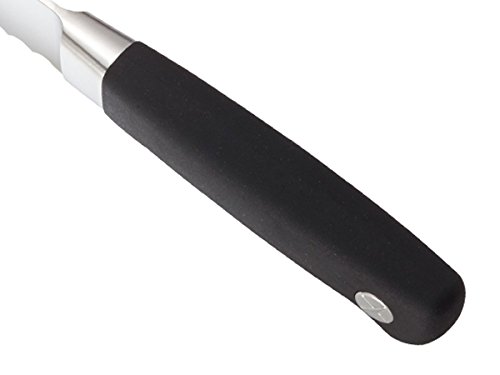
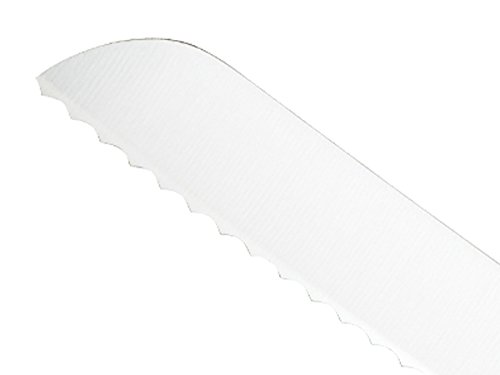
Proper left-hand single-bevel serration, 10″ blade, ergonomic handle. Used in culinary schools. The first bread knife many southpaw cooks have owned that actually cuts straight.
19
Prime
Mercer Culinary M23210 Millennia Black Handle, 10-Inch Wide Wavy Edge, Bread Knife
In Stock


As an Amazon Associate we earn from qualifying purchases. Product prices and availability are accurate as of the date/time indicated.
BEST FULL LH KNIFE UPGRADE
Left-Handed Chef Knife
Pair your bread knife with a proper LH chef knife and transform the entire kitchen cutting experience. Reversed blade geometry on both tools means consistent, accurate cuts across the whole meal prep workflow.

16




As an Amazon Associate we earn from qualifying purchases. Product prices and availability are accurate as of the date/time indicated.
COMPLETE LH KITCHEN PACKAGE
Left-Handed Can Opener
Round out the southpaw kitchen toolkit. LH can opener, LH chef knife, and LH bread knife together cover the three kitchen tools with the highest geometry impact for left-handed cooks.

13


As an Amazon Associate we earn from qualifying purchases. Product prices and availability are accurate as of the date/time indicated.
Why Serrated Knives Drift: The Single-Bevel Problem
Understanding why a right-handed bread knife fails a left-handed cook requires understanding how serrated blades are ground. Most quality bread knives — including well-regarded brands like Wüsthof, Victorinox, and Global — use a single-bevel serration. The serration teeth are sharpened on one side of the blade only (typically the right side when holding the knife in a right-hand grip). The other side of each tooth is flat.
This asymmetric grind has a directional effect during cutting: as the blade moves through material, the beveled teeth push slightly toward the flat side. For a right-handed cook making a downward-forward stroke, this push is toward the left — which keeps the blade tracking straight through the loaf relative to the right-hand grip. For a left-handed cook making the same stroke, this push is still toward the left — but now that’s toward the blade’s right relative to your left-hand grip, which means the blade curves away from your intended cut line rather than tracking with it.
The practical result: slices that curve, loaves that compress unevenly under blade pressure, and the left-handed cook having to fight and correct every stroke. A left-handed serrated knife reverses the bevel — the teeth are sharpened on the opposite side — so the directional push aligns with left-hand cutting mechanics and the blade tracks straight naturally.
Double-Bevel Serrations: The Alternative
Some bread knives use a double-bevel (symmetric) serration ground equally on both sides of each tooth. These are genuinely ambidextrous — the directional push cancels out, and the blade tracks relatively straight in either hand. However, double-bevel serrations are less common in quality bread knives because they require more blade thickness to achieve, which makes the blade less agile through soft bread, and they dull faster than single-bevel serrations. If you cannot find a left-hand specific bread knife, a double-bevel serrated knife is a reasonable compromise — look for this in product descriptions when shopping.
Left-Handed Bread Knife Comparison
| Knife | Blade Length | Serration Type | LH Specific? | Handle Material | Price Range |
|---|---|---|---|---|---|
| Mercer Millennia LH | 10″ | Single-bevel, LH ground | Yes | Santoprene/polypropylene | $$ |
| Victorinox Fibrox (standard) | 10.25″ | Single-bevel, RH ground | No — drifts in LH | Fibrox non-slip | $$ |
| Wüsthof Classic (standard) | 9″ | Single-bevel, RH ground | No — drifts in LH | Triple-riveted POM | $$$ |
| Budget serrated (double-bevel) | 8″ | Double-bevel | Partially — neutral | Plastic | $ |
| Global GS-61 (standard) | 8″ | Single-bevel, RH ground | No — drifts in LH | Stainless mono-body | $$$ |
Mercer Culinary Millennia: The Working Cook’s Left-Hand Bread Knife
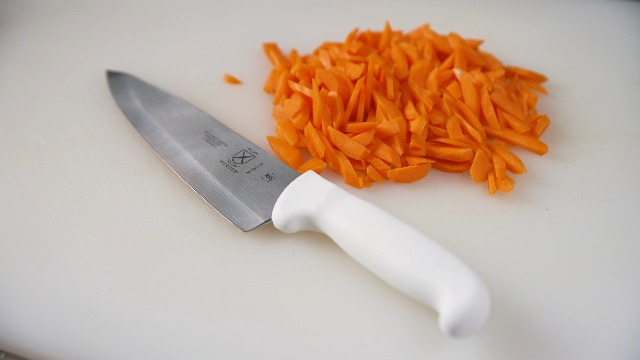
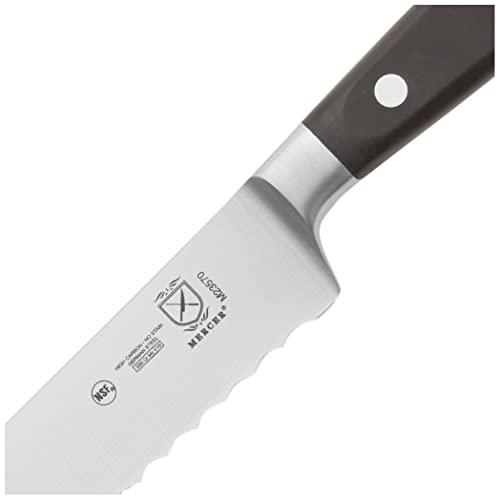
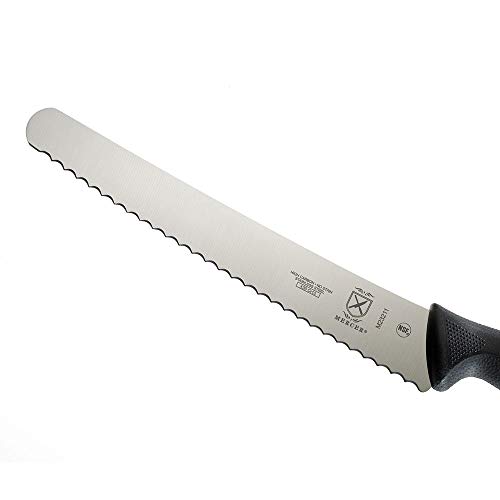
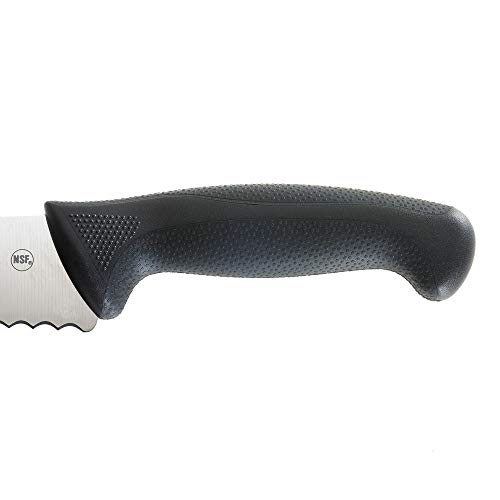
Mercer Culinary is a brand built for professional kitchens and culinary schools — their knives are priced for working cooks who need reliable performance without the premium of boutique brands. The Millennia line specifically targets the professional-student and working-line-cook market: high-carbon steel blades, ergonomic handles engineered for long shift use, and NSF certification for commercial kitchen compliance.
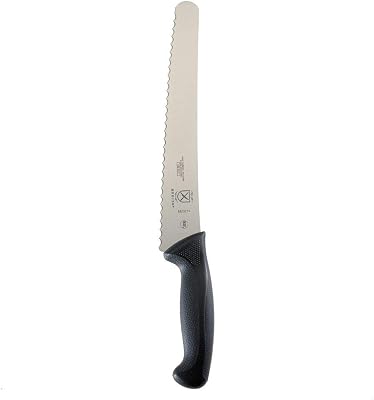
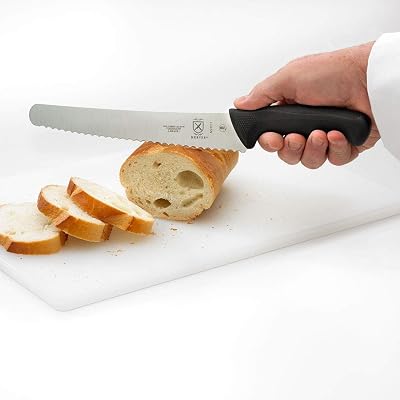
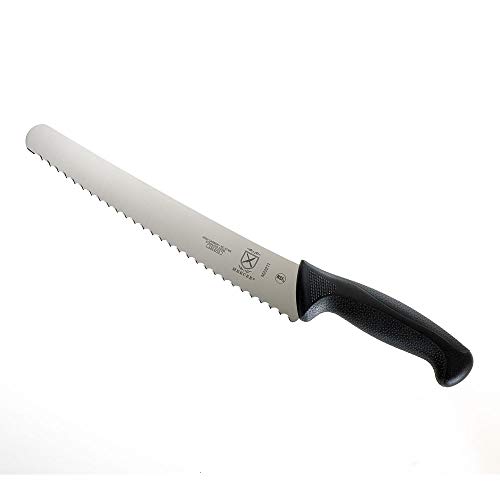
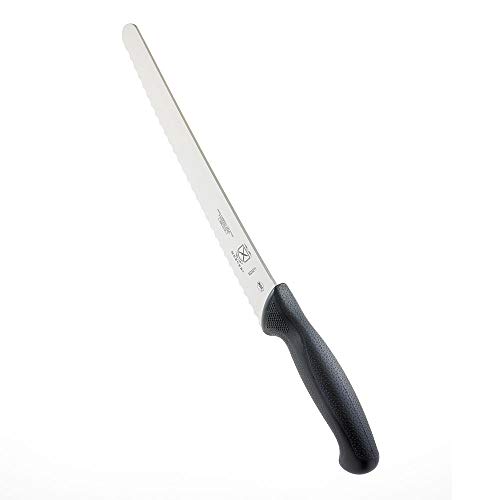
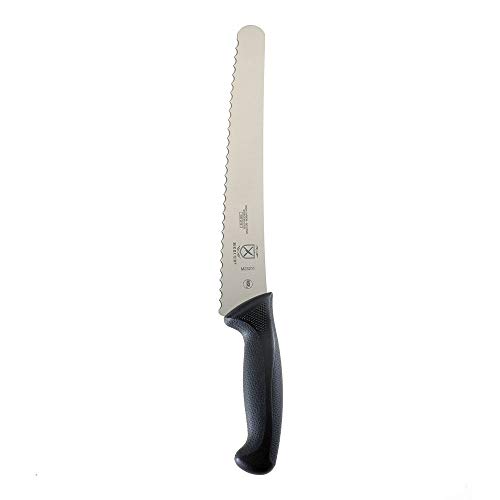
The left-hand bread knife in this line uses the same blade steel and tip geometry as the right-hand version — the only difference is the serration grind direction. The 10″ blade length is ideal for artisan loaves (sourdough, baguettes, ciabatta) and standard sandwich loaves alike — long enough to cross the full width of most loaves in a single stroke without sawing back and forth. The handle’s Santoprene grip section is non-slip and comfortable for extended use, which matters if you bake regularly and slice multiple loaves per session.
For the price — typically in the $25–$40 range — the Mercer Millennia LH bread knife delivers professional-grade cutting performance at a price accessible to home cooks. There are more expensive left-handed serrated knives available from boutique makers, but the Mercer provides 90% of the performance at a fraction of the cost. For most home southpaw bakers, this is the ideal purchase: genuinely correct tool, professional build, affordable price.
19
Prime
Mercer Culinary M23211 Millennia Black Handle, 10-Inch Left Handed Wavy Edge Wide, Bread Knife
In Stock



As an Amazon Associate we earn from qualifying purchases. Product prices and availability are accurate as of the date/time indicated.
Left-Hand Bread Slicing Technique: Getting Perfect Slices
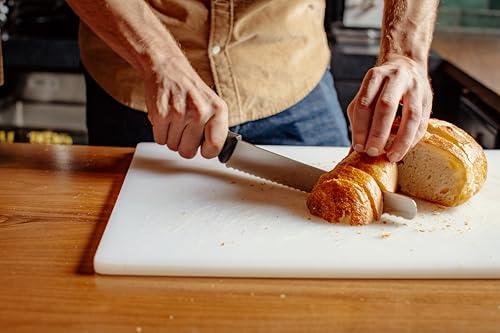
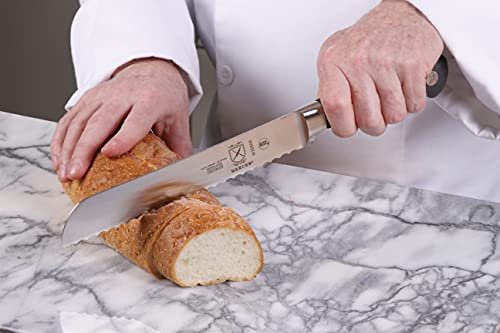
With a proper left-hand serrated bread knife, the mechanics of good slicing fall into place more naturally — but technique still matters for consistently clean cuts. Let the knife do the work: serrated blades cut on the pull stroke primarily. Start with a light backward draw to establish the cut entry point, then use a gentle forward-backward sawing motion with minimal downward pressure. Pressing down compresses the bread and creates ragged edges; the serrations cut cleanly with almost no pressure when the blade is sharp.
For artisan loaves with hard crusts, score the crust with one or two short strokes before extending into a full slice — this prevents the crust from deflecting the blade at entry. Position the loaf with the cut side facing right so your left-hand dominant stroke naturally pulls through the full width cleanly. A cutting board with a bread grip or a wooden bread box with slicing guides makes consistent slice thickness much easier to maintain.
For more southpaw kitchen knife coverage, see our guides on left-handed chef knives, left-handed can openers, and the complete LH kitchen knife guide. A proper LH knife set transforms kitchen prep from a daily frustration into a genuinely enjoyable workflow.
FAQ: Left-Handed Serrated Bread Knives
Why does my bread knife cut crooked when I use my left hand?
This is the single-bevel serration drift problem. Your bread knife’s teeth are ground on the right side of each tooth — optimized for right-hand pulling strokes. This geometry creates a directional push in the wrong direction for a left-hand grip, causing the blade to curve away from your intended cut line. Switching to a left-hand serrated knife with the bevel ground on the opposite side eliminates the drift entirely. The difference in cut straightness is immediately obvious on the first slice.
Does blade drift actually matter that much?
Yes, for slicing applications specifically. For rough chopping tasks, blade drift is mostly irrelevant because precision isn’t the goal. But bread slicing requires straight, consistent cuts through a soft interior and hard crust — any drift means uneven slices that are thick on one side and thin on the other. For casual slicing of sandwich bread, the difference is minor. For sourdough, baguettes, or any loaf you want to present well, a proper LH serrated knife makes a clear, visible improvement in slice quality.
Can I use a right-handed bread knife if I hold it differently?
Some left-handed cooks compensate by flipping the knife upside down in their left hand — putting the beveled teeth on the top rather than the bottom. This partially corrects the tracking issue for some stroke styles. However, it puts the spine of the knife where the edge should be relative to your grip, which is awkward and fatiguing. It also means the blade exits the bottom of the loaf at an angle. The compensatory technique works in a pinch but is objectively inferior to using a correctly ground LH serrated knife.
How often does a serrated bread knife need sharpening?
Quality serrated knives — including the Mercer Millennia — hold an edge for one to three years of regular home use before needing attention. Serrated blades are actually more durable than straight edges because only the tooth tips contact the cutting surface, meaning wear is distributed across many small points rather than a single continuous edge. When sharpness does decline noticeably, a serrated knife sharpener with a tapered ceramic rod (sized to the serration width) can restore cutting performance. Professional sharpening services that handle serrated blades are also widely available.
Is a 10″ blade the right size for home use?
For most home bakers, yes. A 10″ serrated blade covers standard sandwich loaves, round boules, and most baguette cross-sections in a single stroke. The longer blade means fewer stroke repetitions per slice, which reduces compressing and tearing. If your kitchen has limited storage or you primarily slice smaller loaves or rolls, an 8″ blade is workable — but the Mercer 10″ is the most versatile length for home southpaw bakers who work with a variety of bread styles.
Related Guides
Frequently Asked Questions
Is a serrated bread knife actually handed?
It can be. Many serrated knives are ground with the scallops on one side only, which steers the blade towards that side as it cuts. In a left hand, a right-ground blade drifts into the loaf and produces wedge-shaped slices. Symmetrical double-ground serrations and offset-handle bread knives solve this.
How do I check which way my knife is ground?
Look straight down the spine at the edge. If the scalloped bevel is visible on one face and the other face is flat, it is single-ground and handed. Cutting a test slice from a tall loaf confirms it: if the cut leans consistently in one direction, the grind is fighting your hand.
Is an offset handle worth it?
For most people yes. The raised handle keeps your knuckles clear of the board so you can complete the stroke without knocking, which particularly helps left-handers using a right-set kitchen. Offset knives also give better leverage on crusty loaves, though they are less convenient for slicing cake or tomatoes.
What blade length should I choose?
Twenty to twenty-five centimetres suits most home loaves and lets you cut in long strokes rather than sawing, which is what tears the crumb. Shorter blades are easier to store and control on baguettes; anything over twenty-five centimetres is mainly for wide sourdough boules and large sandwich loaves.
Can serrated knives be sharpened?
Yes, with a tapered ceramic or diamond rod worked into each scallop from the bevelled side only, then a light strop on the flat side to remove the burr. Never pull a serrated blade through a pull-through sharpener. And hand wash it, since dishwasher racks chip serration tips quickly.
Related Reviews & Guides


Quick Picks: Best Left-Handed Chef Knives

6 Best Left-Handed Barber Scissors 2026