

Last Updated: September 12, 2026
- Top Pick: Best Left-Handed Kids’ Scissors
- The Blade Geometry Problem: Why Right-Handed Scissors Fail Left-Handed Kids
- Scissor Safety Guide by Age: What Kids Need at Each Stage
- Fiskars Left-Handed Kids Scissors: Why They’re the Standard
- Talking to Schools About Left-Handed Scissors
- FAQ: Left-Handed Scissors for Kids and Toddlers
- Related Guides
- Frequently Asked Questions
- Related Articles
As an Amazon Associate, Label Our Lefty earns from qualifying purchases. This article contains affiliate links — if you buy through them we may earn a small commission at no extra cost to you. We only recommend products we believe in.

Best Left-Handed Scissors for Kids 2026: Safe, Sharp, and Actually Made for Little Lefties
Quick Answer / TL;DR
Giving a left-handed child standard right-handed scissors is one of the most common ways adults accidentally make learning harder for young lefties. The blades are oriented to cut when squeezed right-handed — in a left hand, squeezing pushes the blades apart rather than together. True left-handed kids’ scissors reverse the blade geometry so the cutting action works naturally. The Fiskars 5″ Pointed Kids Scissors Left Hand (ASIN B000F4YDJQ) are the most trusted pick: proper LH blade geometry, rounded safety tip option, and a brand with forty years of scissor engineering behind it. Best pick: ASIN B000F4YDJQ.
As an Amazon Associate we earn from qualifying purchases at no extra cost to you.

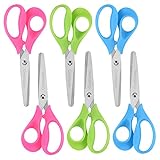
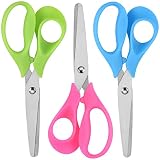


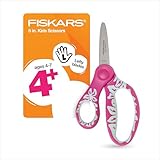

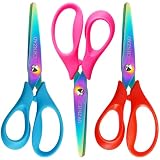


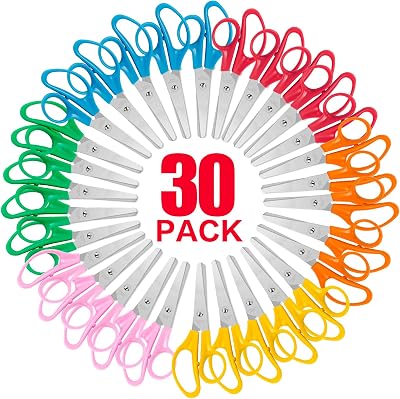

If you’ve watched a left-handed child struggle with scissors — scrunching their face, turning the scissors sideways, tearing paper instead of cutting it — you’ve witnessed exactly what wrong-handed scissors feel like from the inside. The frustration isn’t the child. The scissors are literally working against them on a mechanical level. And because most classrooms stock only right-handed scissors, left-handed children often spend years thinking they’re just “bad at cutting” before anyone identifies the real problem.
Getting true left-handed scissors for a child early is one of the highest-impact, lowest-cost interventions a parent or educator can make for a young lefty. This guide explains the mechanics, the safety considerations by age, and which specific products work best for different developmental stages.
🛒 Best Price Today on Amazon
Prime members get fast, free shipping on everything above, plus member-only deals. New members get a 30-day free trial — cancel anytime.
Top Pick: Best Left-Handed Kids’ Scissors
BEST FOR AGES 5–10
Fiskars 5″ Left-Hand Kids Scissors
True LH blade geometry, pointed tip, soft-grip handle. The benchmark left-handed kids’ scissor. Used in schools and recommended by occupational therapists for left-handed scissor skill development.
BEST FOR TODDLERS (AGES 3–5)
Fiskars Softgrip Blunt-Tip Toddler Scissors
Spring-assisted blunt-tip scissors for early scissor learners. LH-compatible loop size and blade orientation makes this safe for young lefties learning the squeeze motion.
LH SCHOOL SUPPLIES BUNDLE
Left-Handed School Supplies Kit
Complete the southpaw school toolkit. LH scissors paired with LH pencil grips and stationery covers the core tools a lefty child needs to thrive in a right-handed classroom.
The Blade Geometry Problem: Why Right-Handed Scissors Fail Left-Handed Kids
Scissors look symmetric from the outside but are not. The two blades overlap with a specific orientation: one blade sits on top and one on the bottom when viewed from the cutting side. This overlap determines the direction of the shearing force when the blades squeeze together. Right-handed scissors are designed so that when the right hand squeezes, the top blade presses slightly inward against the bottom blade — creating a shearing action that slices cleanly through material.
When a left-handed child holds these same scissors in their left hand and squeezes, the blade orientation reverses. Instead of pressing together, the blades push slightly apart. The scissors still close (the pivot keeps them from separating entirely) but the shearing force is wrong — the blades are separating at the cutting point rather than pressing together. The result is that material gets pushed and torn rather than sheared and cut. Children experience this as needing to squeeze very hard, twisting their wrist to see the cut line, or the scissors just not working despite obvious effort.
True left-handed scissors reverse the blade stack — the blade that was on top is now on the bottom, and vice versa — so the shearing force is correct for a left-hand squeeze. The cutting line is also visible from the correct side: for a right-handed child, the top blade creates a sight line to where the cut is happening. For a left-handed child using LH scissors, the equivalent sight line is on the left side — which is where their eye naturally looks during cutting. This isn’t a minor convenience; it’s a functional difference that affects cutting accuracy.
Scissor Safety Guide by Age: What Kids Need at Each Stage
| Age Range | Developmental Stage | Recommended Scissor Type | Key Safety Feature | Supervision Level |
|---|---|---|---|---|
| Ages 2–3 | Pre-scissor play | Plastic safety scissors (no real cutting) | Cannot cut skin or paper | Direct supervision always |
| Ages 3–4 | Learning the squeeze motion | Spring-assisted blunt-tip, true LH | Blunt tip, spring return helps weak hands | Active supervision |
| Ages 4–6 | Basic straight cuts | Blunt-tip LH kids’ scissors | Blunt tip, LH blade geometry | Supervised craft sessions |
| Ages 6–10 | Curved cuts, detail work | Pointed LH kids’ scissors (Fiskars 5″) | LH blade, child-sized loops | Supervised, teach safe carry |
| Ages 10+ | Craft and school use | LH adult or large kids’ scissors | LH blade geometry, handle fit | Independent with training |
Fiskars Left-Handed Kids Scissors: Why They’re the Standard
Fiskars has manufactured scissors since 1649 — no other consumer scissor brand has that depth of blade geometry expertise. Their left-handed kids’ scissors are not simply mirrored adult scissors scaled down. The 5″ model is specifically proportioned for children’s hands: the loop opening sizes are sized for small fingers (not adult fingers squeezed into undersized loops), the blade length is appropriate for controlled cutting at the child’s developmental stage, and the soft-grip handles reduce the grip force needed for the squeeze motion, which is important because children’s hand strength develops significantly between ages 4 and 10.
The pointed tip on the 5″ model makes it appropriate for detail craft work — cutting shapes, following curves, cutting out small designs. The pointed tip requires more careful handling than blunt-tip versions, which is why it’s best for children 5 and older who have basic scissor control. For younger children, Fiskars’ blunt-tip options are safer while still offering genuine LH blade geometry.
Durability is also notable: Fiskars kids’ scissors survive classroom use, marker contact, dropped-on-floor incidents, and the general chaos of children’s craft sessions better than budget alternatives. The stainless steel blades hold an edge significantly longer than the thin steel used in craft-store multipacks.
Talking to Schools About Left-Handed Scissors
Most classrooms stock exclusively right-handed scissors because left-handed scissors look identical and teachers aren’t always aware of the blade geometry difference. A simple note to a teacher explaining that a child is left-handed and needs LH scissors for cutting activities is usually sufficient — teachers who understand the issue are typically very accommodating. Sending a labeled pair of your child’s own LH scissors to keep in their desk is the most reliable solution and avoids any classroom supply confusion.
Occupational therapists who work with children specifically note left-handed scissor access as one of the most straightforward accommodations to request and implement. If a child has an IEP or 504 plan, appropriate left-handed tools including scissors should be explicitly listed. Even without a formal plan, most teachers will keep a LH pair available once the need is explained.
For more southpaw resources for young lefties, see our guides on left-handed school supplies, left-handed pen grips for children, and left-handed pencil sharpeners. Equipping a left-handed child with the right tools in early education sets positive habits that pay off throughout their school years.
FAQ: Left-Handed Scissors for Kids and Toddlers
How do I know if my child is left-handed and needs left-handed scissors?
Observe which hand your child naturally reaches with for unprompted tasks — picking up a toy, reaching for food, throwing a ball. If the left hand is consistently preferred across multiple activities, your child is likely left-handed. For scissors specifically, if a child consistently twists the scissors sideways, strains to cut, or tears rather than cuts, try a pair of true LH scissors. The immediate improvement is usually dramatic and confirms the handedness issue was the problem. Children as young as 3 show consistent handedness in most cases.
Are left-handed scissors safe for children?
Yes — left-handed children’s scissors follow the same safety standards as right-handed equivalents. Blunt-tip versions are appropriate for younger children (ages 3–6), and pointed tips are appropriate once children have basic scissor control (typically 5–6 and older). The important safety practices — pointing scissors down when walking, cutting away from the body, storing with blades closed — are identical regardless of handedness. LH scissors are not inherently more or less safe than RH scissors.
Can a left-handed child use right-handed scissors if they practice enough?
They can cope, but they will always be fighting the tool. The blade geometry doesn’t change with practice — the shearing force remains wrong for a left-hand squeeze regardless of how skilled the child becomes. Some left-handed adults who were never given LH scissors as children develop compensatory techniques (twisting their wrist, squeezing harder) that work adequately. But these compensations create fatigue, reduce precision, and make cutting tasks more effortful than they should be. Providing correct tools is simply better for development and enjoyment.
Do left-handed scissors look different from right-handed scissors?
From the outside, they look nearly identical. The blade overlap difference is subtle and only visible when you look closely at the blade orientation from the front. Some manufacturers mark LH scissors with an “L” on the handle or a different color scheme, but many do not. When buying, verify the product listing specifically states “left-handed” or “for left-handed users” — don’t assume based on appearance alone. Fiskars consistently labels their LH products clearly.
At what age should a child start using real cutting scissors?
Most occupational therapists introduce cutting activities around age 2.5–3 using spring-assisted or training scissors, progressing to blunt-tip scissors with guidance around age 3–4, and pointed-tip scissors with supervision around 5–6. Left-handed children should access LH scissors at each of these stages — starting with LH geometry from the beginning means they develop correct cutting habits rather than compensatory ones. The motor skills timeline is the same as for right-handed children; only the tool orientation differs.
Related Guides
Frequently Asked Questions
At what age should a left-handed child get proper lefty scissors?
As soon as they start cutting, usually around three. Giving a left-handed child right-handed scissors teaches a compensating wrist twist that is hard to unlearn and often gets misread as poor coordination. Early true left-handed scissors mean they see the cut line and get clean results from the start.
Are ambidextrous school scissors good enough?
No. Ambidextrous scissors only have symmetrical finger loops; the blade order is still right-handed, so a left-handed squeeze pushes the blades apart and the paper folds. They are convenient for a classroom bin but they are the main reason many left-handed children believe they are bad at cutting.
Blunt tip or pointed tip for young children?
Blunt or rounded tips for under-fives and for unsupervised use. Pointed tips cut detail better and matter for older children doing craft work, but the injury risk is real. Some safety scissors also use rounded blades that cut paper but not skin or hair, which suits the youngest users.
Are spring-assisted scissors useful?
They help children with weak hands or reduced fine motor control, because the spring reopens the blades so the child only has to squeeze. The downside is less control and a habit of gripping rather than releasing. Use them as a bridge and move to standard lefty scissors when strength allows.
How do I stop lefty scissors disappearing at school?
Buy a pair with a distinctly coloured handle, usually green or red in school ranges, label them with the child name, and send a spare pair. Ask the teacher to keep the lefty pair separate from the shared pot, since mixed-in lefty scissors are the pairs that never come back.
Related Reviews & Guides


Buy With Confidence: Inside Our Rigorous Process for Testing and Selecting Prod

Left Handed Knitting Needle Set Review


