Last Updated: August 30, 2026
- Top Picks at a Glance
- The Real Reason Left-Handed Cooks Struggle: Edge Geometry Explained
- Handle Design: Why It Matters More Than You Think
- Lefty’s Left Handed Chef Knife: Full Review
- Who Needs What: LH Chef Knife Buying Matrix
- Sharpening a Left-Handed Chef Knife: What Changes
- Lefty’s LH Chef Knife: Pros and Cons
- FAQ: Left-Handed Chef Knives
- Related Guides
- Frequently Asked Questions
- Top Pick: Lefty’s Left Handed Knives Set of 4 – Paring Steak Chef and Bread knife – Extra Sharp – Great for Cutting, General Purpose, Kitchen – Gifts for Left-Handed People, Lefty, Adults, Chef, Cook and Women
- Best Value: Lefty’s Left Handed Paring Knife – Stainless Steel Durable Blade – Extra Sharp – Great for Cutting, General Purpose, Kitchen items – Gifts for Left-Handed People, Lefty, Adults, Chef Man and Women
- Premium Choice: Mercer Culinary Asian Collection Left Handed Yanagi Sashimi Knife with NSF Handle, 10-Inch
As an Amazon Associate, Label Our Lefty earns from qualifying purchases. This article contains affiliate links — if you buy through them we may earn a small commission at no extra cost to you. We only recommend products we believe in.

Left-Handed Chef Knife Buyer’s Guide: Edge Geometry, Lefty’s Deep-Dive, and What to Look For in 2026
Quick Answer / TL;DR
Most “chef knives” sold today are double-bevel and usable by either hand — so why do lefties still struggle in the kitchen? Blade geometry, handle offset, and single-bevel specialty knives all favor right-handers by default. The Lefty’s LH Chef Knife ($21.99) solves the entry-level problem with a properly oriented edge. This guide covers the full technical picture and who needs what.
As an Amazon Associate we earn from qualifying purchases.




Top Picks at a Glance
BEST OVERALL
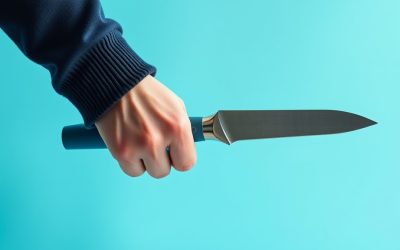
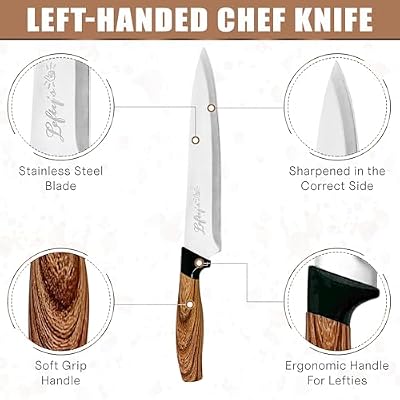
Lefty’s Left Handed Chef Knife
$21.99 — Stainless steel, LH-oriented edge geometry, ergonomic handle. Best value dedicated LH chef knife available.

5
Lefty’s Left Handed Chef Knife – Stainless Steel Durable Blade – Extra Sharp – Great for Cutting, General Purpose, Kitchen items – Gifts for Left-Handed People, Lefty, Adults, Man, and Women
In Stock



As an Amazon Associate we earn from qualifying purchases. Product prices and availability are accurate as of the date/time indicated.
RUNNER-UP
Professional LH Japanese Chef Knife
For serious cooks — LH single-bevel gyuto or yanagiba from Yoshihiro or Suisin, $80–$200+.

20
Prime
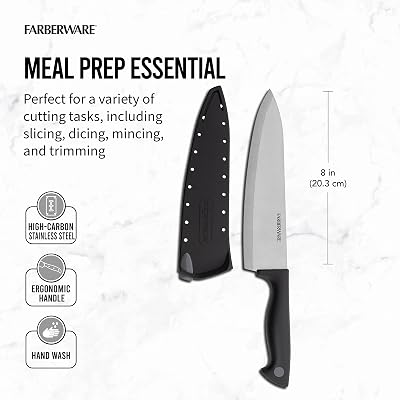
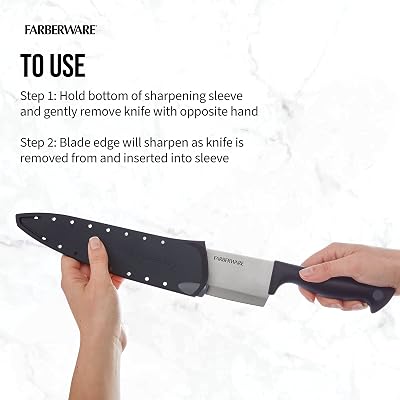
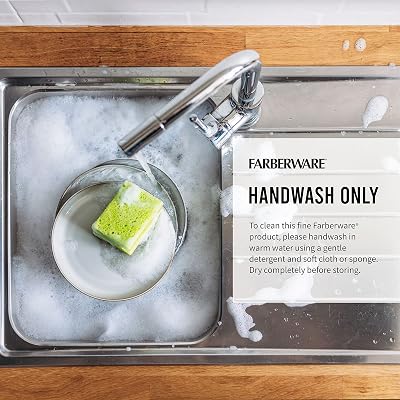
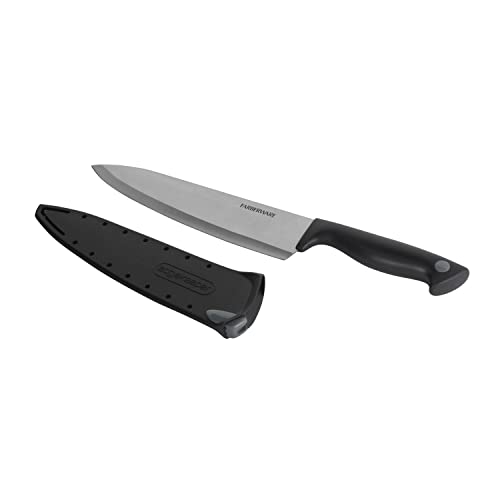
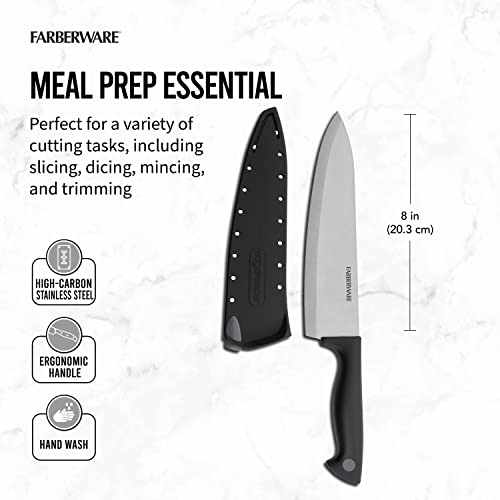
Farberware 8 Inch Chef Knife with EdgeKeeper Self-Sharpening Blade Cover, High-Carbon Stainless Steel Kitchen Knife for Slicing, Dicing, and Mincing
In Stock





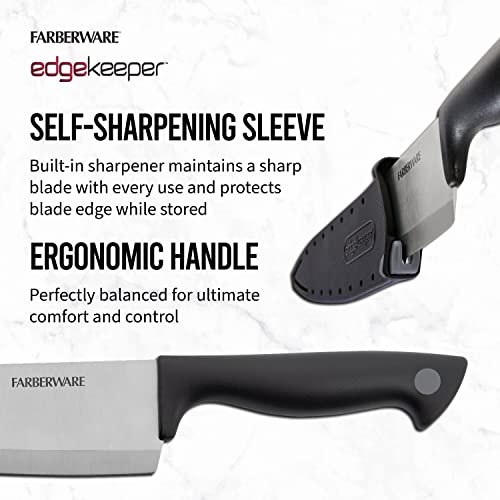
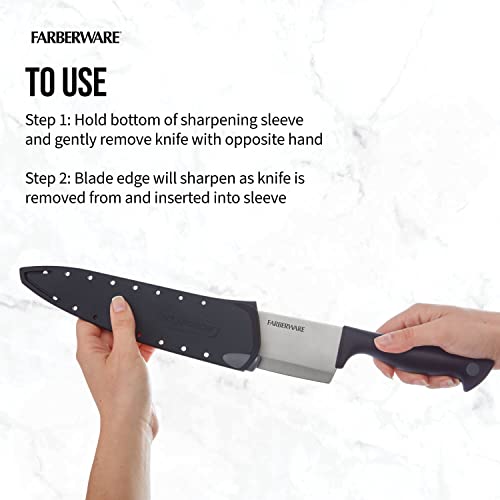
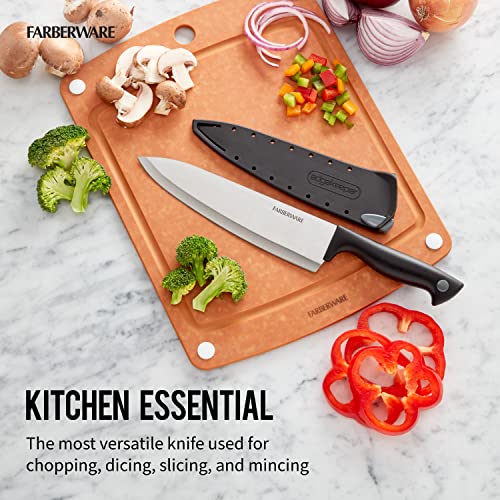
As an Amazon Associate we earn from qualifying purchases. Product prices and availability are accurate as of the date/time indicated.
BEST BUDGET
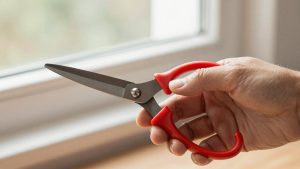
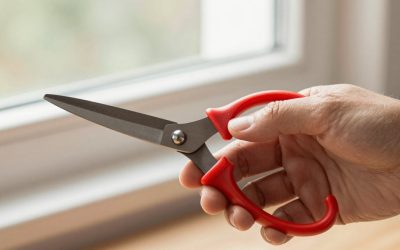
Fiskars Left-Handed Scissors — Complete your LH kitchen toolkit. Proper LH blade geometry in your prep scissors too, $9.43.

19
Prime
Fiskars Left-Handed Scissors, Precision Cutting for Craft Fabric Paper, Ergonomic Comfort Grip, Stainless Steel, 8", Red
In Stock


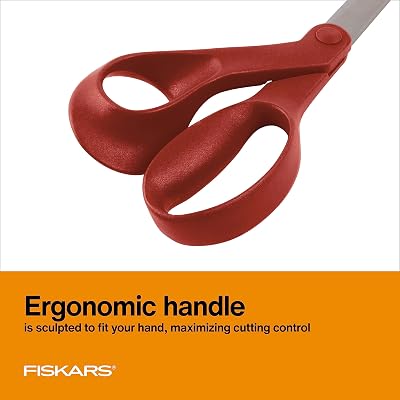


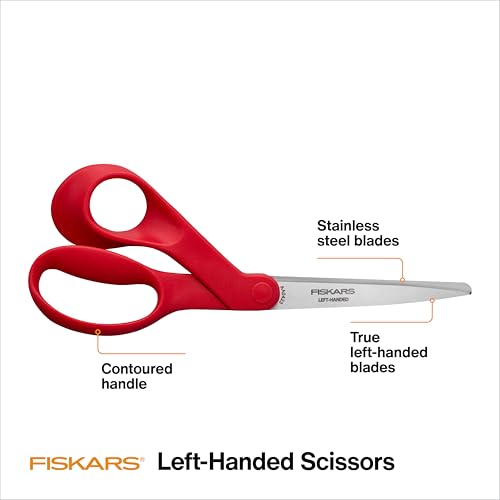
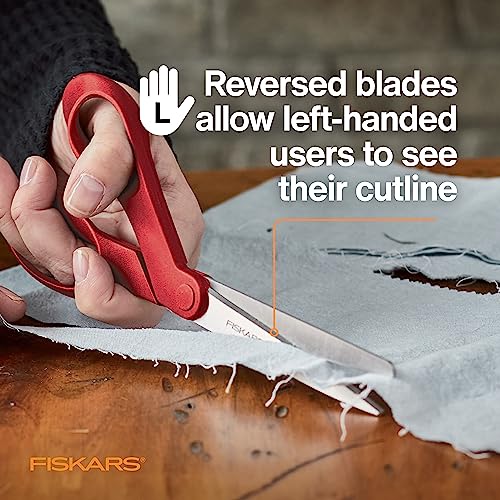
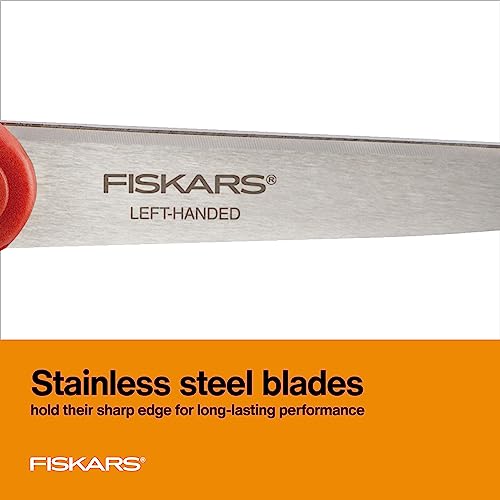
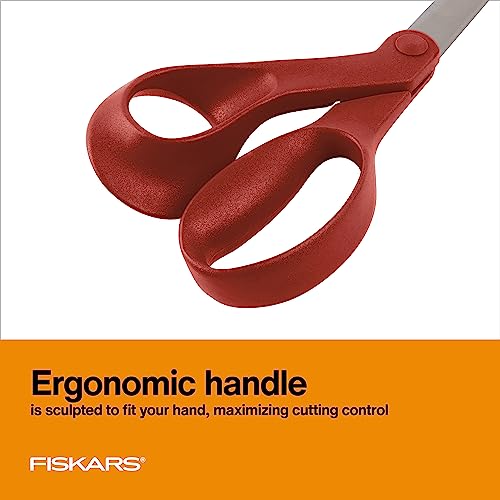
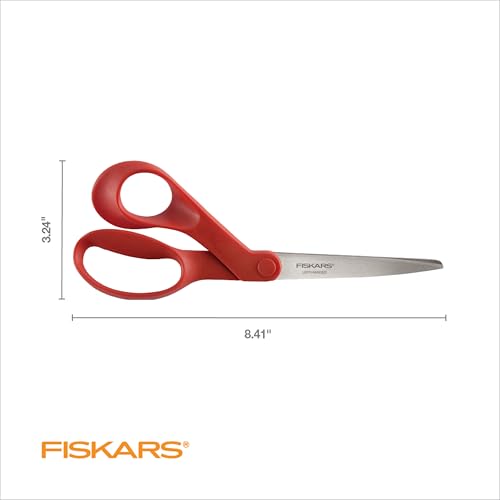

As an Amazon Associate we earn from qualifying purchases. Product prices and availability are accurate as of the date/time indicated.
The Real Reason Left-Handed Cooks Struggle: Edge Geometry Explained
Here’s what most knife guides don’t bother explaining to lefties: the problem isn’t just which hand holds the knife. It’s how the blade’s geometry interacts with your cutting motion.
Double-Bevel vs. Single-Bevel Knives
Western-style chef knives (German and most budget knives) use a double bevel (V-grind) — the edge is ground at an angle from both sides of the blade, meeting in the middle. This is symmetric and technically usable by both hands. The cutting edge doesn’t inherently favor one hand.
Japanese-style knives often use a single bevel (chisel grind) — the edge is ground on one side only. A right-handed single-bevel blade has the bevel on the right side (when the blade faces you, cutting edge down). When pulled through food with a right hand, the flat back pushes food to the left and the bevel guides the blade straight. When a lefty uses a RH single-bevel knife, the bevel actively pushes the blade toward the food, causing the cut to drift and requiring constant correction. A left-handed single-bevel knife reverses this — bevel on the left side.
The Asymmetric Bevel Problem in “Neutral” Knives
Even double-bevel Western knives can have an asymmetric grind. Many knives labeled “50/50 double bevel” are actually ground slightly more on one side — often a 60/40 or 70/30 grind, with the heavier bevel on the right side. This is subtle but means the edge has a slight directional bias toward right-handed cutting.
The Lefty’s LH Chef Knife addresses this with a grind oriented for left-hand use. The asymmetry, if present, works with left-hand cutting pressure rather than against it. For most home cooks doing prep work, this translates to straighter cuts with less steering effort.
Handle Design: Why It Matters More Than You Think
Handle offset affects wrist angle during cutting. Most Western knife handles are slightly asymmetric — a subtle palm swell on the right side of the handle provides a natural grip for right-handed users. Left-handed users gripping this handle have the swell in the wrong position, causing a slight pronation of the wrist over extended cutting sessions.
This sounds minor, and for occasional cooking it is. For anyone doing significant prep work — chopping vegetables for 20+ minutes, breaking down large cuts of meat, cooking professionally or semi-professionally — the cumulative wrist rotation adds up. LH-specific handles position the palm swell correctly, reducing wrist stress over long sessions.
The Lefty’s Chef Knife uses a neutral ergonomic handle that positions well in a left grip. It doesn’t have an exaggerated RH palm swell, making it comfortable for extended use without the wrist compensation issue.
Lefty’s Left Handed Chef Knife: Full Review
| Spec | Details |
|---|---|
| Blade material | Stainless steel (high-carbon stainless) |
| Blade length | Approximately 8″ — standard chef knife length |
| Edge type | Double bevel, LH-oriented asymmetric grind |
| Handle material | Pakkawood or composite (check current listing for exact material) |
| Handle design | Ergonomic, neutral orientation — LH-comfortable |
| Price | $21.99 |
| Best for | Home cooks, beginner to intermediate; daily prep work |
Performance Assessment
Out-of-box sharpness: Adequate for home kitchen use. Noticeably sharper than typical supermarket-brand knives. Will cut through tomato skin cleanly without sawing, which is a useful real-world test. Not razor-sharp like a $150+ Japanese knife, but appropriate and ready to use.
Vegetable prep: Onions, carrots, celery — clean cuts with minimal drift. The LH edge geometry means the blade tracks straight through dense root vegetables without the left-side pull you get from a RH-biased knife in a left hand.
Protein work: Boneless chicken, fish fillets — functional. Not a dedicated boning knife or slicer, but handles general protein prep well. Don’t use it on frozen product or bones.
Edge retention: Stainless steel holds a serviceable edge for 1–3 months of daily home cooking before needing a touch-up. Use a honing rod (steel) weekly to maintain the edge between sharpenings. When sharpening, use a whetstone or pull-through sharpener designed for the bevel angle — a 15–20° angle is appropriate for this type of knife.
Who Needs What: LH Chef Knife Buying Matrix
| Cook Type | Frequency | Recommendation | Budget |
|---|---|---|---|
| Casual home cook | 3–5 meals/week | Lefty’s LH Chef Knife | $21.99 |
| Enthusiast home cook | Daily cooking | Lefty’s LH + LH honing rod | $40–$60 total |
| Serious home chef | Daily + complex prep | LH Japanese gyuto, 210mm | $80–$150 |
| Professional / semi-pro | Extended daily use | LH single-bevel gyuto or deba | $150–$400+ |
| Gift for a lefty | Unknown | Lefty’s LH Chef Knife — safe choice | $21.99 |
Sharpening a Left-Handed Chef Knife: What Changes
Sharpening a LH knife on a whetstone requires mirroring the standard technique. For a RH double-bevel knife, the standard motion involves pushing the blade away from you on the forward stroke. For LH sharpening, the dominant hand grip and stroke direction are reversed.
For home cooks who don’t want to learn whetstone technique: a quality pull-through sharpener works adequately for stainless steel knives. The V-slot accommodates both bevel sides regardless of hand dominance. Pull-through sharpeners remove more metal per use than whetstones, so use them less frequently — when the knife is noticeably dull, not weekly.
For maintaining edge between sharpenings: a honing rod (steel) straightens the edge without removing metal. Use it before each cooking session — 3–4 strokes per side. For a LH knife, lead with the left side of the blade and work toward the right. This maintains the LH-oriented geometry.
Lefty’s LH Chef Knife: Pros and Cons
Pros
- LH edge geometry — not just a relabeled RH knife
- $21.99 makes it accessible for any budget
- Ready to use out of box — no initial sharpening needed
- Stainless steel resists rust and corrosion in kitchen environments
- Standard 8″ length handles virtually all home kitchen tasks
- Excellent gift option for left-handed cooks who’ve never had a proper LH knife
Cons
- Not a professional-grade blade — serious chefs will outgrow it
- Handle material may vary by production run — check current listing
- Not dishwasher safe — hand wash only to preserve edge and handle
- No matching LH bread knife or paring knife in the same line (yet)
- Edge retention shorter than higher-carbon Japanese steel
5
Lefty’s Left Handed Chef Knife – Stainless Steel Durable Blade – Extra Sharp – Great for Cutting, General Purpose, Kitchen items – Gifts for Left-Handed People, Lefty, Adults, Man, and Women
In Stock
As an Amazon Associate we earn from qualifying purchases. Product prices and availability are accurate as of the date/time indicated.
Also see: fiskars left handed scissors review | our left handed computer mouse ergonomic write-up | our left handed acoustic guitar beginner guide
FAQ: Left-Handed Chef Knives
Do left-handed people actually need a special chef knife?
For double-bevel Western knives: technically no, but a LH-oriented asymmetric grind makes cutting more accurate and less fatiguing. For single-bevel Japanese knives: absolutely yes — a RH single-bevel knife actively fights your cutting direction. For casual cooks using standard double-bevel knives: the difference is subtle but noticeable. For serious cooks or anyone doing extended prep: a LH-specific knife is worth it.
Can I use a regular chef knife left-handed?
Yes, most home cooks do. Double-bevel Western chef knives cut reasonably well in either hand. The issues arise with: (1) asymmetric RH-biased grinds causing slight blade drift, (2) handle offset causing wrist strain over long sessions, and (3) single-bevel Japanese knives, which are entirely unusable LH. If you’ve been cooking LH with a standard knife without issues, a LH-specific knife will improve precision but isn’t mandatory.
What’s the best way to sharpen a left-handed knife?
For home cooks: a pull-through sharpener works fine for stainless steel — no technique adjustment needed for LH vs RH. For whetstone sharpening: mirror the standard RH technique — your grip and stroke direction reverse. Plenty of YouTube tutorials exist for LH whetstone technique specifically. Maintain the original bevel angle (15–20° for the Lefty’s knife) to preserve the LH-oriented geometry.
Is the Lefty’s Chef Knife good for professional kitchen use?
At $21.99 with a stainless steel blade, no — not for professional daily use in a commercial kitchen. Professional kitchen use demands higher-carbon steel that holds an edge through 8+ hours of cutting, better balance, and more precise geometry. The Lefty’s knife is designed for home cooks. Professional lefty cooks should budget $150–$300+ for a dedicated LH Japanese gyuto or German-style professional knife.
What other left-handed kitchen tools should I have alongside a LH chef knife?
The short list: LH scissors (see our fiskars left handed scissors hands-on review) for food packaging and herb snipping, a LH peeler (Y-peeler or straight — the blade orientation on many peelers favors RH), and a LH can opener. Together these cover the most friction-causing tasks for left-handed cooks. A properly equipped LH kitchen makes cooking dramatically more enjoyable — it’s the difference between fighting your tools and working with them.
Related Guides
Frequently Asked Questions
How can a chef knife be left-handed?
Through the bevel. Traditional Japanese knives are single-bevel, ground on one face only, so a right-handed blade steers away from the cut when used in the left hand. Left-handed versions mirror that grind. Handle shape also matters, since D-shaped and octagonal handles are often cut for one hand.
Are German knives handed?
Generally not. Western knives from German and French makers use a symmetrical double bevel of roughly fifteen to twenty degrees per side, so they cut identically in either hand. That makes a good double-bevel chef knife the simplest recommendation for a left-hander who does not want to hunt for specialist stock.
What about Japanese double-bevel gyuto knives?
Most gyuto knives are double bevel but ground asymmetrically, often around seventy to thirty in favour of right-handers. That asymmetry is subtle and many left-handers never notice it, but a fifty-fifty symmetrical grind or a dedicated left-handed version cuts straighter through dense vegetables and thick protein.
Do left-handed knives cost more?
Single-bevel left-handed knives typically carry a noticeable premium and longer lead times because makers grind them to order in small batches. Symmetrical Western knives cost the same for everyone, which is another practical argument for choosing a good double-bevel blade unless you specifically need single-bevel performance.
How does sharpening differ?
Single-bevel knives are sharpened almost entirely on the ground face, with only a light deburring pass on the flat back, and left-handed versions reverse which face that is. Symmetrical knives are sharpened evenly on both sides. Pull-through sharpeners suit neither properly; a whetstone gives far better results.
Related Reviews & Guides



Left Handed Ice Cream Scoop Kitchen

Quick Picks: Best Left-Handed Box Cutters & Utility…