Last Updated: September 7, 2026
- Top Left-Handed Rotary Cutters
- Why the Blade Side Matters So Much
- Blade Sizes: Which to Choose
- Handle Ergonomics for Left-Handed Cutters
- Setting Up a Left-Handed Cutting Station
- Blade Maintenance: Don’t Cut With a Dull Blade
- Rotary Cutter Spec Comparison
- FAQ: Left Handed Rotary Cutter Questions
- Complete Your Left-Handed Quilting Kit
- Related Guides
- Frequently Asked Questions
- Related Articles
- Top Pick: Fiskars 45mm Stick Rotary Cutter for Fabric, Arts and Crafts & Sewing
- Best Value: Martelli – Left Handed 45mm Ergonomic Fabric Rotary Cutter – sewing, quilting, fashion design – designed for safe pain free fabric cutting – great if you have arthritis or carpal tunnel
- Premium Choice: Olfa Standard Rotary Cutter 60mm
As an Amazon Associate, Label Our Lefty earns from qualifying purchases. This article contains affiliate links — if you buy through them we may earn a small commission at no extra cost to you. We only recommend products we believe in.

TL;DR: A right-handed rotary cutter in a left hand cuts at the wrong angle, drags instead of rolls, and introduces measurement drift in every quilt piece. Left-handed rotary cutters have the blade on the opposite side for clean left-to-right cutting. This guide covers what to look for, which models work best, and how to set up your cutting station for accurate lefty quilting.
As an Amazon Associate we earn from qualifying purchases at no extra cost to you.


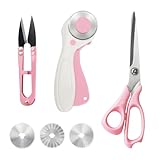

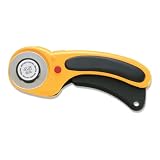

Left Handed Rotary Cutter: Accurate Quilt Cuts Start With the Right Tool
Rotary cutters are the single most-used tool in a quilter’s arsenal — used more often than the sewing machine for many quilters who do extensive pre-cutting. And they are one of the most handedness-specific tools in the craft. A right-handed rotary cutter places the blade on the right side of the handle. When a left-hander grips and rolls it, the blade angle tilts away from the ruler edge, the cut drifts, and every piece ends up slightly off. Multiply that drift across a 500-piece quilt and the problem compounds into assembly errors you cannot explain.
The fix is simple and inexpensive: buy the tool designed for your hand.
🛒 Best Price Today on Amazon
Prime members get fast, free shipping on everything above, plus member-only deals. New members get a 30-day free trial — cancel anytime.
Top Left-Handed Rotary Cutters
28
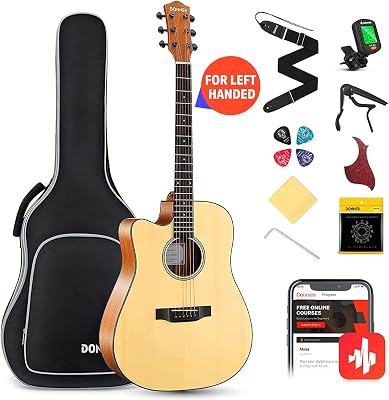
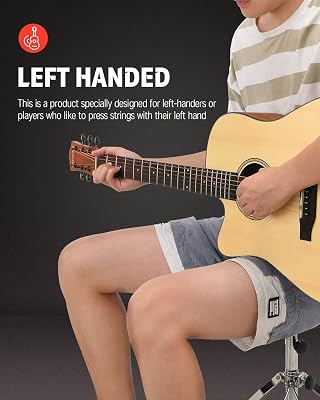
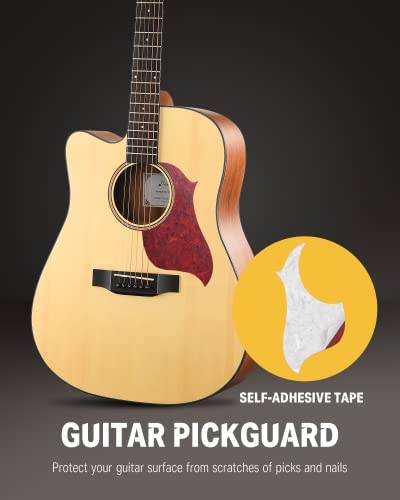
Donner Left Handed Acoustic Guitar Kit for Beginner Adult Full Size Cutaway Lefty Acustica Guitarra Bundle Set with Bag Strap Tuner Capo Pickguard String, 41 Inch, DAG-1CL
In Stock




As an Amazon Associate we earn from qualifying purchases. Product prices and availability are accurate as of the date/time indicated.

19
Prime
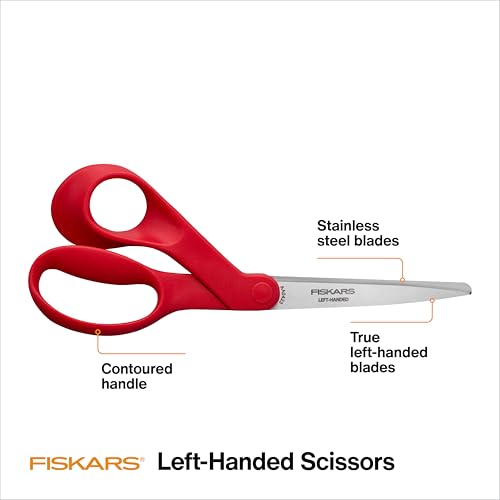
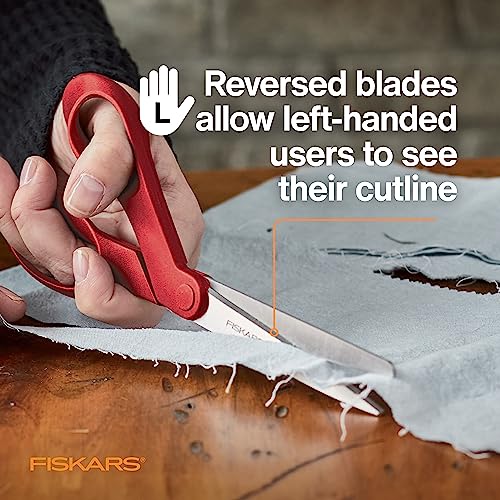
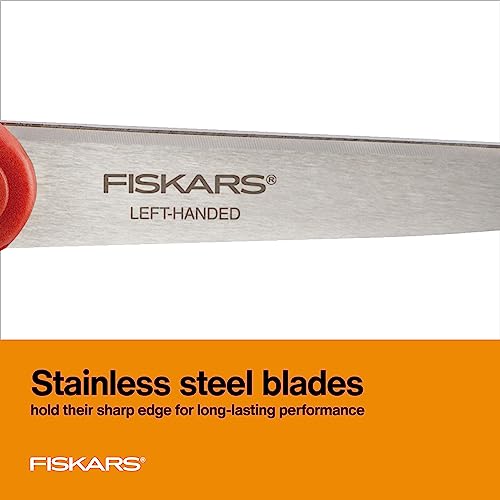
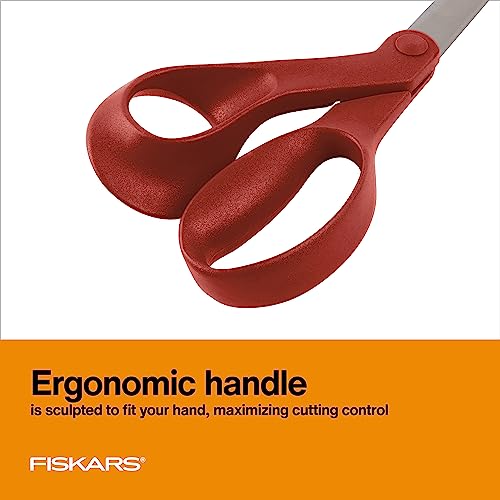
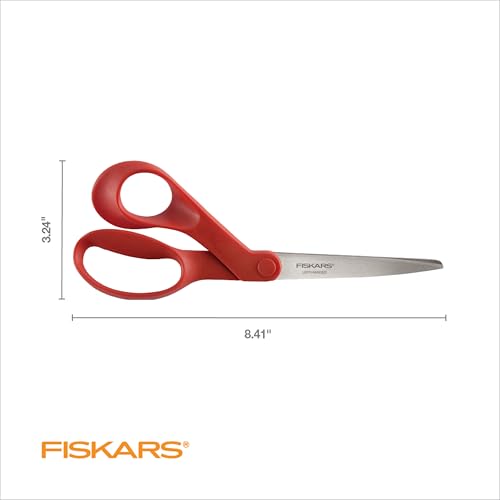
Fiskars Left-Handed Scissors, Precision Cutting for Craft Fabric Paper, Ergonomic Comfort Grip, Stainless Steel, 8", Red
In Stock





As an Amazon Associate we earn from qualifying purchases. Product prices and availability are accurate as of the date/time indicated.

9





As an Amazon Associate we earn from qualifying purchases. Product prices and availability are accurate as of the date/time indicated.
Why the Blade Side Matters So Much
On a right-handed rotary cutter, the blade mounts to the right of the handle body. The cutter rolls forward along a ruler with the blade pressing against the right side of the ruler edge — the natural pressure direction for a right hand pushing toward the right.
When a left-hander uses the same cutter rolling right-to-left (their natural direction), the blade is now on the far side of the handle from the ruler. The cutting force pulls the blade slightly away from the guide edge on every stroke. The result is a cut that wanders — not catastrophically, but consistently, in a direction that slightly undercuts your measurements.
A left-handed rotary cutter mirrors this: blade on the left side of the handle, ruler contact on the left of the blade, clean pressure against the guide for a left-to-right rolling motion. Cuts stay true.
Pair your cutter with the right sewing machine setup — our left-handed sewing machine guide for quilters covers the full cutting-to-stitching workflow.
Blade Sizes: Which to Choose
28mm — Detail and Curves
The smallest common blade size. Best for cutting curves, small shapes, applique pieces, and tight corners. The smaller diameter gives more control around curved templates. Left-handed versions in 28mm are available but slightly less common — worth seeking out for detailed work.
45mm — The Standard Workhorse
The default choice for most quilters. Cuts through up to six fabric layers cleanly, handles straight cuts and gentle curves, and fits comfortably in most hand sizes. Left-handed 45mm cutters are the most widely available LH option. If you buy one left-handed rotary cutter, this is the size to buy.
60mm — Bulk Cutting Power
The large-format cutter for cutting through eight or more layers, long straight cuts across wide fabric, and batch prepping large quilt tops. Left-handed 60mm cutters are available but at fewer retailers. Worth the search if you do high-volume cutting. The larger blade requires more hand strength — left-handed grip ergonomics matter even more at this size.
Handle Ergonomics for Left-Handed Cutters
Beyond blade placement, handle design affects long sessions significantly. Left-handers should look for:
Safety mechanism orientation: On a true left-hand cutter, the blade guard or safety button should be accessible with the left thumb without repositioning your grip. Test this before committing — some “left-hand compatible” handles still have the safety on the right side.
Grip angle: Ergonomic handles that angle the wrist slightly (often called “comfort grip” or “ergonomic” handles) reduce repetitive strain for all cutters. For left-handers, ensure the grip angle points toward the left cutting direction. A grip optimized for right-hand forward rolling will bend your left wrist the wrong way.
Trigger-style vs. loop handle: Trigger-grip cutters (where you push a button to extend the blade) give left-handers excellent blade control but require checking trigger button placement. Loop handles are ambidextrous by default but provide less wrist support during extended cutting sessions.
Setting Up a Left-Handed Cutting Station
The cutter is one piece of the equation. Your cutting station setup determines whether accuracy transfers from tool to fabric.
Cutting mat orientation: Position your mat so the measurement grid reads naturally for left-to-right cutting. For most lefties, this means the mat’s zero point is at the right side, with numbers increasing toward the left — the mirror of how right-handed cutting stations are set up. Some mats are printed on both sides for this reason.
Ruler placement: Left-handers typically hold the ruler with their right hand and cut with their left. This is the reverse of the standard tutorial position. Your right hand stabilizes; your left rolls. Ruler fingers should curl under and away from the blade path — same safety rule, mirrored execution.
Table height: Cutting requires downward pressure plus forward rolling. Your table height should allow your cutting arm to roll with a slight natural downward angle — not reaching up. For most standing-height cutters, a table that hits just below your waist works. Adjust with anti-fatigue mats underneath for longer sessions.
See our broader left-handed ergonomic desk setup for principles that translate directly to any left-hand work surface, including quilting stations.
Blade Maintenance: Don’t Cut With a Dull Blade
Left-handed quilters who used a right-handed cutter previously often compensate for drift by pressing harder. This habit carries over to the correct cutter and dulls blades faster. With a properly oriented left-hand cutter, you need significantly less pressure — let the blade do the work. Replace blades when you feel yourself pushing harder to complete a cut; that is always the blade, not your technique.
For additional left-handed cutting tools to complete your kit, our Fiskars left-handed scissors review covers trimming threads, curved cuts, and the scissors that outlast the alternatives.
Rotary Cutter Spec Comparison
| Blade Size | Best For | Max Layers | LH Availability | Typical Price |
|---|---|---|---|---|
| 28mm | Curves, applique, small shapes | 4 layers | Medium | $12–$25 |
| 45mm | General quilting, straight cuts | 6 layers | High | $15–$35 |
| 60mm | Bulk cutting, wide fabric | 8+ layers | Low–Medium | $25–$50 |
FAQ: Left Handed Rotary Cutter Questions
Can I just flip a right-handed rotary cutter over for left-hand use?
Some rotary cutters allow the blade to be remounted on the opposite side, effectively converting them to left-hand use. Check your cutter’s manual — Olfa and Fiskars both have models that support blade remounting. This works mechanically, but some handle shapes still feel unnatural in the left hand after conversion. A purpose-built left-hand model is generally preferable.
Do left-handed rotary cutters cost more?
Not significantly. Left-handed versions are priced identically to right-handed equivalents from the same brand. The price premium, if any, comes from having fewer retail sources and sometimes needing to order online rather than buying locally.
Does cutting direction (right-to-left vs. left-to-right) matter for fabric grain?
No. Fabric grain is defined by thread direction, not cutting direction. You can cut along or across grain in either direction without affecting the cut quality. What matters is that your blade stays against the ruler edge throughout the stroke — which a properly oriented left-hand cutter ensures.
My cuts still drift slightly even with a left-handed cutter. What’s wrong?
Most likely causes: dull blade (replace it), ruler walking (use a non-slip mat or ruler grips on the underside of your ruler), or cutting table too high (forces an upward angle on the stroke). Rule these out in order before assuming technique.
What cutting mat size should a left-handed quilter use?
The largest mat your workspace accommodates. A minimum of 18×24 inches for general quilting; 24×36 inches is better for cutting yardage and large quilt tops. The mat size is not handedness-specific — get the largest practical size regardless of your dominant hand.
Complete Your Left-Handed Quilting Kit
- Left-handed sewing machine for quilters — machine features, presser feet, and workspace setup
- Fiskars left-handed scissors review — trimming, thread cutting, and curved work
- Left-handed measuring tape and tools — read measurements without wrist contortion
- Left-handed garden tools and pruners — same blade-orientation principles applied to outdoor cutting tools
Accurate quilting starts at the cutting mat. Get the blade on the correct side, set up your station for left-to-right flow, and every piece that goes to your machine will be the right size — the first time.
Related Guides
Frequently Asked Questions
Why does a standard rotary cutter fail left-handers?
The blade sits on one side of the handle, so it runs against the ruler edge only when pushed in one direction. Used left-handed, the blade body rides up onto the ruler, the cut wanders away from the line, and the safety guard sits where your thumb cannot release it.
Are convertible cutters worth buying?
Yes, and they are the mainstream answer. Many well-known cutters let you unscrew the nut, move the blade to the opposite side of the handle and reassemble for left-handed use in under a minute. Check the product listing for the words left-handed conversion before you buy, as not all models allow it.
Which blade size should I use?
Forty-five millimetres is the general-purpose quilting size and handles several fabric layers. Twenty-eight millimetres suits curves and small pieces, while sixty millimetres cuts thick stacks and long straight strips quickly but is harder to steer. Change blades at the first sign of skipped threads rather than waiting for them to snag.
Which direction should I cut?
Always cut away from your body with the ruler held down by the opposite hand. Left-handers usually work from right to left along the mat, which means placing the ruler so its markings read correctly from that side. Reversible rulers with numbers printed in both directions solve this neatly.
How important is the safety mechanism?
Critical. A rotary blade is as sharp as a scalpel and most injuries happen when a cutter rolls off the table with the guard open. Choose an automatic retracting guard that closes when you release the handle, and confirm the retraction lever works in your left hand before purchase.
Related Reviews & Guides





Quick Picks: Left-Handed Drafting Ruler Sets

4 Best Left Handed Classroom Desks for School