Last Updated: October 8, 2026
- Quick picks by collecting situation
- What matters more than the case’s appearance
- Head-to-head: passive, active, and custom cases
- UV protection, lighting, and glazing
- Interior dimensions, shelving, and load capacity
- Security and power requirements
- Ownership realities: what wears first
- How to choose without overbuying
- Top Pick: The Art of Cruising. Fine art and antiques of Holland America Line
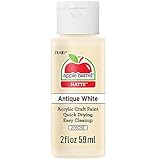
- Best Value: Apple Barrel Acrylic Paint in Assorted Colors (2 oz), 20505, Antique White
- Premium Choice: Wrapped Canvas Wall Art – Vision Studio 'Antique World Map Framed' Wall Art for Living Room, Bedroom, or Office Décor – 14×19
The best climate controlled display cases for fine art and antiques are museum-grade, sealed vitrines with active humidity control, low-heat temperature management, laminated low-iron glass, and a documented ability to hold stable conditions—not simply cabinets marketed as “dustproof.”
For most private collectors, a sealed case with humidity control of approximately 40–55% relative humidity (RH), temperature stability within ±2°F, UV-filtering glazing, and a lockable steel or hardwood frame is the best balance of protection, cost, and practicality. Extremely sensitive objects, including works on paper, historic textiles, photographs, and mixed-media pieces, may justify a custom inert-gas or microclimate case.
As an Amazon Associate we earn from qualifying purchases at no extra cost to you.



Quick picks by collecting situation
| Collector’s situation | Best case type | Target specification | Typical 2026 market range |
|---|---|---|---|
| Small, valuable object in a home | Sealed tabletop microclimate case | 40–55% RH, UV-filtering acrylic or glass, 12–24 in. interior width | $600–$2,000 |
| Painting, textile, or framed document | Freestanding climate-controlled vitrine | 40–55% RH, 60–75°F, 30–48 in. interior width, lockable base | $2,500–$8,000 |
| Several objects or a large sculpture | Modular museum-style showcase | 50–150 cu. ft., separate climate module, adjustable shelving | $7,000–$25,000+ |
| Highly sensitive or irreplaceable material | Custom conservation microclimate enclosure | Programmable RH, continuous monitoring, inert materials, redundant alarms | $10,000–$50,000+ |
What matters more than the case’s appearance
Humidity range and stability
Relative humidity is usually the most important controllable variable. Wood, ivory, parchment, paper, canvas, leather, and some composite materials expand and contract as humidity changes. A case that reaches 35–65% RH but swings repeatedly through that range may be less useful than one that maintains a narrower 45–55% band.
For general mixed collections, look for a stated operating range of 40–60% RH and an accuracy of at least ±3–5% RH. For paper, photographs, textiles, and wooden objects, a practical target is often 45–55% RH, but the appropriate set point depends on the object’s existing condition and conservation history. Do not place a newly acquired antique directly into a sharply different environment; allow gradual acclimatization and consult a conservator for fragile pieces.
Passive cases use conditioned silica gel or another humidity-buffering material. They are quiet and energy-efficient, but they require weighing, replacing, or reconditioning the buffer. Active systems use a humidifier, dehumidifier, or thermoelectric module and can respond to changing room conditions. They cost more and have pumps, fans, sensors, and filters that eventually need service.
Temperature control and heat management
Temperature control should mean stability, not merely cooling. A useful case may maintain 60–75°F with fluctuations of about ±2°F. Avoid systems that put a compressor, heater, or bright lighting directly inside the display chamber. Heat accelerates material aging and can create localized drying even when the room temperature seems comfortable.
Thermoelectric cooling is often quieter and better suited to a small case, while compressor systems can handle larger thermal loads but may transmit vibration and require more space for ventilation. Leave the manufacturer’s recommended clearance around vents. Enclosing a case tightly against a wall or furniture can cause the control system to run continuously.
Sealing and air exchange
A good seal slows the movement of outdoor moisture, pollutants, dust, and insects. Look for continuous silicone or EPDM gaskets, compression latches, sealed cable ports, and a documented leak-reduction design. Magnetic seals are convenient, but they may not compress as consistently as a gasket secured by a clamping or compression closure.
A sealed case is not automatically safe for every object. Wood, leather, and organic materials may release volatile compounds, while fresh paint, adhesives, and some plastics can off-gas. Interior finishes should be inert or isolated behind a tested barrier. If the manufacturer cannot identify the interior board, paint, adhesive, and sealant, use an archival tray or liner rather than placing the object directly on the base.
Head-to-head: passive, active, and custom cases
| Feature | Passive microclimate case | Active climate-controlled case | Custom conservation enclosure |
|---|---|---|---|
| Typical RH control | Usually 40–60%, depending on buffer quantity | Approximately 35–65%, programmable on better systems | Project-specific, often 40–55% with tight monitoring |
| Temperature control | Room temperature only | About 60–75°F on suitable models | Designed around object and room requirements |
| Power requirement | None or 5–20 W for monitoring | Typically 100–600 W while operating | Often 200–1,000 W, sometimes on a dedicated circuit |
| Noise | Silent | Approximately 25–50 dB, depending on fan or compressor | Specified during the design process |
| Maintenance | Recharge or replace buffer; inspect seals | Calibrate sensors; clean filters; service fans and pumps | Scheduled conservation and mechanical servicing |
| Best use | Small objects and stable rooms | Valuable objects needing active stability | Rare, fragile, oversized, or irreplaceable collections |
UV protection, lighting, and glazing
UV protection is necessary but does not make light harmless. Choose laminated glass or museum acrylic that blocks at least 99% of UV below approximately 400 nanometers. Low-iron glass gives a clearer view with less green tint, while acrylic is lighter and more impact-resistant but can scratch and attract dust through static. Laminated glazing also provides better security and reduces the chance of a dangerous shatter.
Specify the visible-light exposure separately. For sensitive paper, dyes, and textiles, use dimmable LED lighting outside the sealed chamber when possible. Avoid ultraviolet-producing bulbs and do not leave display lighting on continuously. A practical improvement is a motion sensor or timer that limits illumination to viewing periods.
Interior dimensions, shelving, and load capacity
Measure the object, mount, protective cradle, and the space needed to handle it. Then add clearance rather than buying to the exact dimensions. A useful formula is:
Required interior height = object height + mount height + 4 inches of handling clearance.
For example, a 22-inch sculpture on a 3-inch plinth needs at least 29 inches of clear interior height. If the case’s shelf supports, lighting, or humidity equipment occupy 3 inches, select a model with at least 32 inches of advertised internal height.
Adjustable shelves should use pinned or mechanically secured supports rather than friction alone. Check both the total load and the point load: a shelf rated for 100 pounds may still be unsuitable if a narrow stone base concentrates 70 pounds in one small area. Shelves made from powder-coated steel, anodized aluminum, or sealed glass are preferable to unsealed particleboard.
Security and power requirements
For valuable pieces, choose a five-point or similarly substantial lock, concealed hinges, laminated glazing, and a base that can be bolted to the floor or wall. A case alarm is useful only if it produces a local alert or connects to a monitored security system. Ask whether the alarm detects door opening, glass impact, temperature excursions, humidity excursions, and power failure.
Active cases commonly draw 100–600 watts. At an electricity rate of $0.18 per kilowatt-hour, a 250-watt system operating continuously would cost about $1.08 per day:
0.25 kW × 24 hours × $0.18 = $1.08 per day
That equals roughly $395 per year before maintenance. Real consumption will vary because cooling and humidification cycle on and off. Use a dedicated surge-protected outlet, avoid extension cords, and confirm whether the unit resumes its set point after an outage. For an irreplaceable object, add a battery-backed data logger or an uninterruptible power supply sized for the controller and alarm; a large cooling system may require a professionally designed backup circuit.
Ownership realities: what wears first
- Door gaskets: They flatten, crack, or lose elasticity. Inspect them annually and replace them when the case can no longer maintain its normal humidity.
- Humidity sensors: Many drift over time. Compare the built-in reading with a recently calibrated independent data logger at least once a year.
- Filters and fans: Dust buildup reduces airflow and increases noise. Clean accessible filters according to the service schedule.
- Humidity buffers: Passive media eventually become exhausted. Mark the installation date and replace or recondition them before the case begins cycling widely.
- Acrylic glazing: It scratches easily. Use a clean microfiber cloth and a manufacturer-approved cleaner; never use abrasive household glass products.
- Shelving hardware: Recheck fasteners after moving the case. A small loosened bracket can become a serious fall risk.
How to choose without overbuying
Start with the most sensitive material in the collection, not the largest object. For a stable room and one small object, a passive sealed case with an independent data logger may be sufficient. If the room experiences seasonal humidity swings, choose an active system. If the object has flaking paint, friable surfaces, mold history, major dimensional movement, or exceptional financial and cultural value, involve a professional conservator before selecting a set point or transferring it into a sealed enclosure.
The strongest purchase is the case with published humidity and temperature tolerances, measured interior dimensions, glazing specifications, sound power information, service access, replacement-part availability, and a clear warranty. Decorative furniture can display art; the best climate-controlled case also documents and maintains the environment that keeps it safe.
Related Reviews & Guides



6 Best Left-Handed Guitar Fenders 2026

6 Best Left Handed Mice For Computer 2026