Last Updated: October 11, 2026
- Quick comparison: the best drones under 250 grams
- Best overall: DJI Mini 4 Pro
- Best value: DJI Mini 4K
- Best for endurance: DJI Mini 3
- Best for quick, hands-free clips: DJI Neo and HoverAir X1
- Choose by situation
- What “under 250 grams” changes in practice
- Ownership costs and maintenance that listings omit
- Bottom line
- Top Pick: DJI Mini 4K, Drone With 4K UHD Camera, Under 249 g
- Best Value: DJI Mini 4K Camera Drone Combo, Drone with 4K UHD Camera for Adults, Under 249 g, 3-Axis Gimbal Stabilization, 10km Video Transmission, Auto Return, 2 Batteries for 62-Min Max Flight Time, QuickShots
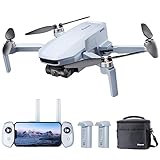
- Premium Choice: Potensic ATOM SE GPS Drone with 4K EIS Camera, Under 249g, 62 Mins Flight, 4KM FPV Transmission, Brushless Motor, Max Speed 16m/s, Auto Return, Lightweight and Foldable Drone for Adults Beginner
The best drones under 250 grams are the DJI Mini 4 Pro for advanced camera work, the DJI Mini 4K for value, the DJI Neo for hands-free selfie flying, and the DJI Mini 3 for long battery life at a lower price.
Staying below 250g makes a drone easier to carry and may simplify registration in some jurisdictions, but the weight limit is not a universal exemption from aviation rules. In the United States, a sub-250g drone used recreationally generally does not need FAA registration, although the pilot still needs TRUST certification and must follow airspace, safety, and Remote ID rules where applicable. Commercial operators need to check Part 107 requirements. In the UK and EU, a camera drone can still require operator registration even when it weighs under 250g.
As an Amazon Associate we earn from qualifying purchases at no extra cost to you.



Quick comparison: the best drones under 250 grams
| Drone | Weight | Advertised flight time | Camera | Best for |
|---|---|---|---|---|
| DJI Mini 4 Pro | 249g standard battery | Up to 34 minutes; up to 45 with Intelligent Flight Battery Plus, where permitted | 1/1.3-inch CMOS, 48MP stills, 4K/60 HDR video, vertical shooting | Best overall image quality and safety features |
| DJI Mini 3 | Under 249g standard battery | Up to 38 minutes; up to 51 with Plus battery, where permitted | 1/1.3-inch CMOS, 48MP stills, up to 4K/30 video, vertical shooting | Long flight time and social-video work |
| DJI Mini 4K | 246g | Up to 31 minutes | 1/2.3-inch CMOS, 12MP stills, up to 4K/30 video | First-time buyers on a budget |
| DJI Neo | 135g | Up to 18 minutes | 1/2-inch CMOS, 12MP stills, 4K/30 video | Quick personal clips and simple tracking |
| HoverAir X1 | 125g | Up to 11 minutes | 2.7K video, 12MP stills | Hands-free indoor and outdoor follow shots |
Flight times are laboratory maximums. Wind, cold weather, aggressive flying, obstacle avoidance, and the reserve needed to land safely reduce usable time. A more realistic planning figure is about 70% to 80% of the advertised maximum.
Best overall: DJI Mini 4 Pro
The DJI Mini 4 Pro is the strongest choice when portability matters but image quality cannot be compromised. Its 1/1.3-inch sensor, wide f/1.7 aperture, 48MP stills, 4K/60 HDR video, and true vertical shooting cover travel, real-estate details, landscapes, and social media without moving to a heavier drone.
It is also the most capable option here for avoiding obstacles. Omnidirectional sensing and automated return-to-home features provide more protection than the simpler systems on budget models, though no sensor can see every branch, wire, or person. The standard battery keeps the aircraft below 250g; the optional Plus battery improves endurance but can raise the takeoff weight above the threshold, so check local rules and the exact configuration.
Choose it if you frequently fly, edit footage seriously, or want a drone that will not feel limiting after a few months. Its drawbacks are price, more settings to learn, and higher replacement costs for batteries and propellers.
Best value: DJI Mini 4K
The DJI Mini 4K is the sensible starting point for pilots who want stabilized 4K video without paying for advanced sensing or professional image features. At 246g, it remains comfortably below the 250g mark in its standard configuration. Its 1/2.3-inch sensor is smaller than the Mini 3 and Mini 4 Pro sensors, so low-light footage shows noise sooner, but daylight video is sharp enough for holidays, property progress records, and family events.
Its up-to-31-minute advertised flight time is adequate for learning basic controls. The missing features are more important than the headline resolution: it does not provide omnidirectional obstacle sensing, vertical camera rotation, or the same high-dynamic-range flexibility as the Mini 4 Pro. Keep it within clear visual range and leave extra space around trees and buildings.
For occasional use, the Mini 4K usually offers the lowest total cost among conventional GPS camera drones. A kit with two or three batteries is more useful than buying a premium controller immediately.
Best for endurance: DJI Mini 3
The DJI Mini 3 is a particularly good match for travel photographers and left-handed pilots who want time to compose rather than constantly land and change batteries. Its 1/1.3-inch sensor, 48MP stills, 4K/30 video, and rotating camera support vertical recording. Its standard battery is rated for up to 38 minutes, longer than the standard battery figures of the Mini 4 Pro and Mini 4K.
The trade-off is older and simpler flight assistance. It lacks the Mini 4 Pro’s omnidirectional obstacle sensing and newer subject-tracking capabilities. That does not make it unsafe, but it places more responsibility on the pilot to scan the route and maintain clearance.
For a left-handed operator, the important question is not which hand is “correct.” It is whether the controller layout, stick mode, and app gestures can be configured comfortably. Practice hovering with both sticks at low altitude, then assign camera controls so that you do not need to remove your dominant hand from the flight stick.
Best for quick, hands-free clips: DJI Neo and HoverAir X1
The DJI Neo and HoverAir X1 are different from traditional camera drones. They are designed around automated takeoff, landing, orbiting, and follow modes rather than detailed manual piloting.
The DJI Neo weighs 135g and records up to 4K/30 video. It is the better pick when you want a compact aerial camera that can also be controlled with a phone, remote controller, or selected gesture and tracking modes. Its 18-minute maximum flight time is modest, and the small sensor is less suitable for dim scenes.
The 125g HoverAir X1 is even simpler and particularly convenient for walking, cycling, or short talking-to-camera clips. Its 2.7K ceiling and approximately 11-minute maximum flight time make it a specialist rather than a replacement for a Mini-series drone. Its enclosed propeller design is useful around people and indoors, but you should still avoid crowded spaces, loose hair, curtains, and pets.
Choose by situation
| Your situation | Recommended choice | Why |
|---|---|---|
| First drone, limited budget | DJI Mini 4K | Stable GPS flight and 4K video without premium features you may not use |
| Frequent travel and long sessions | DJI Mini 3 | Long standard-battery endurance and a larger sensor |
| Professional-looking travel footage | DJI Mini 4 Pro | Better HDR video, vertical shooting, tracking, and obstacle sensing |
| Short self-filmed clips | DJI Neo | Low weight and automated flight modes |
| Walking or indoor follow shots | HoverAir X1 | Simple operation and protected propellers |
What “under 250 grams” changes in practice
The weight threshold affects paperwork, not physics. A 249g drone can still injure someone, damage property, invade privacy, or be carried into restricted airspace. Check the aviation authority rules for the country where you will fly, look up temporary flight restrictions, and do not assume that a park permits takeoff merely because it has open space.
Also calculate the aircraft’s takeoff weight, not just the advertised body weight. A Plus battery, propeller guards, a third-party light, or a camera accessory may push the drone above 250g. If remaining below the threshold is important, weigh the complete flying configuration on a small digital scale.
Ownership costs and maintenance that listings omit
A realistic flight plan is more useful than the maximum specification. For example, with a Mini 4K rated for 31 minutes, planning around 23 minutes of usable airtime leaves roughly eight minutes for wind, return-to-home, and landing reserve. A two-battery outing therefore gives about 46 practical minutes, not 62. That is enough for several short flights, but not for one uninterrupted hour.
- Propellers wear first. Replace them after a strike, visible nick, bend, or unexplained vibration. Do not straighten damaged blades.
- Batteries age. Store them partly charged, keep them cool and dry, and retire packs that swell, become unusually hot, or lose capacity quickly.
- Clean after dusty flights. Use a soft brush or air blower around motors and gimbal openings. Avoid forcing grit deeper into the bearings.
- Check the gimbal before takeoff. Remove the transport protector, confirm that the camera moves freely, and ensure the lens is clean.
- Do not rely on return-to-home blindly. Set an appropriate altitude, confirm the home point, and remember that a return path may contain trees or buildings.
Bottom line
Buy the DJI Mini 4 Pro if camera quality, safety assistance, and long-term capability matter most. Choose the DJI Mini 4K for the lowest-cost entry into stabilized 4K aerial video, or the DJI Mini 3 when longer standard-battery flight time is the priority. For effortless personal clips, the DJI Neo and HoverAir X1 are lighter and easier, but they sacrifice endurance and manual control. Whichever model you choose, verify the rules where you fly and treat the 250g limit as a regulatory detail—not a substitute for careful piloting.
Related Reviews & Guides


Best Label Makers for Home Organization in 2026: Jars, Bins & Storage
6 Best Left Handed Guitar Players 2026