Last Updated: October 11, 2026
- Top 3 Picks
- Quick Comparison
- How We Chose
- 1. VEVOR Single Tap Kegerator – Best for First-Time Home Draft Setups
- 2. VEVOR Beer Kegerator, Dual Tap – Best for Two-Beer Households on a Value Budget
- 3. MRbrew Single Tap Draft Beer Tower – Best Budget Tower for Countertop and Kegerator Mounting
- 4. HXILAJM Beer Faucet Wrench – Best for Leak-Free Tap Hardware and Maintenance
- 5. PEAKCOLD Commercial Kegerator, 48″ Wide, 2 Tap – Best Premium Two-Tap Cabinet for a Home Bar
- 6. PEAKCOLD Commercial Kegerator, 60″ Wide, 4 Tap – Best Premium for Four-Beer Variety
- 7. PEAKCOLD Commercial Kegerator, 72″ Wide, 4 Tap – Best for the Largest Home and Light-Commercial Draft Setups
- 8. EdgeStar KC2000SSTWIN – Best Overall for Most Homes
- 9. MRbrew Beer Tap Cover, 10 Pieces – Best for Keeping Faucets Sanitary Between Pours
- 10. Ferroday Single Beer Tap Draft Kegerator Tower, 3″ – Best Budget Tower for DIY Builds
- 11. MRbrew 128 oz Mini Keg Growler Mini Kegerator – Best for Small Spaces and Low-Volume Draft
If you want the short answer: for most homes, the best overall premium kegerator for a home draft beer system is the EdgeStar KC2000SSTWIN — a full-size, dual-tap, stainless-steel unit that accepts a standard 15.5-gallon half-barrel keg, holds serving temperature in the mid-to-high 30s Fahrenheit, and opens wide enough to swap a keg without pulling the tower. It suits the household that wants two beers on tap and a cabinet that looks deliberate in a kitchen, basement bar, or garage taproom. If you pour for crowds and want commercial-grade construction, the PEAKCOLD 60″ four-tap is the best premium pick, with a footprint and build quality closer to a bar back than a fridge. If you are working to a tight budget or upgrading an existing kegerator, the Ferroday 3″ single-tap tower is the best budget starting point, and the VEVOR single-tap is the best value complete kit. Everything below is compared on keg capacity, temperature control, tap hardware, line-cleaning access, footprint, finish quality, and installation needs.
Top 3 Picks
Best overall: EdgeStar KC2000SSTWIN
The KC2000SSTWIN is the pick for the widest range of homes because it balances real capacity with a footprint that still fits a normal kitchen alcove. It takes a full-size keg, gives you two faucets, and wraps the whole thing in stainless steel that resists the scuffs and fingerprints a garage or basement environment throws at it. If you only buy one kegerator and you want it to last a decade, start here.
Best premium: PEAKCOLD 60″ Wide, 4 Tap
This is the kegerator you buy when “home bar” means a real bar. Sixty inches of commercial stainless, two doors, four taps, and forced-air cooling designed to recover temperature fast after the doors open. It is oversized for a typical kitchen and ideal for a dedicated taproom, clubhouse, or a home that regularly hosts thirty or more people.
Best budget: Ferroday 3″ Single Beer Tap Tower
Not everyone needs a whole cabinet. If you already own a chest freezer, a converted fridge, or a countertop jockey box, a tower is the cheapest route to a real draft pour. The Ferroday single-tap tower gives you a 3″ column and a standard faucet mounting pattern for a fraction of a complete kegerator’s cost, and it pairs with the HXILAJM wrench and the MRbrew tap covers to make a complete low-cost dispensing setup.
Quick Comparison
| Product | Best for | Key specs | Price tier |
|---|---|---|---|
| VEVOR Beer Kegerator, Single Tap | First-time single-beer home setups | Full-size keg capacity, D-system coupler, one faucet, adjustable thermostat, casters | Mid-range |
| VEVOR Beer Kegerator, Dual Tap | Two beers on tap at a value price | Full-size keg capacity, D-system coupler, two faucets, dual-line tower | Mid-range |
| MRbrew Single Tap Draft Beer Tower | Replacing or upgrading an existing tower | 3″ column, stainless-core faucet, countertop or kegerator mounting | Budget |
| HXILAJM Beer Faucet Wrench | Maintenance, leak fixes, hardware swaps | 26 mm open-end hex spanner, heavy-duty steel, fits standard tap nuts | Budget |
| PEAKCOLD Commercial Kegerator, 48″ 2 Tap | Premium two-tap home bar | 48″ wide, two doors, two taps, commercial stainless, forced-air cooling | Premium |
| PEAKCOLD Commercial Kegerator, 60″ 4 Tap | Premium four-beer variety for hosts | 60″ wide, two doors, four taps, commercial stainless, forced-air cooling | Premium |
| PEAKCOLD Commercial Kegerator, 72″ 4 Tap | Largest home and light-commercial builds | 72″ wide, three doors, four taps, commercial stainless, high-volume cabinet | Premium |
| EdgeStar KC2000SSTWIN | Best overall for most homes | Full-size keg capacity, dual tap, stainless steel, two-faucet tower | Mid-range |
| MRbrew Beer Tap Cover, 10 Pieces | Keeping faucets sanitary between pours | Ten rubber caps, friction-fit, fits standard draft faucets | Budget |
| Ferroday Single Beer Tap Tower, 3″ | Budget countertop and kegerator builds | 3″ column, single faucet, countertop or cabinet mounting | Budget |
| MRbrew 128 oz Mini Keg Growler | Small-space and low-volume draft | 128 oz (1 gallon) capacity, self-contained mini dispenser system | Mid-range |
How We Chose
This roundup is built from published manufacturer specifications, category standards for draught dispensing, and the physical realities of running a keg line in a house. We did not test, benchmark, or own any of these units. Instead, we screened each product against a fixed set of criteria: how much beer it actually holds, how precisely and how quickly it holds temperature, what tap hardware it ships with, whether the beer line and coupler can be reached for cleaning without emptying the cabinet, how much floor and wall space it consumes, how the finish holds up to moisture and traffic, and what installation work the buyer has to do themselves.
We also weighted the upgrade path. A kegerator is a system, not an appliance — the cabinet, the tower, the faucet, the coupler, the regulator, and the line all age at different rates. A product earns a place here if it either anchors a system well or fills a gap that the anchors leave open, which is why this list includes three PEAKCOLD commercial cabinets, two VEVOR value kits, one mainstream dual-tap anchor, two towers, a faucet wrench, a set of tap covers, and a one-gallon mini dispenser. Budget, mid-range, and premium tiers are assigned by build class and materials, not by any single day’s price.
1. VEVOR Single Tap Kegerator – Best for First-Time Home Draft Setups
As an Amazon Associate we earn from qualifying purchases at no extra cost to you.

The VEVOR single-tap kegerator is aimed squarely at the person who has never run a keg line before and wants one box to solve the problem. It is a full-size keg refrigerator with a D-system coupler — the Sanke D is the standard US commercial keg connection, which means you can walk into almost any liquor store, taproom, or distributor and walk out with a keg that fits without adapters. One faucet, one beer, one set of instructions.
Who it suits: a single household with one favourite beer, a garage or basement setup where cosmetics matter less than function, or a first kegerator that will later become the backup unit when the owner upgrades. It is also a reasonable choice for a workshop, a small home bar, or a rental where the owner does not want to invest heavily in cabinetry.
Key specs
- Keg capacity: one full-size half-barrel keg (15.5 US gal / 58.7 L), or smaller kegs such as a pony or sixtel with the same D coupler
- Coupler: D system (Sanke D), the US industry standard
- Taps: single faucet on a tower
- Temperature control: adjustable thermostat, generally in the 34–42 °F band typical of this class
- Cabinet: full-size refrigerator format with a black body and a stainless-steel door option, on casters
- Included hardware: typically a CO2 regulator, a 5 lb CO2 tank, gas and beer line, a coupler, and a drip tray
- Installation: plug in, set the thermostat, connect the regulator, purge, and pour — no plumbing required
Strengths
The value proposition is the headline. You get a complete, working draft system — cabinet, tower, faucet, coupler, regulator, tank, and lines — for less than the cost of most mid-range cabinets alone. The D-system coupler removes a whole category of compatibility headaches. The casters mean you can roll it out to clean behind it, which sounds trivial until you own a kegerator and discover that spilled beer finds its way under everything. Because it is a single-tap unit, the tower is short and the interior is uncluttered, so reaching the coupler and the beer line for cleaning is genuinely easy compared with a four-tap commercial cabinet.
Pros
- Complete system in one purchase, including gas hardware
- Standard Sanke D coupler works with nearly every commercial keg sold in the US
- Simple single-tap layout keeps cleaning access straightforward
- Casters make the cabinet movable for floor cleaning and service
- Lowest entry cost of any complete kegerator in this roundup
Cons
- One tap means one beer on draft at a time — no variety for guests
- Dial thermostat rather than a digital controller on this class of unit, so temperature is set by feel rather than by number
- Finish quality is functional; the cabinet is not furniture-grade
- Single-pressure regulator, so you cannot run two beers at different carbonation levels
- Tower is not insulated to the standard of premium units, which matters more in a hot garage
How it compares
The nearest alternative is the VEVOR dual-tap version, and the decision comes down to one question: will you ever want two different beers on at once? If yes, pay the difference up front, because adding a second faucet later means a new tower, a second beer line, a second coupler, and often a second regulator — usually more than the price gap between the two units. If you genuinely drink one beer at a time, the single-tap model saves money and keeps the interior simpler to clean. Against the EdgeStar KC2000SSTWIN, the VEVOR trades finish quality and dual-tap capability for a lower entry price, which is the right trade for a garage build and the wrong one for a finished kitchen.
2. VEVOR Beer Kegerator, Dual Tap – Best for Two-Beer Households on a Value Budget

The dual-tap VEVOR is the same basic platform as the single-tap unit with a two-faucet tower and the extra internal plumbing to feed it. That means two beers on draft from a single cabinet, usually one full-size keg plus a smaller pony or sixtel, or two smaller kegs side by side. It is the value answer to the most common complaint about single-tap kegerators: the house has one IPA drinker and one lager drinker, and someone always loses.
Who it suits: couples and roommates with different tastes, anyone who hosts regularly, and buyers who want variety without stepping up to commercial pricing. It also suits the person who wants a “house beer” plus a rotating seasonal tap.
Key specs
- Keg capacity: full-size cabinet; typically one half-barrel plus one smaller keg, or two smaller kegs depending on configuration
- Couplers: D system (Sanke D) — confirm the listing specifies two couplers if you plan to run two kegs simultaneously
- Taps: two faucets on a single tower
- Temperature control: adjustable thermostat in the standard 34–42 °F class range
- Cabinet: full-size refrigerator format, black with stainless door option, casters
- Gas: single CO2 regulator and tank feeding a split gas line, unless the listing specifies a dual-body regulator
- Installation: same plug-and-play profile as the single-tap model, plus a second line to purge and balance
Strengths
Two taps transform how a kegerator gets used. Instead of committing 15.5 gallons to one beer — roughly 124 twelve-ounce pours — you can run a sixtel of something experimental next to a half-barrel of the house standard and let guests choose. The cabinet itself is unchanged, so you are not giving up floor space for the extra faucet. Cleaning is still manageable because the tower is short and both lines run straight down into an open interior. And the price still lands in the mid-range tier, well below any commercial cabinet.
Pros
- Two beers on draft without a larger footprint
- Same standard D-system compatibility as the single-tap model
- Short tower and open interior keep line cleaning practical
- Lets you run a big keg and a small keg together, which is the cheapest way to add variety
- Strong value relative to dual-tap units from mainstream appliance brands
Cons
- Single-pressure gas setup means both beers pour at the same regulator setting, which forces compromises on carbonation
- Two faucets on an uninsulated tower can sweat in humid rooms
- Dial thermostat rather than digital readout
- Interior gets tighter once two kegs and two lines are inside
- Finish is durable but plainly utilitarian
How it compares
Against its single-tap sibling, the dual-tap is the better long-term buy for almost anyone who entertains, because retrofitting a second tap later costs more than the upgrade does now. Against the EdgeStar KC2000SSTWIN, the VEVOR dual-tap gives up stainless-steel build quality and brand support in exchange for a lower price, and it gives up the EdgeStar’s tighter temperature consistency. If the kegerator lives in a garage and the budget is firm, the VEVOR wins. If it lives indoors and you want it to look intentional, the EdgeStar is worth the step up.
3. MRbrew Single Tap Draft Beer Tower – Best Budget Tower for Countertop and Kegerator Mounting

A tower is the part of a draft system that people actually touch, and it is also the part most likely to be the weak link in a budget build. The MRbrew single-tap tower is designed to mount either on a countertop — over a hole drilled through the counter into a cold space below — or directly on top of an existing kegerator cabinet. The stainless core faucet is the detail that matters here: a stainless contact surface resists the pitting and off-flavours that plated brass can develop over years of acidic beer contact.
Who it suits: someone converting a chest freezer or an under-counter fridge into a draft system, someone whose original tower is dented, leaking, or sweating badly, and anyone building a kegerator from parts rather than buying a complete unit. It is also a sensible spare to keep on the shelf if you run multiple taps and cannot afford downtime.
Key specs
- Type: single-faucet draft tower
- Column: 3″ diameter class, the standard size for most kegerator and countertop mounting holes
- Faucet: stainless-core beer faucet
- Mounting: supports both countertop installation and kegerator-top installation
- Connection: standard beer-line and shank threading compatible with common 3/16″ ID draft line
- Installation needs: a hole saw in the correct diameter, a shank and nut, a beer line with a tailpiece, and a faucet wrench for final tightening
Strengths
The core value of a standalone tower is that it decouples the dispensing hardware from the cold box. You can buy the cheapest reliable refrigerator you can find, cut one hole, and put a quality tower on top, which usually beats buying a complete budget kegerator where the tower is the first thing to fail. The stainless-core faucet resists the corrosion that shortens the life of cheaper taps, and the 3″ column diameter matches the overwhelming majority of existing mounting holes, so replacement is often a direct swap rather than a fabrication job. Because the tower is simple — one column, one faucet, no manifold — it is also the easiest configuration to clean and the least likely to hide a leak.
Pros
- Cheapest way to add a real draft faucet to an existing cold space
- Stainless-core faucet resists pitting and flavour carryover
- Standard 3″ column fits most existing mounting holes
- Single-tap simplicity means fewer joints and fewer leak points
- Works for both countertop and kegerator-top builds
Cons
- Tower only — no cabinet, no coupler, no regulator, no gas hardware
- Single tap limits you to one beer
- Uninsulated or lightly insulated columns can sweat in humid rooms
- Requires you to drill and seal a hole, which is a real commitment on a finished counter
- Installation quality depends entirely on your own shank and line work
How it compares
The closest alternative in this list is the Ferroday single beer tap tower, also a 3″ budget tower. The two occupy nearly the same position: both are single-faucet, standard-diameter towers aimed at DIY builds. The practical difference is faucet hardware and finish detail, so choose on the faucet material and the mounting hardware included rather than on the column. Against the complete VEVOR kegerators, a tower is the right purchase only if you already have a cold box — otherwise you are buying a component and still need a cabinet, a coupler, a regulator, and a CO2 tank, which quickly erases the savings.
4. HXILAJM Beer Faucet Wrench – Best for Leak-Free Tap Hardware and Maintenance

The least glamorous product in this roundup is also the one that prevents the most common home draft failure: a slow leak at a nut that was never properly tightened. The HXILAJM beer faucet wrench is a heavy-duty 26 mm metric open-end hex spanner sized for the hex nuts found on draft beer taps, shanks, and couplers. Twenty-six millimetres is a size that shows up repeatedly in draft hardware, which makes a single dedicated spanner more useful than a general-purpose adjustable wrench.
Who it suits: every kegerator owner, but especially the person assembling a system from parts, the person chasing a mystery CO2 loss, and the person who has ever chewed up a chrome nut with pliers. It is also the right tool to keep in the drip tray area so it is never more than arm’s reach away when a faucet starts dripping.
Key specs
- Type: open-end hex nut spanner
- Size: 26 mm metric
- Build: heavy-duty steel, intended for repeated use on chrome and stainless hardware
- Applications: draft beer tap nuts, shank nuts, coupler hex fittings, and other standard keg spanner duties
- Price tier: budget — a single-digit-to-low-double-digit accessory in most markets
Strengths
A properly sized open-end spanner grips a hex nut on four flats instead of two, which spreads the load and lets you reach the correct torque without rounding the corners. That matters because draft hardware is almost always chrome-plated brass or stainless, and both deform permanently once a corner is stripped. An adjustable wrench is the wrong tool for the job — it opens under load and concentrates force on two points. The dedicated 26 mm spanner also gets into the tight space between a faucet and a tower column, where a bulky adjustable head will not fit at all. For a few dollars, it converts a frustrating repair into a thirty-second job.
Pros
- Correct 26 mm size for common draft hardware
- Open-end design grips four flats, reducing the risk of stripping chrome nuts
- Heavy-duty steel handles real torque
- Slim profile fits between faucets and tower columns
- Very low cost relative to the damage it prevents
Cons
- Single-size tool — it will not fit every nut on a system
- No ratcheting action, so tight quarters require patience
- Not a substitute for a full maintenance kit if you own commercial hardware
- Easy to misplace because it is small and used infrequently
How it compares
There is no direct alternative elsewhere in this list, which is precisely why it belongs here: every other product on this page assumes you can tighten a faucet properly. The nearest functional neighbour is the MRbrew tap cover set, and the two do different jobs — the wrench fixes hardware, the covers protect the spout between pours. Buy both. A kegerator owner who owns a correctly sized spanner and a set of sanitary caps will spend dramatically less time troubleshooting foam, drips, and flat beer than one who owns neither.
5. PEAKCOLD Commercial Kegerator, 48″ Wide, 2 Tap – Best Premium Two-Tap Cabinet for a Home Bar

The PEAKCOLD 48″ two-tap is the smallest of the three commercial cabinets here and the most realistic premium option for a dedicated home bar. It is a 48-inch-wide, two-door, commercial-grade stainless unit with two taps — roughly twice the width of a residential kegerator, which buys you interior volume for two full-size kegs plus gas hardware, and a cooling system designed to recover temperature quickly when the doors are open.
Who it suits: the household that has already committed a wall to a bar, hosts frequently, and wants the kegerator to look like it belongs behind a counter rather than beside a washing machine. It also suits small commercial settings — a clubhouse, a workshop, a bed-and-breakfast — where a residential unit would be undersized or would fail early.
Key specs
- Width: 48″ class cabinet
- Doors: two
- Taps: two faucets
- Construction: commercial-grade stainless steel exterior and interior surfaces
- Cooling: forced-air circulation designed for fast recovery after door openings
- Temperature control: commercial controller with a wider and more precise set range than residential dial thermostats
- Capacity: sized for multiple full-size kegs plus CO2 tank and regulator
- Installation needs: a dedicated circuit is sensible, plus clearance at the rear for airflow and enough width to swing two doors
Strengths
The jump from residential to commercial is most obvious in three places: interior volume, cooling recovery, and hardware. Forced-air cooling keeps the cabinet even from top to bottom, which matters because a kegerator with warm spots pours foam from the top of the keg. Commercial-grade stainless inside and out resists the humidity and spillage that eventually rusts a residential cabinet around the door gasket. And the wider cabinet means you are not fighting to fit a half-barrel, a CO2 tank, and two beer lines into a space designed for groceries. Two taps from a 48-inch cabinet is a sensible ratio: enough variety to matter, without a tower so crowded that cleaning becomes a chore.
Pros
- Commercial-grade stainless interior and exterior
- Forced-air cooling gives even temperature and fast recovery
- Wide cabinet easily holds full-size kegs plus gas hardware
- Two taps is the sweet spot between variety and serviceability
- Looks and performs like permanent bar equipment
Cons
- Roughly twice the width of a residential kegerator — not a kitchen appliance
- Premium tier pricing, often several times a mid-range unit
- Heavy; delivery and placement need planning and usually two people
- Requires more rear clearance and a stronger floor in some older homes
- Overkill for a household that pours a few pints a week
How it compares
Against the PEAKCOLD 60″ four-tap, the 48″ two-tap is the more livable choice: same build philosophy, smaller footprint, fewer lines to clean, and a tower that is not crowded. The 60″ makes sense only if you genuinely need four beers pouring simultaneously. Against the EdgeStar KC2000SSTWIN, the PEAKCOLD is a different category of object — the EdgeStar is an appliance, the PEAKCOLD is equipment. If you are building a bar and can spare the wall, the 48″ is the most defensible premium entry point in this roundup.
6. PEAKCOLD Commercial Kegerator, 60″ Wide, 4 Tap – Best Premium for Four-Beer Variety

Sixty inches wide, two doors, four taps, commercial stainless throughout. This is the kegerator that turns a home bar into a taproom, and it is the best premium pick in this roundup for anyone who regularly pours for a crowd and wants genuine variety rather than two beers and an apology. Four faucets on one cabinet means four different beers, or three beers and a nitro line, or a kombucha and a cold brew alongside two ales.
Who it suits: serious home bar owners, homebrewers who want several of their own beers on simultaneously, clubhouses, and small venues that need commercial durability without a full walk-in draught system. It is not a kitchen appliance and should not be bought as one.
Key specs
- Width: 60″ class cabinet
- Doors: two
- Taps: four faucets
- Construction: commercial-grade stainless steel inside and out
- Cooling: forced-air system for even temperature and rapid recovery
- Temperature control: commercial-grade controller with a broad, precise set range
- Capacity: sized for four kegs, or a mix of full-size and smaller kegs plus gas hardware
- Installation needs: dedicated circuit, rear clearance, reinforced floor consideration, and a plan for running and labelling four beer lines
Strengths
Four taps changes the economics of a keg. You can put a sixtel of something rare on one line without committing to fifteen gallons of it, keep a crowd-pleasing lager on another, run a stout, and still have a line free for a seasonal. Because the cabinet is 60 inches wide, the interior is not a puzzle — four kegs, a CO2 tank, a regulator, and a manifold fit without the contortion act that residential kegerators demand. Commercial stainless construction means the interior surfaces survive years of condensation, spillage, and cleaning chemicals. The forced-air system is the real differentiator: it holds temperature evenly across a much larger volume, which is exactly where cheap residential cabinets fail when loaded with four kegs.
Pros
- Four beers on tap from one cabinet
- Commercial stainless construction inside and out
- Forced-air cooling keeps a large, fully loaded cabinet even
- Interior volume allows proper gas manifold and regulator placement
- Handles high-traffic entertaining without temperature swings
Cons
- Sixty inches of width is a serious commitment of wall space
- Premium pricing — several times a mid-range residential unit
- Four beer lines mean four times the cleaning discipline
- Heavy and awkward to move; plan the delivery route in advance
- Running four kegs at once has a real consumable cost in CO2 and beer
How it compares
Against the 48″ two-tap PEAKCOLD, the 60″ buys you two extra faucets and enough width that the tower is not cramped, at the cost of a foot of wall space and a higher price. Against the 72″ three-door, the 60″ is the more sensible home choice: the 72″ adds cabinet volume you probably do not need and a third door that increases the number of places warm air can enter. If four beers on tap is the goal and the wall exists, the 60″ is the cleanest expression of that goal in this list.
7. PEAKCOLD Commercial Kegerator, 72″ Wide, 4 Tap – Best for the Largest Home and Light-Commercial Draft Setups

The 72-inch, three-door, four-tap PEAKCOLD is the largest unit in this roundup and sits at the boundary between a very serious home bar and light commercial equipment. The extra twelve inches over the 60″ model go into cabinet volume rather than additional faucets, which means more keg storage, more room for gas hardware, and easier access to the back of the cabinet for cleaning and line work.
Who it suits: a home with a purpose-built bar room, a homebrewer running multiple kegs of their own beer, a club or lodge, a workshop with a social space, or a small taproom that needs a backup or auxiliary unit. It is not a plausible choice for a normal kitchen, and it is not meant to be.
Key specs
- Width: 72″ class cabinet
- Doors: three
- Taps: four faucets
- Construction: commercial-grade stainless steel, interior and exterior
- Cooling: forced-air circulation sized for a large-volume cabinet
- Temperature control: commercial controller with precise, repeatable settings
- Capacity: the largest keg and gas storage capacity in this roundup
- Installation needs: dedicated circuit, generous rear clearance, level floor, and ideally a service plan for line cleaning
Strengths
Volume is the entire argument. A three-door cabinet lets you reach any keg without unloading the others, which sounds like a small convenience until you have to pull two full half-barrels out to get at the one at the back. Four taps across seventy-two inches means the tower is not crowded and each faucet has room to be cleaned and serviced individually. For a homebrewer, the ability to store several kegs at serving temperature while others condition is a genuine workflow advantage — you are not choosing between serving and conditioning. Commercially, the build quality and cooling capacity are designed for the door-opening frequency of a small venue rather than a household.
Pros
- Largest capacity in this roundup, with room for conditioning as well as serving
- Three doors allow direct access to any keg
- Four taps on a wide tower means easier individual faucet service
- Commercial stainless construction built for high-use environments
- Strong choice for homebrewers running multiple kegs at once
Cons
- Seventy-two inches wide — requires a purpose-built space
- Highest price tier in this roundup
- Very heavy; professional placement is often the sensible route
- Three doors mean three gaskets to maintain and more openings for warm air
- Energy use scales with cabinet volume and door-opening frequency
How it compares
Against the 60″ four-tap PEAKCOLD, the 72″ adds storage volume and a third door but not an extra faucet, so the choice is purely about how much keg and gas storage you need. If you run four kegs and nothing else, the 60″ is the better value. If you want to keep a spare keg cold, condition homebrew, or store a full set of backup kegs at serving temperature, the 72″ is the only unit here that supports that without compromise. Against every residential option in this list, both PEAKCOLD units are a different class of purchase entirely.
8. EdgeStar KC2000SSTWIN – Best Overall for Most Homes

The EdgeStar KC2000SSTWIN is the best overall pick because it hits the balance point that most buyers are actually looking for: full-size keg capacity, two taps, stainless steel finish, and a footprint that still fits a normal kitchen alcove or basement bar without a renovation. It is the unit to buy if you are only going to buy one kegerator and you want it to serve as both appliance and furniture.
Who it suits: a household that wants draft beer at home without a commercial footprint, a kitchen or finished basement where the cabinet will be visible, and a buyer who values dual-tap variety but does not need four lines. It also suits the person who wants a unit with a well-known parts ecosystem, so a replacement faucet, gasket, or regulator is easy to source years later.
Key specs
- Capacity: full-size keg class — accepts a standard 15.5-gallon half-barrel, and accommodates smaller kegs and some multi-keg configurations
- Taps: dual faucet tower, stainless steel
- Coupler: D system (Sanke D) compatibility
- Temperature control: adjustable thermostat in the standard residential kegerator range, typically 34–42 °F
- Finish: stainless steel door and tower — the main visual upgrade over value cabinets
- Included hardware: typically ships with a CO2 regulator, CO2 tank, coupler, beer and gas line, and a drip tray
- Installation: freestanding, plug-in, no plumbing; allow a few inches of rear clearance for the condenser
Strengths
Stainless steel is not just cosmetics on a kegerator. The door and tower are the two surfaces that see condensation, spilled beer, and constant hand contact, and stainless handles all three far better than painted steel or plastic. The dual-tap tower gives you two beers without the crowded tower of a four-faucet unit, which keeps each faucet accessible for cleaning. The cabinet is sized to accept a full half-barrel — the format that gives you the best price per ounce — while still fitting under a standard counter-height overhang in many installations. And because EdgeStar is an established name in home draft equipment, consumables and replacement parts are widely available, which matters enormously five years in when a faucet seat wears out.
Pros
- Accepts a full-size 15.5-gallon keg — best cost per ounce in the category
- Dual taps for two beers without a crowded tower
- Stainless steel door and tower resist condensation and staining
- Residential footprint fits most kitchens, basements, and garages
- Widely available replacement parts and consumables
Cons
- Two taps only — no four-beer variety
- Residential cooling recovery is slower than commercial forced-air systems
- Thermostat is dial-type rather than a precise digital controller on this class
- Interior is tight once a half-barrel and CO2 tank are inside
- Single-pressure gas setup limits carbonation flexibility across two beers
How it compares
Against the VEVOR dual-tap, the EdgeStar costs more and gives you stainless construction, better-known parts support, and generally tighter temperature behaviour — worth it indoors, less so in a workshop. Against the PEAKCOLD 48″, the EdgeStar gives up commercial build quality, forced-air cooling, and cabinet volume in exchange for a footprint that fits a home and a price that is a fraction of commercial equipment. For most readers, that is the right trade.
9. MRbrew Beer Tap Cover, 10 Pieces – Best for Keeping Faucets Sanitary Between Pours
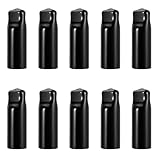
A tap cover is the cheapest piece of hygiene equipment in a draft system. The MRbrew set includes ten rubber caps that push onto the spout of a standard draft faucet, sealing out dust, insects, and airborne contaminants between pours. Ten pieces is the detail that matters: it is enough to cover a multi-tap tower, keep spares in a drawer, and replace caps as they wear or go missing.
Who it suits: anyone with a kegerator in a garage, workshop, or outdoor bar — exactly the environments where a faucet sits exposed for days between uses. It is also genuinely useful indoors, where kitchen grease and dust settle on an open spout.
Key specs
- Type: friction-fit rubber faucet caps
- Quantity: 10 pieces per set
- Fit: designed for standard draft beer faucet spouts
- Material: rubber, flexible enough to seal over a chrome or stainless spout
- Price tier: budget — one of the lowest-cost items in this roundup
Strengths
Every open faucet spout is a small, damp, sugar-rich surface, and that is an ideal environment for spoilage organisms and fruit flies. A cap costs almost nothing and removes the problem entirely. Because the set includes ten, you can rotate caps through a wash cycle instead of putting a damp cap straight back on. On a four-tap tower, ten caps means you always have clean spares on hand. They also prevent the small drips that leave mineral rings and sticky residue on the tower base, which keeps stainless looking new longer.
Pros
- Ten caps cover a multi-tap tower with spares left over
- Very low cost for a real hygiene benefit
- Fits standard faucet spouts without tools
- Reduces drip residue and mineral staining on the tower
- Easy to wash and rotate
Cons
- Does not replace regular line cleaning — caps protect the spout, not the line
- Rubber can stiffen or discolour over time
- Caps are easy to lose if not stored with the cleaning kit
- Does not fit every non-standard faucet shape
How it compares
The nearest functional alternative in this list is the HXILAJM faucet wrench, and the two are complementary rather than competing: the wrench maintains the hardware, the caps protect the outlet. If you own any of the kegerators or towers above, this is the lowest-cost item on the page that changes your day-to-day experience. Buy a set when you buy the kegerator, not after the first fruit fly appears.
10. Ferroday Single Beer Tap Draft Kegerator Tower, 3″ – Best Budget Tower for DIY Builds

The Ferroday 3″ single beer tap tower is the budget route into real draft dispensing for anyone building a system around an existing cold space. It is a single-faucet tower with a 3″ column, designed for countertop mounting or direct mounting on a kegerator cabinet. Like the MRbrew tower, it exists because the tower is usually the first component to fail on a budget kegerator and the most expensive to replace with an original part.
Who it suits: the DIY builder converting a chest freezer or under-counter refrigerator, the owner of an older kegerator whose tower is dented or rusting, and anyone assembling a draft system piece by piece to spread the cost. It is also a sensible choice for a temporary or seasonal setup where a full commercial tower would be wasted.
Key specs
- Type: single-faucet draft tower
- Column: 3″ diameter class
- Mounting: countertop or kegerator installation
- Faucet: single standard draft faucet
- Connection: standard shank and beer-line fittings for common 3/16″ ID draft line
- Installation needs: a correctly sized hole saw, shank and coupling nut, tailpiece and beer line, plus a 26 mm spanner for final tightening
Strengths
Buying the tower separately from the cold box is the single best money-saving decision in home draft. Refrigerators are commodities; towers and faucets are not. You can buy a reliable used refrigerator for very little, add a budget tower, and end up with a system that pours as well as a mid-range kegerator for a fraction of the cost. The 3″ column is the near-universal standard, so this tower will fit the hole left by most original equipment towers, making replacement a drop-in job rather than a fabrication project. A single faucet also means a single beer line, a single shank, and a single set of joints to leak-check — the simplest possible system to keep clean.
Pros
- Lowest-cost way to add a real faucet to an existing cold space
- 3″ column matches the most common mounting hole size
- Single-tap simplicity means fewer leak points
- Works for both countertop and cabinet-top builds
- Easy to replace later without disturbing the cabinet
Cons
- Tower only — cabinet, coupler, regulator, and CO2 tank sold separately
- Single tap means one beer at a time
- Budget faucet internals may need replacing sooner than premium hardware
- Lightly insulated columns can sweat in humid rooms
- You own the installation quality — poor sealing causes foam and temperature loss
How it compares
The MRbrew single tap tower is the direct alternative, and the two sit in the same budget class with the same 3″ column and the same single-faucet layout. Choose between them on faucet material — a stainless contact surface is worth paying a little more for — and on what mounting hardware is included. Against the VEVOR complete kegerators, this tower is only the right buy if you already own a cold box. If you do not, the arithmetic flips: a cabinet, coupler, regulator, and tank bought separately will usually cost more than a complete value kegerator.
11. MRbrew 128 oz Mini Keg Growler Mini Kegerator – Best for Small Spaces and Low-Volume Draft

The MRbrew 128 oz mini keg growler is the smallest dispensing system in this roundup and answers a question the full-size kegerators cannot: how do you get draft beer at home when you have no space, no appetite for fifteen gallons of one beer, and no interest in a CO2 tank the size of a fire extinguisher? At 128 ounces — one US gallon — it holds roughly ten to eleven twelve-ounce pours, which is a party’s worth rather than a season’s worth.
Who it suits: apartment dwellers, people in shared houses where a full kegerator would start an argument, small-space entertainers, and anyone who wants to try a keg of something without committing to a half-barrel. It is also a good fit for a homebrewer who wants to serve a small batch fresh rather than bottling it.
Key specs
- Capacity: 128 oz (1 US gallon / approximately 3.8 L)
- Yield: roughly 10–11 twelve-ounce pours per fill
- Type: self-contained mini keg growler and dispenser system
- Footprint: countertop scale — a fraction of even a compact kegerator
- Temperature: typically relies on pre-chilled beer and/or refrigeration rather than a built-in compressor, depending on configuration
- Installation: none beyond filling, sealing, and chilling — no plumbing, no dedicated circuit
Strengths
The mini keg growler solves the three objections that stop people buying a kegerator: space, cost, and commitment. It fits on a counter or a shelf. It lets you drink a beer fresh from a keg and then move on to a different one next week, which is impossible with a half-barrel. It also eliminates the long, slow learning curve of balancing a draft system — there is no 3/16″ line to
Related Reviews & Guides





Best Silverware Sets for Everyday Use and Entertaining

Best Range Hoods for Kitchen Ventilation