Last Updated: October 8, 2026
- Hand mixer or stand mixer: the short answer
- Best electric mixers by baking situation
- Best hand mixers for baking and everyday use
- Best stand mixers for different workloads
- Wattage, speeds, and capacity: what the numbers actually tell you
- Ownership costs, cleaning, and durability
- How to choose in five steps
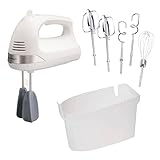
- Top Pick: Hamilton Beach 6-Speed Electric Hand Mixer With Easy Clean Beaters
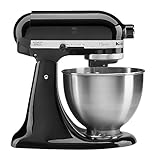
- Best Value: KitchenAid Classic Series 4.5 Quart Tilt-Head Stand Mixer K45SS, Onyx Black
- Premium Choice: Kitchen in the box Stand Mixer,3.2Qt Small Electric Food Mixer,6 Speeds Portable Lightweight Kitchen Mixer for Daily Use with Egg Whisk,Dough Hook,Flat Beater (Black)
The best electric mixers depend on what you bake: choose a hand mixer for occasional cakes, small kitchens, and low cost; choose a stand mixer for frequent bread, large batches, and hands-free mixing.
As an Amazon Associate we earn from qualifying purchases at no extra cost to you.


Hand mixer or stand mixer: the short answer
A hand mixer is the better everyday tool when you mostly make whipped cream, frosting, pancake batter, cookies, and small cakes. It costs less, takes up little cupboard space, and lets you move the beaters around the bowl. A typical model has roughly 220–350 watts, five or more speeds, and beaters plus dough hooks.
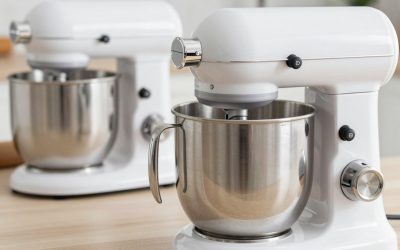
A stand mixer is worth the extra space and money when you bake weekly, knead dough, double recipes, or want the mixer to work while you add ingredients. Its motor is designed to maintain torque under load, and its bowl, planetary mixing action, and attachments make repeated baking more consistent. The trade-off is greater weight, more cleaning, and a higher typical price.
Best electric mixers by baking situation
| Situation | Best choice | Useful specification | Why it fits |
|---|---|---|---|
| Occasional cakes and frosting | Basic hand mixer | 220–300 W, 5 speeds | Affordable, compact, and sufficient for light batters |
| Frequent cookies and family baking | Powerful hand mixer or 4.5–5 qt stand mixer | 250–325 W hand mixer, or 300–500 W stand mixer | Handles thicker mixtures with less arm work |
| Bread once or twice a week | Stand mixer with dough hook | 5–7 qt bowl, roughly 500–1,000 W claimed input | More stable and practical for repeated kneading |
| Large batches | Large-bowl stand mixer | 6–7 qt bowl; follow the manufacturer’s flour limit | More headroom for dough and doubled cake recipes |
| Very limited counter space | Hand mixer | About 1–2 kg including beaters | Stores in a drawer or cupboard instead of living on the counter |
| Hands-free multitasking | Stand mixer | Locking bowl and 6–10 speed settings | Leaves both hands available for weighing and adding ingredients |
Best hand mixers for baking and everyday use
Best all-round hand-mixer type: a 250–300 W, five-speed model
This is the sensible choice for most households. Look for stainless-steel beaters, a separate eject button, a slow-start function, and a cord that does not force you to hold the mixer in an awkward position. Five speeds are normally enough: low for flour, medium for creaming butter, and high for whipping.
Examples of established designs include the Cuisinart Power Advantage Plus and Breville Handy Mix Scraper. Exact wattage, included tools, and regional versions vary, so check the model sold in your country rather than assuming every version has the same specification.
Best for thick mixtures: a more powerful hand mixer with dough hooks
A hand mixer with approximately 300–350 watts and included dough hooks can manage pizza dough or enriched dough in small quantities, but it is not a substitute for a stand mixer. Thick dough transfers force into your wrist and can cause the beaters to stall if you work too slowly or exceed the stated quantity.
For left-handed bakers, a hand mixer has one important advantage: you can hold it in your dominant hand and position the bowl wherever your other hand is most comfortable. Choose a model with controls reachable without twisting your wrist. A top-mounted speed slider is often easier to operate than a button placed beside the thumb on only one side.
Best stand mixers for different workloads
Best familiar all-purpose option: KitchenAid Artisan 5-Quart Tilt-Head
The KitchenAid Artisan 5-Quart Tilt-Head is a practical middle-ground stand mixer for cakes, cookies, buttercream, and moderate bread making. Its 4.8-litre bowl is large enough for many family recipes without making small quantities disappear at the bottom. The common package includes a flat beater, wire whisk, and dough hook, while the accessory hub supports additional tools.
Its tilt-head design gives good access when scraping the bowl or changing attachments, but the head can occupy more vertical space when raised. The 325-watt figure should not be compared directly with the wattage printed on every other brand: manufacturers measure motor power differently.
Best for larger dough batches: Bosch Universal Plus
The Bosch Universal Plus uses a central mixing system and a large bowl commonly listed at about 6.5 quarts, or roughly 6.2 litres. It is particularly suited to bread bakers who value capacity and kneading performance over the classic planetary mixer layout. Its lighter plastic bowl is easier to lift than a heavy stainless-steel bowl, although some users prefer stainless steel for long-term scratch resistance and a more solid feel.
Its open design makes it easy to add ingredients and see the mixture. Before buying, check the included attachments and the manufacturer’s maximum flour or dough quantities, because bowl volume is not the same as safe working capacity.
Best for serious repeated baking: Ankarsrum Assistent Original
The Ankarsrum Assistent Original has a 7-litre bowl and a distinctive rotating-bowl design. It is aimed at frequent bread and pastry makers who want a machine built around larger, heavier mixtures. The roller-and-scraper system behaves differently from a conventional planetary mixer and may require a short learning period, but it gives the user a clear view of dough development.
This is a substantial investment, generally costing several hundred to over a thousand dollars depending on the package and market. It makes sense when you will use the capacity regularly, not merely because the bowl is large.
Wattage, speeds, and capacity: what the numbers actually tell you
Wattage is an imperfect comparison. A hand mixer’s stated wattage may describe electrical input, while another brand emphasizes a motor rating under different conditions. For practical buying, combine wattage with the mixer’s weight, speed control, thermal protection, and published capacity limits.
- Speeds: five settings are adequate for most hand mixing; six to ten settings provide finer control, especially when starting flour or gradually whipping egg whites.
- Slow start: reduces flour clouds and helps prevent splashing liquid ingredients.
- Whisk: best for aerating cream and egg whites.
- Flat beater: suited to cake batter, cookie dough, mashed potatoes, and buttercream.
- Dough hook: useful for yeast dough, but only within the stated flour limit.
- Bowl capacity: a 5-quart bowl does not mean you can fill it with 5 quarts of dough. Dense dough usually has a much lower safe limit.
As a rough planning example, a cookie recipe using 500 grams of flour may fit comfortably in a 5-quart stand mixer, while a bread recipe using 1,000 grams of flour may be more appropriate for a larger 6.5–7-litre machine. Always use the maker’s dough and flour limits as the final guide.
Ownership costs, cleaning, and durability
Typical hand mixers cost approximately $30–$120, while mainstream stand mixers commonly range from $250–$600. Larger or specialist stand mixers can cost $700–$1,200 or more. If a $60 hand mixer lasts four years and is used twice a month, its equipment cost is about $0.63 per use. A $400 stand mixer used twice a week for eight years costs about $0.48 per use before accessories and electricity. Frequent use is what makes the stand mixer’s higher purchase price easier to justify.
Beaters, whisks, dough hooks, bowl coatings, belts, gears, and speed controls are the parts most likely to show wear. Do not wash a motor body under running water. Remove attachments promptly, wipe the housing with a damp cloth, and check whether the bowl and tools are dishwasher-safe; “dishwasher-safe” does not necessarily mean that repeated harsh cycles will preserve a polished finish.
Common mistakes include starting at high speed, forcing cold butter through a thick mixture, overloading a dough hook, and scraping a moving bowl with a metal utensil. Stop the machine before scraping. If the motor becomes hot, smells electrical, or repeatedly cuts out, let it cool and reduce the batch size rather than continuing.
How to choose in five steps
- List your three most common tasks: light batter, thick cookie dough, whipped mixtures, or yeast dough.
- Estimate your largest batch by flour weight, not bowl volume.
- Measure storage and counter clearance, including the space needed to tilt or lift the head.
- Compare included attachments before paying extra for accessories you may not use.
- Choose the smallest machine that comfortably handles your largest regular batch; oversized bowls can mix tiny quantities poorly.
For most occasional bakers, a well-built 250–300-watt hand mixer is the best value. For weekly baking with cookies and cakes, a 4.8–5-quart stand mixer offers the best balance. For frequent bread making or large batches, step up to a 6.5–7-litre stand mixer and prioritize published dough limits, serviceability, and comfortable bowl access over headline wattage.
Related Reviews & Guides
Best Bertello Pizza Ovens for Backyard Cooking
Best Silverware Sets for Everyday Use and Entertaining