Last Updated: September 18, 2026
- Top Pick: TEC582 CERAMIC DETAIL SPRAY (1 Gallon)
- Best Value: Griot’s Garage Ceramic 3-in-1 Wax, SiO2 Spray for Cars, Trucks, and RV’s, Provides Protection and Water Beading on Paint, Wheels, Plastic, Rubber Trim, Chrome, and More, 10978, 22 oz
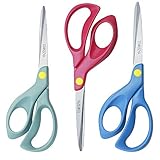
- Premium Choice: Fiskars 8" Left-Handed Titanium All Purpose Scissors for Office
Choosing between ceramic and stainless left handed scissors is less about which material sounds more advanced and more about how the scissors will be used every day. A home crafter cutting fabric has different needs from a parent opening food packages, a renter with limited storage, or someone assembling a basic household toolkit.
The real decision is whether you value ceramic’s light weight, rust resistance, and sharp-feeling cut for light-duty tasks—or stainless steel’s broader availability, stronger construction, easier replacement, and genuine left-handed blade alignment. Before buying, check not only the blade material but also the handle design, cutting capacity, total length, and whether the scissors are truly made for left-handed use rather than simply labeled “ambidextrous.”
As an Amazon Associate we earn from qualifying purchases at no extra cost to you.


Quick Verdict
For most homes, stainless left handed scissors are the safer all-around choice. They are easier to find, generally more affordable, and better suited to cardboard, fabric, packaging, paper, and occasional household jobs. A good 8-inch pair typically costs about $8 to $25, while heavy-duty or titanium-coated models may cost $25 to $45.
Ceramic scissors make sense when low weight, corrosion resistance, and clean cutting of paper, thread, tape, or thin film matter most. They commonly cost about $10 to $35. However, ceramic blades are more brittle than steel. Dropping them, twisting them through thick material, or using them on staples and wire can chip the edge. Many ceramic models are ambidextrous rather than specifically left-handed, so they may not provide the same ergonomic cutting action as a purpose-built left-handed pair.
If you want one dependable household pair, choose stainless left handed scissors. If you already own sturdy shears and want a lightweight secondary pair for clean, light-duty work, ceramic can be a useful addition.
Side by Side
| Factor | Ceramic scissors | Stainless left handed scissors |
|---|---|---|
| Comfort | Often lightweight, commonly around 1.5 to 3 ounces; handle quality varies | Usually 3 to 6 ounces for an 8-inch pair; left-handed handles and blade alignment improve control |
| Durability | Resists corrosion but can chip or crack if dropped or twisted | Strong, resilient, and more tolerant of rough household use; may eventually dull or rust if neglected |
| Price range | About $10 to $35 | About $8 to $45, with many useful options below $20 |
| Maintenance | Wipe clean and keep away from impacts; sharpening is specialized | Wipe dry, occasionally oil the pivot, and have the edge sharpened or replace the pair |
| Space needed | Usually 6 to 8 inches long; light enough for a drawer organizer | Commonly 8 inches long; needs a protected drawer or tool caddy to prevent damage |
| Look | Modern, often white, black, or brightly colored with a clean technical appearance | Classic metal finish, sometimes with colored or soft-grip handles |
| Resale | Limited resale value unless unused or from a specialty brand | Recognizable brands and specialty left-handed models are easier to pass along |
| Best for | Paper, thread, tape, labels, lightweight crafts, and damp environments | Fabric, cardboard, packaging, office work, crafts, and general household use |
Where Ceramic Wins
Ceramic’s biggest advantage is its low weight. For repetitive trimming, scrapbooking, sewing-room tasks, or opening mail, a lightweight pair can reduce hand fatigue. This is particularly helpful for users who find a full-size steel pair tiring after several minutes. Look for a handle with openings large enough for your fingers and a soft, non-slip grip; blade material alone does not determine comfort.
Ceramic also does not rust in the same way steel can. That makes it appealing for kitchens, laundry rooms, craft spaces, and humid homes. It is still wise to dry scissors after cleaning, because the pivot, fastener, and handle may contain metal components even when the cutting edges are ceramic.
A ceramic edge can stay sharp for a long time during appropriate light-duty use. It is well matched to paper, ribbon, yarn, thread, tape, labels, and thin plastic film. It may also be a convenient choice when clean cutting is more important than force. The limitation is that sharpness should not be confused with toughness: a fine ceramic edge is not a substitute for heavy-duty shears.
There is also a practical cleanliness benefit. Ceramic surfaces are nonporous, so residue from tape or adhesives can be easier to wipe away than from a damaged or heavily scratched metal edge. Keep expectations realistic, however. A ceramic-detail product such as TEC582 CERAMIC DETAIL SPRAY, priced at $28.49 for a gallon, is intended for vehicle-care applications—not for lubricating or coating scissor blades. Likewise, Griot’s Garage Ceramic 3-in-1 Wax, 22 ounces at $17.59, belongs with car-care supplies and should not be applied to household cutting tools.
Finally, ceramic can be attractive for a secondary pair kept in a desk drawer or craft box. Its lighter feel and corrosion resistance are useful where the scissors will perform a narrow set of clean, low-force tasks.
Where Stainless Left Handed Scissors Wins
Stainless steel is the better material for versatility. It tolerates more bending and twisting than ceramic, making it more forgiving when cutting layered paper, thin cardboard, fabric, packaging tape, or blister-pack material. It is not indestructible—staples, wire, and hard plastic can damage any household scissors—but it generally gives you more margin for error.
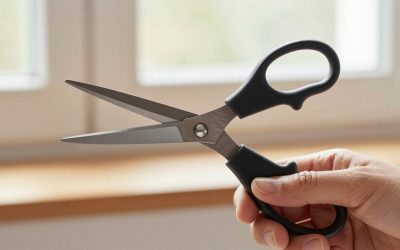
The most important advantage for left-handed users is blade orientation. True left-handed scissors place the upper blade and cutting action where a left-handed grip can see and control the cut. Standard right-handed scissors often force the blades apart when used in the left hand, which can lead to slipping, ragged cuts, or unnecessary squeezing. An ambidextrous handle does not always solve that problem.
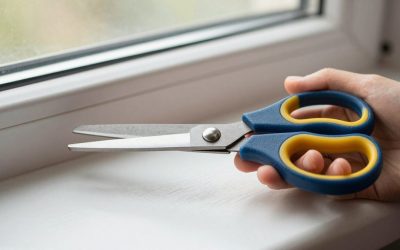
Stainless left handed scissors are also widely available at several price points. For example, the Fiskars 8-inch Left-Handed Titanium All Purpose Scissors is listed at $9.47, while the YAZEMKEL Left-Hand Scissors Stainless Steel 3-Pack, also 8 inches, is listed at $8.99. These products illustrate why steel is practical for outfitting a home office, kitchen drawer, classroom, or shared craft area without spending much. They are reference points for price and format, not a reason to assume every 8-inch pair has the same handle comfort or cutting performance.
Another benefit is repair and replacement. Stainless scissors can often be sharpened by a professional, and replacement pairs are easy to find. Ceramic edges typically require specialty sharpening or replacement if chipped. For a tool used by several family members, steel’s ability to survive ordinary mistakes usually outweighs ceramic’s lighter weight.
Cost Over 5 Years
Initial price is only part of the calculation. Assume a household buys one pair for general use and uses it several times per week. A basic stainless left-handed pair costs $8 to $15. A midrange pair costs $15 to $30, and a premium pair can reach $45. If cared for properly, a midrange stainless pair may last the full five years, producing an estimated ownership cost of $3 to $9 per year before sharpening.
Ceramic scissors commonly cost $10 to $35. A light-duty pair may also last five years, but a chip caused by a fall or misuse can make replacement the only practical option. Buying one $20 pair and replacing it once during the period would result in about $40 over five years, or $8 per year. Buying two ceramic pairs—one for crafting and one for general household tasks—can raise the total to $20 to $70.
For a realistic five-year budget, allow about $10 to $45 for stainless scissors, including one replacement or sharpening event, and about $20 to $70 for ceramic scissors if replacement becomes necessary. The cheapest option is not always the best value: a correctly oriented left-handed stainless pair that remains comfortable is likely to be used more often and replaced less often than a low-cost pair that pinches or slips.
Which One for Your Home
Small apartment
Choose stainless left handed scissors if you want one tool to cover mail, food packaging, cardboard, sewing repairs, and household projects. An 8-inch pair fits most drawers and offers more capability than a small ceramic craft pair. If storage is extremely limited, add a blade cover or keep the scissors in a narrow desk organizer rather than loose in a junk drawer.
Family with kids and pets
Stainless is the more practical choice because it handles varied users and unpredictable tasks better. Select a pair with rounded or smoothly finished tips, a comfortable grip, and a clearly designated storage spot. No scissors should be left within a child’s reach, regardless of material. Ceramic is best kept as a supervised craft tool, not the household’s only pair.
Rental
Renters often benefit from an inexpensive stainless pair that can move from home to home and handle packing tape, labels, paper, and small repairs. Spending $9 to $20 provides useful coverage without requiring specialized maintenance. Ceramic is worthwhile if the rental is humid or if you mainly cut crafts and paper, but its impact sensitivity makes careful storage more important.
Long-term home
Buy a quality stainless left-handed pair as the primary tool, then add ceramic only for a specific use. A sensible setup might include one 8-inch stainless pair for general work and a 6- to 8-inch ceramic pair for thread, paper, or light crafting. Store each away from knives, tools, and loose hardware that could nick the blades.
FAQ
Are ceramic scissors better than stainless steel scissors?
Neither is universally better. Ceramic is lighter and corrosion resistant but more brittle. Stainless steel is stronger, easier to replace, and better for varied household work. For most left-handed households, stainless is the more versatile first purchase.
Can left-handed people use ceramic scissors?
Yes, but check the design. Some ceramic scissors are ambidextrous, while others may favor one hand. A true left-handed model should keep the blade orientation and cutting action comfortable in the left hand.
How long do left handed stainless scissors last?
A well-made pair can last five years or longer with normal use. Keep the blades dry, avoid staples and wire, and add a small amount of suitable lubricant to the pivot when it becomes stiff. Sharpening may extend useful life.
What size scissors should I buy for home use?
An 8-inch pair is a practical general-purpose size for most adults. Smaller 6- to 7-inch scissors are easier for detail work, while 9- to 10-inch shears provide more leverage for fabric but need more drawer space. Choose the size that matches the materials you cut most often.
Related Reviews & Guides



3 Best Left Handed Calligraphy Starter Sets
3 Best Left Handed Can Openers for Easy Kitchen Use