Last Updated: September 9, 2026
Choosing from the best sewing machines in 2026 is harder than it looks because the price range is wide and the differences between models are often invisible on the spec sheet. A beginner might overpay for features they will never touch, while an intermediate quilter might settle for a machine that chokes on thick seams or limits stitch variety to a handful of options. The concrete problem most buyers face is matching a machine’s actual capability to their real project load, not the one they imagine they will tackle someday.
What separates a good value from a poor one comes down to a few measurable factors: how many built-in stitches the machine offers, whether the thread tension is manual or computerized, how the machine handles heavier fabrics, and whether the included accessories cover the basics so you are not buying extras on day one. This roundup compares seven machines that consistently appear in buyer discussions, using published specs, listed prices, and aggregated owner feedback to identify where each model shines and where it falls short.
As an Amazon Associate we earn from qualifying purchases at no extra cost to you.




Quick Picks
| Product | Best for | Price |
|---|---|---|
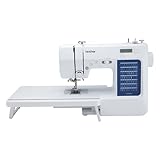
| Brother CS7000X | Quilting and multi-project work | $279.99 |
| Brother XM3700 | Beginners on a tight budget | $129.88 |
| Brother SE700 | Embroidery and monogramming | $579.99 |
| SINGER 4411 | Heavy fabrics at an accessible price | $179.99 |
| Brother XR9550 | Variety of decorative stitches | $262.99 |
| Brother XM2701 | Portable, lightweight projects | $149 |
| SINGER 4423 | Daily use on mixed-weight fabrics | $239.99 |
How We Picked
We narrowed this list by weighing four criteria that consistently drive owner satisfaction or frustration. First, stitch count and variety, because a machine with only a handful of options limits your project range from the start. Second, motor power and fabric tolerance, since a machine that stalls on denim or canvas is not truly versatile regardless of how many decorative stitches it offers. Third, ease of threading and control interface, which matters most for beginners and anyone who sews intermittently. Fourth, included accessories and value at the listed price, because the accessories bundle can shift a borderline deal into a clear winner.
The 7 Best Sewing Machines in 2026
Brother XM2701
The Brother XM2701 is a lightweight portable sewing machine designed for someone who needs a reliable basic stitch without committing to a full-size workstation. With 27 built-in stitches, it covers straight, zigzag, and a modest range of decorative options that handle garment repair, simple crafts, and beginner projects comfortably. Owners frequently praise how easy the automatic needle threader is and note that the machine weighs little enough to carry between rooms or to a class without strain.
- Automatic needle threader reduces the learning curve for new sewists
- Portable weight makes it practical for small spaces or travel to workshops
- Limited stitch variety compared to machines only slightly higher in price
Skip this machine if you plan to sew quilts or work with denim, leather, or canvas regularly. The 27-stitch selection and lighter motor are suited to light-to-medium fabrics, and intermediate users will likely outgrow it within a year or two of active use.
SINGER 4411
The SINGER 4411 earns its reputation as a high-speed heavy duty sewing machine by delivering more power than most models in the sub-$200 range. With 11 built-in stitches and a notably faster bobbin wind, it is built for people who sew through thick seams frequently and want speed over decorative variety. The included accessories bundle adds practical value for someone setting up a first real sewing station.
- Strong motor handles denim, canvas, and layered seams without frequent stalling
- High speed reduces sewing time on long straight runs
- Only 11 stitches limits creative and decorative applications
Pass on this if you want decorative stitching, quilting patterns, or a wide stitch library. The 4411 is a workhorse focused on function, and buyers who want aesthetic variety will find it restrictive almost immediately.
Brother XM3700
At $129.88, the Brother XM3700 is the least expensive machine on this list and among the best sewing machines under $150 for a beginner who wants more than a bare-bones stitch set. It offers 37 built-in stitches, enough for straight seams, zigzags, buttonholes, and a reasonable selection of decorative patterns. Owners report that the automatic needle threader and drop-in bobbin make setup quick, and the machine handles light cottons and medium-weight knits without fuss.
- Lowest price among machines with 30-plus stitch options
- Drop-in bobbin and automatic threading reduce beginner frustration
- Lighter build and motor mean it struggles with thick or densely layered fabrics
Skip the XM3700 if you need to sew through upholstery, multiple layers of denim, or any project that demands consistent power on heavy materials. It is a capable starter, but not a grow-with-you machine.
Brother CS7000X
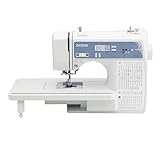
The Brother CS7000X sits at the intersection of quilting and general sewing, making it the most versatile mid-range option here. Its LCD display lets you preview stitch patterns before committing needle to fabric, which reduces trial-and-error waste on expensive quilting cotton. Owners consistently highlight the included extension table and wide range of presser feet as the features that make the $279.99 price feel justified for anyone doing patchwork or free-motion quilting.
- LCD preview and included extension table support quilting without extra purchases
- Broad stitch library covers utility, decorative, and quilting-specific patterns
- More than you need if your projects are simple garment construction or mending
Skip this if you only hem pants or sew pillow covers. The CS7000X is a strong value for quilters, but its feature set is overkill for casual menders who could save over a hundred dollars with a simpler machine.
Brother XR9550
With 165 built-in stitches, the Brother XR9550 is the most stitch-rich sewing-only machine on this list. It is computerized, meaning stitch selection, width, and length are adjusted via button rather than dial, which appeals to users who value precision and repeatability across long projects. The $262.99 price puts it below the CS7000X while offering significantly more decorative variety.
- 165 stitches provide the widest creative range in this group of sewing-only machines
- Computerized controls allow precise, repeatable stitch settings
- Larger stitch menu can overwhelm beginners who just need straight and zigzag
Not ideal if you are brand new to sewing or if your primary need is quilting rather than decorative work. The XR9550 rewards users who will actively explore its stitch library; for a beginner, the interface can feel cluttered and the extra stitches represent unused cost.
Brother SE700
The Brother SE700 is the only combined sewing and embroidery machine here, and it is priced accordingly at $579.99. It includes Wireless LAN connectivity and 8 built-in fonts, which makes it practical for monogramming personalized items, logos, or text-heavy projects without tethering to a computer. Owners appreciate the dual-function design and note that the embroidery field gives you real space for multi-line or multi-word designs without constant repositioning.
- Combined sewing and embroidery eliminates the need for two separate machines
- Wireless LAN and 8 included fonts simplify monogramming workflows
- Significantly higher price than any sewing-only model on this list
Skip the SE700 unless you will actually use the embroidery function regularly. If your projects are straight sewing, quilting, or garment work, you are paying a premium for capability you will ignore.
SINGER 4423
The SINGER 4423 is the heavy-duty step-up from the 4411, offering 23 built-in stitches in the same sturdy, high-speed motor platform. At $239.99, it is the best option for someone who sews through thick fabrics frequently but also wants some decorative and utility stitch variety beyond the bare minimum. The Meltwater Blue finish and included accessories make it a practical full-kit purchase for an intermediate sewist.
- Heavy-duty motor handles thick seams and dense fabrics with consistent speed
- 23 stitches provide more variety than the 4411 without a large price jump
- Manual controls lack the precision of computerized tension on very delicate fabrics
Not the right pick if you work mainly with silks, chiffon, or lightweight knits where fine tension control matters more than raw power. The 4423 is built for thickness, and its strength becomes a liability on whisper-thin materials.
Buying Guide
Stitch Count vs. Actual Use
A machine advertising 165 stitches sounds more capable than one offering 27, but the relevant question is how many stitch types you will use within the first month. Straight, zigzag, and a single-step buttonhole are the non-negotiables for garment sewing. Decorative and quilting-specific stitches only add value if your project mix includes them. Buyers who over-index on stitch count often discover that the extra options never leave the manual.
Motor Power and Fabric Tolerance
Heavy-duty machines like the SINGER 4411 and 4423 are built around stronger motors that maintain speed through layered seams. For quilting cottons and thin linens, a standard motor suffices. If your sewing involves denim hems, canvas bags, upholstery patches, or multiple fabric layers at once, motor power is the single spec that determines whether the machine is usable or frustrating. Check whether the listed speed is a maximum on thin fabric or a sustained rate on medium-weight materials.
Interface and Ease of Threading
Manual dial-based machines require you to understand stitch width and length physically, which slows down beginners and anyone who sews intermittently. Computerized machines with LCD screens or button controls let you recall settings and preview before stitching, reducing wasted thread and fabric. If you sew more than once a week, the interface type directly affects how quickly you get back into a project after a break.
Our Verdict
The Brother CS7000X is the top pick for the widest range of users in this group, combining quilting capability, a helpful LCD display, and a strong accessories bundle at $279.99. For buyers whose priority is the lowest entry price with enough stitch variety to learn on, the Brother XM3700 at $129.88 is the budget pick. If your primary work is heavy fabric and you value raw speed over creative variety, the SINGER 4423 is the condition under which another machine wins, because its motor and stitch count hit the sweet spot between the stripped-down 4411 and more expensive computerized options.
FAQ
What is the difference between a portable and a heavy-duty sewing machine?
Portable machines prioritize weight and size so you can store them easily or carry them between rooms. Heavy-duty machines prioritize motor power and frame rigidity so they can push through thick fabrics without stalling. The tradeoff is that portable models typically cannot handle the same fabric weights, while heavy-duty models are fixed in one location.
Do I need a computerized machine, or is manual fine?
Manual is fine if you sew the same few stitch types regularly and do not change settings often. Computerized machines shine when you need to switch between stitch styles frequently, preview patterns before sewing, or maintain precise consistency across a large project. For quilting specifically, the ability to adjust stitch length in small increments matters more than on a simple straight-stitch model.
Is an embroidery machine worth buying as a second machine?
Only if you will use it on projects that genuinely require embroidery, such as monogrammed gifts, logos, or decorative patches. The Brother SE700 combines both functions, which means you do not need a separate sewing machine. If embroidery is occasional rather than regular, a sewing-only model plus hand-embroidery skills may serve you better at lower total cost.
How many stitches do I actually need as a beginner?
Fifteen to twenty-five stitches is sufficient for almost all beginner-to-intermediate garment work, including straight seams, zigzag finishing, buttonholes, and a small selection of decorative options. You can always upgrade later. The priority for a beginner should be consistent stitching on medium-weight fabrics and an easy threading system, not a large stitch menu.
Related Reviews & Guides



8 Best Left Handed Bocce Ball Sets

13 Best Left-Handed Pens: Top Picks Reviewed and Compared (2026)