Last Updated: September 18, 2026
- Decide These 3 Things First
- Size: Match the Pen to Your Hand and Line
- Material: Look for a Secure, Low-Slip Grip
- Construction: Choose a Tip and Mechanism That Stay Consistent
- Comfort and Performance: Test for Smear, Drag, and Pressure
- Price Tiers: Pay for Ink Behavior, Not Just Packaging
- Warranty and Refill Support: Check the Ownership Cost
- Delivery and Assembly: Simple, but Still Worth Checking
- Spec Checklist
- Red Flags
- FAQ
- Top Pick: Maped – Visio – Left-handed ballpoint pens – Black ink – 2 count
- Best Value: Maped – Visio – Left-handed ballpoint pens – Quick-drying – 3 count
- Premium Choice: Lerheedi 5 Pcs Vintage Left Handed Gel Pens Left Handed Quick Drying Pens Click Gel Pen Smooth Writing Black Ink 0.5mm for Journaling Writers School Supplies Calligraphy Office Gift Home Work
Left-handed writing is not a niche problem—it is a timing problem. As your hand moves across the page, it can drag over ink that is still wet, causing smears on the paper, your palm, and sometimes the side of your hand. The best pen for a left-handed writer is therefore not automatically the smoothest or darkest pen. It must balance drying speed, writing angle, grip comfort, line width, and refill availability.
Common buying mistakes include choosing a broad 1.0mm gel point because it feels smooth, assuming every pen labeled “left-handed” dries instantly, and judging performance only on printer paper. A pen that behaves well on a dry notebook page may smear on glossy planner paper or heavier cardstock. This guide explains how to choose smudge resistant left handed pens for school, office work, journaling, and everyday writing in 2026.
As an Amazon Associate we earn from qualifying purchases at no extra cost to you. Product prices and availability are accurate as of the date shown and are subject to change.


Decide These 3 Things First
- Your writing style: If you write quickly with your hand immediately following the tip, prioritize quick-drying ballpoint or hybrid ink. If you prefer bold, fluid lettering, a fast-drying gel may be more comfortable, but it needs testing on your usual paper.
- Your preferred line width: A 0.5mm tip generally creates a finer line with less ink on the page, while a 0.7mm tip offers a smoother, darker stroke. For left-handed writers who frequently smear, 0.5mm is often the safer starting point.
- Your daily volume: Students and journalers may want a multipack and a comfortable grip. Occasional users may get better value from a durable retractable pen with inexpensive refills rather than a large assortment.
Size: Match the Pen to Your Hand and Line
Pen size affects both control and fatigue. Most everyday pens measure approximately 13–15cm long and weigh about 8–15g without a cap. That range works for many users, but hand size and writing pressure matter more than a single “ideal” measurement.
For small hands or compact pencil cases, choose a barrel close to 9–11mm in diameter. A larger 11–13mm barrel can be more comfortable for long writing sessions because it reduces the need to squeeze. Avoid extra-thin barrels below roughly 8mm if you tend to grip tightly; they may increase finger pressure and make fast writing less controlled.
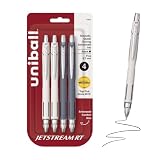
Tip width deserves equal attention. A 0.5mm gel pen, such as the Lerheedi five-piece example, can produce a neat line for notes and journaling. A 0.7mm ballpoint, such as the four-count uniball Jetstream RT example, usually gives a slightly fuller line and a smooth feel. For forms, margins, and small handwriting, look for 0.38–0.5mm. For general notes, 0.7mm is a useful middle ground.
Material: Look for a Secure, Low-Slip Grip
Most pen barrels use plastic, with rubber, silicone, or textured plastic added around the grip. Plastic keeps weight low and helps bring multipack prices down. Metal barrels can feel more substantial, but extra weight is not automatically an advantage for left-handed writers who already apply substantial downward pressure.
A practical target is a total pen weight of approximately 10–20g for everyday use. A metal-bodied pen above 25g may feel premium, but it can become tiring during extended note-taking. Check whether the grip has a defined texture rather than a smooth coating that becomes slippery with warm hands.
Soft rubber grips can improve comfort, but very squishy material may allow the fingers to shift and alter the writing angle. A lightly cushioned grip with a diameter of about 10–12mm is a reliable compromise. Also check for latex information if you have sensitivities; manufacturers do not always use the same grip materials.
Construction: Choose a Tip and Mechanism That Stay Consistent
Smudge resistance begins with the ink, but construction determines whether that ink reaches the page evenly. A retractable pen protects the tip and is convenient for desks, classrooms, and bags. A capped pen may better protect a fine gel tip, but the cap can be lost and may need to be posted on the back while writing.
Look for a clip that flexes without feeling loose and a click mechanism that operates without excessive play. If the tip wobbles, it can interrupt fast writing and encourage extra pressure. A metal or reinforced tip section may offer better durability than a very thin plastic cone, especially if the pen is carried loose in a bag.
Ink type is decisive. Standard ballpoint ink is oil-based and generally dries faster than many gel inks. Hybrid ballpoint ink is designed to feel smoother while retaining relatively quick-drying behavior. Gel ink uses water-based pigment or dye and often produces a darker, more fluid line, but drying time varies substantially by formula, paper, and stroke width. Do not assume that “gel” and “quick drying” mean the same thing across brands.
Comfort and Performance: Test for Smear, Drag, and Pressure
The most useful home test takes less than five minutes. Write several lines on the paper you use most, then drag the side of your hand across one line immediately, after 5 seconds, and after 15 seconds. Repeat with a vertical stroke, a signature, and a small block of text. This reveals whether the pen works for your actual writing speed instead of a product description alone.
Pay attention to four behaviors:
- Drying time: Faster is better when your hand follows the tip closely. Treat manufacturer claims as a starting point, not a guarantee.
- Ink flow: Skipping can make you press harder, which increases fatigue and may spread wet ink.
- Line consistency: The stroke should not suddenly become broad when you change direction or speed.
- Pressure required: A pen that writes darkly with light pressure is usually more comfortable for long sessions.
Paper changes the result. Ordinary copy paper around 20–24 lb is a useful baseline. Thin notebook paper can show-through, while planner paper, coated pages, and smooth cardstock may extend drying time. If you write left-handed in an underwriting position, you may tolerate a slightly slower ink. If you write with your hand above the line, choose the quickest-drying option you can find.
Price Tiers: Pay for Ink Behavior, Not Just Packaging
Budget pens generally cost about $1–$3 per pen when purchased in multipacks. They can be excellent for schoolwork and disposable note-taking, but inspect the grip, refill availability, and tip consistency. The Maped Visio left-handed ballpoint two-count example is priced at $8.39, or about $4.20 per pen, while the three-count quick-drying version is $11.39, or about $3.80 per pen. The higher price is reasonable only if the ink behavior suits your paper and writing speed.
Midrange options typically cost approximately $2.50–$6 per pen. This tier often offers better grips, more reliable retractable mechanisms, and easier access to replacement refills. The Lerheedi five-piece 0.5mm gel set is listed at $7.99, or about $1.60 per pen, making it attractive for journaling, school supplies, and keeping spares in different locations.
Premium everyday pens usually cost $5–$12 per pen, especially when sold individually or with specialized refills. The extra cost should provide a meaningful benefit: smoother writing, a sturdy mechanism, a comfortable barrel, or a refill system you will actually use. The uniball Jetstream RT four-count example is $6.47, or about $1.62 per pen, showing that a well-regarded smooth-writing ballpoint does not always require a premium budget.
Warranty and Refill Support: Check the Ownership Cost
Disposable pens rarely have a meaningful long-term warranty, while reusable retractable pens may have limited coverage for manufacturing defects—often 30 days to one year, depending on the seller and brand. Read the terms before paying extra. Coverage generally does not include dried ink caused by leaving the tip extended or storing a capped pen improperly.
Refills can matter more than warranty length. Confirm the refill model, tip size, ink color, and approximate price before buying a premium barrel. A useful target is a refill costing no more than 50–70% of the original pen price. If replacement cartridges are difficult to locate, a low-cost multipack may be more practical than a heavier reusable design.
Delivery and Assembly: Simple, but Still Worth Checking
Pens require no assembly, but shipping condition and delivery quantity deserve attention. Confirm whether the listing includes two, three, four, or five complete pens, rather than a mixture of barrels and refills. For online orders, inspect the package within 48 hours for cracked clips, missing caps, leaking ink, or tips that fail to retract.
Allow pens stored in a cold delivery vehicle to reach room temperature before testing them. Store them horizontally or tip-down only as the manufacturer recommends; extreme heat can increase leakage, while prolonged exposure to air can dry exposed tips. If you are ordering for a class or office, buy at least one extra pen per five users so a defective unit does not interrupt work.
Spec Checklist
| Spec | Budget | Mid | Premium |
|---|---|---|---|
| Typical price | $1–$3 per pen | $2.50–$6 per pen | $5–$12 per pen |
| Tip size | 0.5–0.7mm | 0.5–0.7mm | 0.38–0.7mm |
| Barrel diameter | 9–12mm | 10–13mm | 10–14mm |
| Approximate weight | 8–15g | 10–20g | 12–25g |
| Best ink type | Ballpoint | Hybrid ballpoint or quick-drying gel | Specialized hybrid or premium gel |
| Refill expectation | Usually none | Often available | Should be readily available |
Red Flags
- “Instant dry” claims without a stated ink type, paper condition, or testing method.
- A broad 0.8–1.0mm tip when you write quickly and frequently smear ink.
- A grip that is narrower than about 8mm if you experience hand fatigue.
- Loose tip assemblies, rattling mechanisms, or a clip that bends after light pressure.
- Listings that do not clearly state the number of pens, ink color, or tip size.
- Premium barrels with no identifiable refill number or replacement source.
- Reviews describing hard starts, skipping, leaking, or smearing on ordinary copy paper.
FAQ
Are ballpoint pens better than gel pens for left-handed writers?
Often, yes, because oil-based ballpoint ink generally dries faster. However, a quick-drying gel pen can be smoother and darker. Choose based on your writing speed, hand position, and paper rather than the label alone.
What tip size is least likely to smudge?
A 0.5mm tip is a sensible starting point because it places less ink on the page than a broad tip. A 0.7mm pen can still perform well when its formula dries quickly, so tip width is only one part of the decision.
How can I test a pen before buying several?
Buy or borrow one first and test it on your normal paper. Write continuously for 30 seconds, then drag your hand over the lines immediately, after 5 seconds, and after 15 seconds. Also test small writing, signatures, and fast note-taking.
Should left-handed pens have a special shape?
Not necessarily. A comfortable 10–13mm grip, stable tip, low writing pressure, and quick-drying ink matter more than a dramatically angled barrel. Left-handed labeling can be useful, but actual smear performance should decide the purchase.
Ready to decide? Our #1 pick for 2026 is the Typical price.
Live price & availability on Amazon.
Related Reviews & Guides



Quick Picks: Left-Handed Grip Strength Trainers
3 Best Left-Handed Scissors for Kids: Safe Cuts Every Time