Last Updated: September 18, 2026
Quick answer: Our top pick in 2026 is the Basic standard manual can opener — our #1 rated choice. See the full ranked comparison, alternatives and buying advice below.
The Short Answer
Yes, left-handed can openers are worth it if you open cans regularly and a standard opener feels awkward, painful, or difficult to control in your left hand. The one condition is that the tool must use a genuinely left-handed cutting mechanism—not simply a standard opener with a handle marketed to lefties.
For occasional use, the difference may not justify spending more. Many conventional can openers cost about $8 to $15 and work well enough for both hands, especially models with large, comfortable handles. But for a left-handed cook who opens canned tomatoes, beans, pet food, soup, or vegetables several times a week, a dedicated opener can make a small but noticeable kitchen task faster and less frustrating.
As an Amazon Associate we earn from qualifying purchases at no extra cost to you. Product prices and availability are accurate as of the date shown and are subject to change.
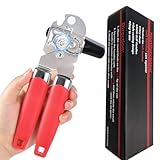

In 2026, the products in this category are still relatively inexpensive. The main question is less about the price and more about whether the cutting wheel, grip, and turning direction match the way you naturally use your left hand.
What You Actually Get
A left-handed manual can opener generally reverses the cutting orientation of a traditional opener. Instead of forcing a left-handed user to twist the knob across the body or grip the handles at an uncomfortable angle, it places the turning mechanism where the left hand can operate it naturally. Depending on the design, you may turn the knob counterclockwise rather than clockwise.
The two related products commonly sold in this price range illustrate what to expect:
- Left Handed Can Opener Manual, Lefty Kitchen Tools Utensils (Red Handle): listed at about $15.99.
- KYDLLF Left Handed Can Opener and bottle openers (Black): listed at about $12.99 and includes a bottle-opening function.
These are manual tools, so they do not require batteries, an outlet, or counter space. Most handheld can openers measure approximately 6 to 8 inches long and weigh roughly 4 to 8 ounces, although the exact dimensions vary by handle design and materials. Their compact size makes them easy to keep in a utensil drawer, but it also means that the handles may feel narrow or short for users with limited grip strength.
Most left-handed openers use a stainless-steel cutting wheel or cutting assembly combined with plastic, rubberized, or coated metal handles. A smooth-turning gear is more important than an attractive color. Look for a wide turning knob, nonslip grips, and a cutting wheel that sits securely against the can rim. If the listing does not clearly explain that the opener is left-handed, be cautious: some products are simply labeled “lefty” because they have a symmetrical handle.
Pros
- More natural hand position: A properly designed left-handed model lets you hold and turn the opener without crossing your wrist or reaching over the can.
- Better control: The correct cutting direction can make it easier to keep the opener aligned with the rim, particularly on large cans or cans with stiff lids.
- Less wrist strain: Repeated twisting can be irritating for people with arthritis, tendon pain, or reduced hand mobility. A better fit may reduce awkward pressure, though it is not a medical device.
- Low purchase price: At roughly $13 to $16 for the examples above, a dedicated tool costs far less than an electric opener, which commonly runs about $20 to $50.
- No batteries or electricity: A manual opener works during power outages, while camping, and in small kitchens without taking up an outlet.
- Easy storage: A 6- to 8-inch handheld tool fits in most kitchen drawers and can be hung from a utensil hook if it has a loop.
- Potentially cleaner cuts: Some models are designed as “smooth-edge” openers that cut the side of the lid rather than leaving a sharply exposed rim. Confirm the cutting style before buying, since not every left-handed opener offers this feature.
- Useful extra function: A built-in bottle opener can be convenient, although it should be treated as a bonus rather than a reason to overlook a poor can-opening mechanism.
Cons
- Limited selection: Left-handed models are less common than standard openers, so there may be fewer choices in handle shape, smooth-edge cutting, and construction quality.
- Marketing can be unclear: “Left-handed” does not always mean the mechanism is reversed. Product photos and instructions should show how the opener is held and which direction the knob turns.
- Manual effort is still required: A left-handed opener does not eliminate squeezing and twisting. People with significant hand weakness may be better served by an electric or automatic model.
- Quality varies at the budget end: In the $10 to $20 range, some openers may have stiff gears, thin handles, or cutting wheels that dull sooner than expected.
- May not suit the whole household: If several right-handed people use the same kitchen, a dedicated left-handed opener may be less intuitive for them. Keeping a second standard opener could be necessary.
- Cleaning needs attention: Food residue can collect around the cutting wheel and gears. A model that cannot be rinsed safely or wiped clean may become unpleasant to maintain.
- Can compatibility is not universal: Very small cans, unusually thick rims, and damaged cans can challenge any manual opener. A left-handed design improves ergonomics but does not guarantee effortless operation.
Who Should Buy It
A left-handed can opener is a sensible purchase if you are left-handed and open cans at least once or twice a week. It is especially worthwhile when you notice any of the following: you have to reposition a standard opener repeatedly, the handle pinches your fingers, your wrist bends sharply, or the tool slips before the lid is fully cut.
It can also be a good choice for a left-handed person setting up a first kitchen, replacing a frustrating hand-me-down, or buying a practical gift. Choose a model with handles at least about 4 inches long, a turning knob large enough to grip, and a clearly described left-handed mechanism. Rubberized or textured handles are preferable if your hands get wet while cooking.
If you have arthritis or limited strength, prioritize ease of turning over the lowest price. A manual left-handed model may help, but an electric opener in the $25 to $50 range could be a better long-term investment if you open multiple cans each day.
Who Should Skip It
Skip a dedicated left-handed opener if you rarely use canned food and your current tool already opens cans without discomfort. It is also unnecessary if your household prefers an electric opener or if you want one tool that every family member can use immediately.
Right-handed shoppers should not buy one simply because the listing includes an extra bottle opener or has a lower price. The reversed mechanism may feel unnatural in the right hand. Likewise, shoppers seeking a smooth, cut-free lid should not assume that every left-handed model provides that feature; check the product description carefully.
Cheaper Alternatives
| Option | Cost | Trade-off |
|---|---|---|
| Basic standard manual can opener | $8-$15 | Cheapest choice, but the handle and turning direction may feel awkward for a left-handed user. |
| Ambidextrous manual can opener | $10-$20 | Works for multiple users, though it may not provide the same natural wrist position as a true left-handed model. |
| Used or secondhand electric opener | $10-$30 | Requires counter space, cleaning, and electricity; condition and motor performance can be unpredictable. |
| Manual opener with large ergonomic handles | $12-$25 | Can reduce hand pressure, but may still use a right-handed cutting orientation. |
FAQ
Are left-handed can openers actually different?
Usually, yes. A true left-handed model changes the position or direction of the cutting wheel, gear, or turning knob so the tool can be operated naturally with the left hand. Some products use “left-handed” loosely to describe a comfortable handle, so verify the mechanism rather than relying on the product name alone.
Can a left-handed person use a regular can opener?
Yes. Many left-handed people use standard openers successfully, particularly if the handles are symmetrical or the tool has a side-mounted turning knob. The issue is comfort and control, not basic compatibility. If a regular opener works smoothly and does not cause strain, there is no requirement to replace it.
Are left-handed can openers safer?
Not automatically. A left-handed opener may be safer to use because better control can reduce slips, but safety depends on the cutting style, condition of the tool, and how carefully the lid is handled. A standard cutting wheel can leave a sharp edge, while a smooth-edge model may reduce exposed metal. Never run a finger around a freshly opened lid.
Is a $13 to $16 left-handed opener worth buying?
For a regular left-handed user, yes, if the mechanism is genuinely reversed and the handles feel comfortable. That price is reasonable for a simple manual kitchen tool. If you open only a few cans per year, a standard $8 to $15 opener or an existing household model will probably provide better value.
Ready to decide? Our #1 pick for 2026 is the Basic standard manual can opener.
Live price & availability on Amazon.
Related Reviews & Guides



How to Replace Left Handed Mouse Skates (2026): Step-by-Step

Left Handed Combination Padlock Review