Last Updated: October 8, 2026
- Quick comparison of leading all-terrain choices
- Best overall: Magic Mobility Extreme X8
- Best for a smaller outdoor footprint: Magic Mobility Frontier V6
- Best for severe terrain: Action Trackchair 2.0
- How the important specifications affect real terrain
- Decision matrix: which type fits your situation?
- Transport and ownership costs people often miss
- Bottom line
The best all terrain electric wheelchairs for adults are the Magic Mobility Extreme X8 for demanding outdoor use, the Magic Mobility Frontier V6 for a more compact all-terrain chair, and the Action Trackchair 2.0 when tracked traction matters more than easy transport.
There is no single winner for every buyer. A chair that handles gravel and wet grass well may be too wide for a car lift, while a lighter folding power chair may be convenient indoors but struggle on ruts, loose soil, or steep uneven paths. The right choice depends on ground clearance, tire design, range, weight capacity, turning behavior, and how you will move and store it.
As an Amazon Associate we earn from qualifying purchases at no extra cost to you.

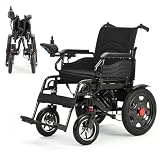

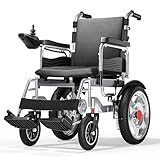
Quick comparison of leading all-terrain choices
| Chair | Best suited to | Approx. ground clearance | Approx. range | Weight capacity | Approx. chair weight | Approx. width |
|---|---|---|---|---|---|---|
| Magic Mobility Extreme X8 | Grass, gravel, trails, slopes | 6.5 inches | Up to 15 miles | 400 lb | About 330 lb | About 28.5 inches |
| Magic Mobility Frontier V6 | Outdoor versatility with a smaller footprint | About 5 inches | Up to 17 miles | 300 lb | About 265–285 lb | About 26 inches |
| Action Trackchair 2.0 | Soft ground, sand, mud, snow, steep uneven terrain | Configuration dependent | Up to about 10 miles | 350 lb | About 30 inches | About 30 inches |
| Heavy-duty four-wheel outdoor power chair | Lawns, compact gravel, parks, and paved routes | 3–5 inches | 10–20 miles | 300–450 lb | 250–400 lb | 27–32 inches |
Figures vary with battery type, seating system, tires, user weight, temperature, terrain, and accessories. Treat them as buying benchmarks rather than a substitute for the current configuration sheet from a dealer.
Best overall: Magic Mobility Extreme X8
The Extreme X8 is the strongest all-round pick when outdoor performance is the priority. Its eight-wheel design, high clearance, large pneumatic tires, and four-wheel drive help it maintain traction on grass, gravel, woodland paths, and uneven ground. The four motors also distribute load more effectively than a basic rear-wheel-drive chair.
Its main compromise is size. Around 330 pounds before some accessories, it normally requires a substantial vehicle lift, ramp system, or accessible van. It is not a chair that most people will casually place in a car trunk. The turning radius is tight for its class because of the drive layout, but the chair still needs clear floor space indoors and may be difficult in narrow hallways.
Why choose it
- High clearance reduces the chance of the frame grounding on ruts or roots.
- Pneumatic outdoor tires provide better cushioning and grip than small solid casters.
- Around 400 pounds of rated capacity leaves useful margin for the user, clothing, bags, and equipment.
- Suitable for frequent outdoor use rather than occasional lawn crossings.
Best for a smaller outdoor footprint: Magic Mobility Frontier V6
The Frontier V6 is the better choice when you need real outdoor ability but must manage width, transport, or tighter home spaces. Its approximately 26-inch width can fit through more doorways than many heavy-duty trail chairs, and its mid-wheel-drive layout can make indoor turning more predictable.
It is capable on grass, firm gravel, and maintained paths, but it is not a tracked vehicle. Deep mud, loose sand, large rocks, and sharply eroded trails can exceed its practical limits. The lower weight capacity also makes it important to calculate the complete loaded weight instead of comparing the user’s body weight alone.
Choose the Frontier V6 for regular park visits, lawns, paved routes with broken surfaces, and compact gravel. Choose the Extreme X8 if ruts, steep grades, soft ground, or rough trails are part of normal use.
Best for severe terrain: Action Trackchair 2.0
A tracked chair is a specialist tool for terrain that defeats conventional tires. The Action Trackchair 2.0 spreads its load over continuous tracks, which can improve flotation on sand, snow, mud, and soft ground. It can also climb over obstacles that would stop a small-caster power chair.
The trade-offs are substantial. Tracks can mark delicate surfaces, collect mud, and require more involved cleaning. The chair is wide and heavy, and its range is generally shorter than a wheeled chair used on firm ground. It is best for a buyer who has a specific access problem—such as a beach, hunting property, snow-covered route, or rugged trail—not simply someone who wants occasional outdoor driving.
How the important specifications affect real terrain
Ground clearance
For grass and maintained gravel, 3–5 inches may be adequate. Uneven paths with roots, drainage channels, and rocks justify approximately 5–7 inches or more. Clearance is measured at particular points, so ask where the lowest motor housing, footplate, and battery tray sit. A chair can advertise high clearance while its footplate still catches on an obstacle.
Tire type
Pneumatic tires usually offer the best combination of traction and shock absorption, but they can puncture and need pressure checks. Foam-filled tires resist punctures while retaining some cushioning, though they add weight and can be expensive to replace. Solid tires are convenient on pavement but may transmit more vibration and lose grip on loose surfaces. Small front casters are often the first limitation on gravel because they dig in or deflect sideways.
Range
Published range is commonly measured with a lighter load on a smooth, level surface. Grass, hills, cold weather, tire pressure, and repeated starts can reduce it considerably. For frequent outdoor trips, select a claimed range at least 30–50 percent greater than your planned distance.
For example, a planned six-mile outing has a 12-mile round-trip requirement. Adding a 50 percent terrain reserve gives:
12 miles × 1.5 = 18 miles of claimed range.
That does not guarantee 18 miles in deep grass, but it gives a more useful target than choosing a chair rated for exactly 12 miles.
Weight capacity
Capacity includes the occupant and anything carried on the chair. Add the user, cushion, backpack, oxygen equipment, clothing, and removable accessories. Staying below the rating improves braking margin and reduces stress on motors, suspension, and tires. If you are near the limit, request a configuration designed for that load rather than relying on the headline capacity.
Turning radius and drive layout
Mid-wheel chairs often turn neatly around their center and work well in familiar indoor spaces, but their front and rear casters can be vulnerable on rough ground. Four-wheel-drive and eight-wheel designs distribute traction more effectively outdoors, though they may need more room for controlled turns. A zero-turn specification does not mean the chair can pivot safely on every surface; spinning on wet grass or loose gravel can damage the ground and reduce traction.
Decision matrix: which type fits your situation?
| Your situation | Most sensible choice | Reason |
|---|---|---|
| Occasional firm grass and park paths; limited budget | Heavy-duty four-wheel outdoor chair | Lower purchase and service complexity than a specialist trail chair |
| Frequent gravel, slopes, and uneven lawns | Magic Mobility Frontier V6 | Good outdoor balance with a relatively manageable width |
| Rough trails, roots, ruts, and higher user weight | Magic Mobility Extreme X8 | Higher clearance, traction, and capacity |
| Sand, mud, snow, or very soft ground | Action Trackchair 2.0 | Tracks improve flotation where tires may sink |
| No van, lift, or safe ramp storage | Lighter outdoor power chair | A heavy all-terrain model may be impractical regardless of capability |
Transport and ownership costs people often miss
Transport can determine whether an all-terrain chair is useful. Confirm the chair’s total weight with batteries installed, the lift’s payload rating, the vehicle’s hitch capacity, and the combined width of the chair and removable controls. A ramp that works for a 200-pound chair may be unsafe for a 330-pound model.
Budget for pneumatic tire replacements, tubes or sealant, batteries, joystick parts, charger replacement, and periodic inspection of suspension and fasteners. Outdoor use accelerates wear on tread, bearings, caster forks, and upholstery. Rinse mud and salt without directing high-pressure water at motors, controllers, connectors, or battery compartments. Dry the chair before charging, and inspect tire pressure before every long trip.
Bottom line
For the broadest combination of clearance, traction, capacity, and grass-or-gravel performance, choose the Magic Mobility Extreme X8 if you can solve its transport requirements. Choose the Frontier V6 when width and maneuverability matter more and your routes are mostly firm. Choose the Action Trackchair 2.0 for genuinely soft or severe terrain, accepting its weight, track maintenance, and transport demands.
Before ordering, have a rehabilitation technology professional or qualified mobility dealer check seating, posture, controls, braking, transfer needs, doorway measurements, and vehicle loading. These are general buying guidelines, not a clinical recommendation.
Related Reviews & Guides

Best Why Trust the Bible? (9Marks) Picks to Buy – Our Expert-Vetted and Trusted Rec
Best 50-Inch TVs for Bright and Dark Rooms