Last Updated: October 8, 2026
Best Leather Jackets for Men: Style and Fit Guide
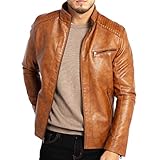
The best leather jackets for men are made from leather suited to how often you’ll wear them, lined for your climate, and cut to fit over your usual layers without pulling across the shoulders. For most people, a midweight cowhide or lambskin jacket with a simple lining is the most versatile choice; choose heavier hide for hard use, a warmer lining for cold weather, or a roomier cut if you’ll wear sweaters underneath.
Choose by how and where you’ll wear it
- Everyday city wear: A clean racer or café-racer cut in cowhide balances abrasion resistance with a trim profile. A smooth polyester or cotton lining makes it easier to put on over a shirt.
- Softness and a dressier look: Lambskin is supple and drapes well, making it a good option for occasional wear and polished outfits. It usually needs more care than cowhide and is less forgiving of rough use.
- Cold-weather commuting: Look for a hip-length jacket with a quilted lining, room in the chest and sleeves, and a closure that seals at the cuffs. A leather jacket alone is not a substitute for a windproof winter coat in severe cold.
- Motorcycle use: Choose a purpose-built motorcycle jacket with protective construction and compatible armor pockets. A fashion jacket may look similar but is not designed to provide the same riding protection.
- Relaxed, layered outfits: A bomber or flight-inspired cut typically allows more room through the body than a close-fitting racer. Check that the hem and cuffs sit comfortably rather than riding up when you move.
Leather, lining, and cut: what changes in practice
| Feature | Typical options | What to expect | Best suited to |
|---|---|---|---|
| Leather | Lambskin: about 0.7–1.0 mm; cowhide: about 1.0–1.3 mm | Thinner lambskin is generally softer and lighter. Heavier cowhide tends to resist scuffs better but can feel stiff at first. Thickness varies by maker and is not a safety rating. | Lambskin for a softer, dressier feel; cowhide for frequent wear |
| Lining | Polyester or cotton shell lining; quilted lining commonly about 60–100 g/m² | A light lining helps with layering and ease of movement. Quilting adds insulation and bulk; the fill weight is only one part of warmth, alongside fit and wind protection. | Light lining for mild weather; quilting for cooler commutes |
| Cut | Racer, bomber, café racer, relaxed flight style | A close cut looks neat but leaves less room for layers. Ribbed hems on bombers can help hold warmth, while a straighter hem is easier to wear over longer tops. | Racer for a streamlined outline; bomber for layering |
| Typical weight | About 1.2–2.0 kg for many unarmored men’s jackets in sizes M–L | Actual weight depends on hide, hardware, lining, and size. A heavier jacket may feel more substantial but can be tiring for all-day wear. | Compare garment weight if comfort during long wear matters |
These figures are practical comparison ranges, not universal specifications. Brands measure materials differently, and a jacket’s label may not state leather thickness or lining fill. Ask the maker when a number matters to your decision.
As an Amazon Associate we earn from qualifying purchases at no extra cost to you.


Find a cut that works with your build
If you have broad shoulders or a larger chest
Prioritize shoulder seams that sit near the edge of your shoulders and enough chest room to zip the jacket without strain. A straight or slightly relaxed cut is often easier to fit than a sharply tapered racer. If the chest fits but the waist looks loose, a tailor may be able to adjust some seams; leather alterations are specialized, so confirm feasibility before buying.
If you have a shorter torso
Check the jacket’s center-back length and where the hem falls, rather than relying on the model’s photos. A shorter bomber can balance proportions, but a tight ribbed hem may bunch over a belt. Avoid sleeves that cover the heel of your hand; shortening leather sleeves can be complex, especially with zips or decorative cuffs.
If you are tall or slim
Look for enough sleeve length and a body length that covers the waistband when you reach forward. Slim cuts can suit a narrower frame, but they should still allow a full breath and comfortable arm movement. If a jacket fits in the shoulders but pulls at the back when you extend your arms, try a different pattern rather than simply sizing up.
Use a simple fit check
- Wear the kind of shirt or sweater you expect to put under the jacket.
- Zip it fully. The front should close without strong tension, and the lapels or front panels should lie flat.
- Reach forward, cross your arms, and raise them. Some movement is normal; sharp pulling at the shoulders or armholes is a warning.
- Check sleeve length with your arms relaxed. Cuffs should end around the wrist, not halfway up the forearm.
- Compare the brand’s garment measurements with a jacket you already like. Measure chest across the garment under the arms, then double that number for an approximate circumference.
For example, if a well-fitting jacket measures 22 inches across the chest when laid flat, its approximate chest circumference is 44 inches. A new jacket with the same measurement may still fit differently because of its pattern, lining, and leather stiffness, so use the number as a starting point rather than a guarantee.
Durability and ownership: what to inspect
Leather often outlasts the small components attached to it. Zippers, snaps, pocket linings, and stitching at stress points can wear before the hide does. Before buying, inspect zipper action, seam consistency, pocket depth, and whether the lining catches when you move your arms. A jacket that is difficult to zip or has a lining that twists can become frustrating even if its leather is excellent.
Care starts with keeping the jacket dry when possible. If it gets wet, let it dry naturally on a broad hanger, away from heaters and direct sunlight; concentrated heat can dry or distort leather. Brush off dust with a soft cloth and use a leather cleaner or conditioner only if its maker says it is suitable for that finish. Test any product on a hidden area first. Too much conditioner can leave some leathers greasy or darkened, and suede needs different care from smooth leather.
Store the jacket with room around it so the leather can breathe. Avoid folding it for long periods or hanging it on a thin wire hanger, which can distort the shoulders. For a torn seam, damaged zipper, or deep stain, a leather specialist is usually a better choice than an all-purpose repair kit.
Quick decision guide
| Your priority | A sensible starting point | Trade-off to accept |
|---|---|---|
| One jacket for regular casual wear | Midweight cowhide, light lining, straight racer or café-racer cut | May feel stiff during the initial break-in |
| Soft feel and sharper outfits | Lambskin with a simple lining and restrained hardware | Needs gentler handling and careful storage |
| Cool-weather layering | Quilted lining, roomier bomber or flight-style cut | More bulk and less comfort in mild weather |
| Frequent riding | Purpose-built motorcycle jacket designed for protective inserts | Can be heavier and less tailored for everyday outfits |
How much should you spend?
As a broad market guide, entry-level genuine-leather jackets often sit around $150–$350, midrange options around $350–$800, and premium or specialist designs can exceed $800. These are general ranges, not quality guarantees. Construction, fit, leather grade, hardware, lining, and repair support matter more than price alone. At a lower budget, prioritize a comfortable fit and sound stitching over decorative details; for a jacket you expect to wear for years, repairability and a reliable zipper can be worth paying for.
The best choice is the one whose leather, lining, and pattern suit your real routine. Start with where you’ll wear it, fit it over your usual layers, and treat listed measurements as a way to narrow options—not as a replacement for checking movement and comfort.
Related Reviews & Guides


Best Grand Duchess Christmas Tree in 2026: Specs and Prices Compared

Best Computer TV Monitors for Work and Play