Last Updated: October 8, 2026
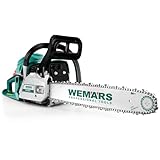
- Top Pick: 62CC Gas Chainsaw, 20 Inch Power Chain Saw, 2-Cycle Handed Petrol Chainsaws Gasoline Chainsaws Garden Tool for Cutting Trees, Wood, Outdoor Home Garden and Farm Use
- Best Value: SENIX 4-Cycle 18-Inch Gas Chainsaw | 49cc Cordless Chain Saw for Wood Cutting, Tree Trimming, Farm & Home Garden Use | No Fuel Mixing, Automatic Oiler & Quick Start Engine
- Premium Choice: Cordless Small Electric Chainsaw For Home Use
The best battery chainsaws for occasional use are usually a compact 12- to 16-inch model with a removable lithium-ion battery, tool-free chain adjustment, automatic oiling, and a battery platform you can store and recharge without special treatment.
As an Amazon Associate we earn from qualifying purchases at no extra cost to you.


Quick picks by situation
- Best for small branches and limited storage: DeWalt DCCS620, with a 12-inch bar and 20V MAX battery system.
- Best balanced choice for homeowners: Makita XCU03, a 14-inch saw powered by two 18V batteries.
- Best for occasional firewood and storm cleanup: EGO CS1611E, with a 16-inch bar and 56V battery system.
- Best for more demanding light-to-medium work: Greenworks 80V 18-inch chainsaw.
- Best if you already own compatible batteries: Milwaukee M18 FUEL 16-inch chainsaw, model 2827, or another saw in your existing platform.
For occasional use, the battery ecosystem often matters more than a small difference in cutting speed. A less expensive bare tool is attractive if you already own compatible batteries; starting a new platform can make the saw, battery, and charger cost considerably more.
Comparison of leading occasional-use battery chainsaws
The figures below are useful buying references, but configuration varies by kit, battery, guide bar, and market. Tool-only weights exclude the battery and may differ slightly between production versions.
| Model | Voltage platform | Bar length | Approx. tool-only weight | Adjustment and oiling | Best fit |
|---|---|---|---|---|---|
| DeWalt DCCS620 | 20V MAX | 12 in | 8.8 lb | Tool-free side tensioner; automatic oiling | Pruning, small limbs, compact storage |
| Makita XCU03 | 36V from two 18V batteries | 14 in | About 10.2 lb | Tool-free tensioning; automatic oiling | Quiet general homeowner work |
| EGO CS1611E | 56V | 16 in | About 12 lb | Tool-free tensioning; automatic oiling | Storm debris and occasional firewood |
| Greenworks 80V 18-inch | 80V | 18 in | About 11 lb | Tool-free tensioning; automatic oiling | Longer cuts and larger homeowner jobs |
| Milwaukee M18 FUEL 2827 | 18V | 16 in | About 13 lb | Tool-free tensioning; automatic oiling | M18 owners needing a full-size saw |
What occasional users should prioritize
Easy starting beats maximum power
A battery chainsaw starts with a trigger or safety button rather than a fuel primer, choke, pull cord, or carburetor. That matters when the saw has spent months in a shed. There is no stale gasoline to drain and no cold-engine starting sequence to remember.
Look for a clearly positioned lockout, a comfortable trigger, and a hand guard that does not interfere with your grip. Left-handed users should handle the saw in the manufacturer’s specified two-handed position and check whether the trigger, battery release, and chain-tensioning controls are easy to operate from either side. A chainsaw is not made safe by reversing the grip, and the chain brake must remain unobstructed.
Choose the shortest bar that covers your work
A 12-inch bar is easier to control and store, and it is well suited to branches roughly 4 to 8 inches in diameter. A 14- or 16-inch bar gives more clearance for storm-damaged limbs and small logs. An 18-inch model is useful for larger cuts but adds weight, battery demand, and the temptation to tackle work beyond a homeowner saw’s sensible limits.
Do not select a bar solely by multiplying its length by two. A bar should not be forced through material near its maximum capacity. For occasional work, a practical rule is to choose a bar at least 2 inches longer than the typical diameter you expect to cut, while keeping the saw light enough to control.
Chain adjustment is a real ownership issue
New chains stretch during their first few cuts, and every chain gradually loosens through normal use. Tool-free tensioners are convenient, but they still need correct adjustment. With the battery removed, loosen the side cover, turn the tension wheel until the drive links remain engaged in the bar groove, then retighten the cover firmly. The chain should move around the bar by hand with moderate resistance and should snap back into place when lifted slightly from the bar.
A chain that is too loose can derail. One that is too tight overheats the bar, increases battery drain, and accelerates wear on the drive sprocket. Check tension before each session and again after the first several minutes of cutting.
Runtime: what a light-job battery can actually do
Manufacturers commonly describe runtime using cuts through a particular size of wood, so runtime claims are not directly comparable. Hard, wet, or large wood consumes much more energy than dry softwood and small branches. A sharp chain also makes a major difference.
As a planning estimate, a 4Ah battery may provide roughly 20 to 45 minutes of intermittent light cutting, while a 5Ah or 6Ah pack may provide about 30 to 70 minutes. This is not continuous cutting time: it includes repositioning, clearing branches, checking the chain, and letting the motor rest. A compact 12-inch saw often gets more usable work from the same battery than a high-power 16- or 18-inch model.
For example, suppose a 5Ah battery gives 40 minutes of practical intermittent cutting and your cleanup involves ten-minute bursts separated by moving branches. That is approximately four work periods before recharging. If the battery is more than half full when stored, this is usually enough for a small pruning or storm-cleanup session without buying a second pack.
Battery shelf life and storage
Lithium-ion batteries do not need to be emptied before storage. For a saw used only a few times each year:
- Remove the battery from the saw after every session.
- Store the battery indoors in a dry location, away from direct sun and freezing or high heat.
- Leave it partly charged rather than completely empty; around 30 to 60 percent is a sensible long-term storage range.
- Check the charge every few months and recharge according to the battery maker’s instructions.
- Allow a battery that has just been used or exposed to cold to return to a moderate temperature before charging.
- Do not store the saw with bar oil where it can leak onto the battery contacts.
A battery may last many years when kept cool and dry, but capacity gradually declines even when it is rarely used. If the saw is needed for emergency storm cleanup, keeping a second charged battery is more dependable than assuming an old pack will deliver its original runtime.
Maintenance between uses
After every cutting session
- Remove the battery before cleaning, adjusting, or inspecting the chain.
- Brush chips and sawdust from the chain brake area, sprocket cover, battery bay, and cooling vents.
- Check that the oil reservoir has enough bar-and-chain oil. Never substitute used motor oil.
- Inspect the bar groove and oil outlet. Packed sawdust can prevent lubrication.
- Check for damaged or missing drive links, loose fasteners, and a bent or burred bar rail.
- Wipe the chain lightly with a rust-preventive product if the saw will be stored for a long period, keeping contaminants away from the brake and battery contacts.
What wears first
For occasional users, the chain is normally the first consumable, not the motor. A dull chain produces fine dust, cuts slowly, pulls to one side, and makes the saw feel underpowered. Sharpen it when it stops producing reasonably sized chips, or replace it when the cutters are damaged or too short. Confirm the replacement chain’s pitch, gauge, and drive-link count; a 12-inch chain is not automatically interchangeable with every other 12-inch chain.
The guide bar can wear unevenly if the chain is loose or lubrication is poor. Rotate a reversible bar periodically if the manufacturer permits it, and replace it when the rails are visibly spread, the groove is damaged, or the bar has developed a pronounced side wear pattern. The drive sprocket should also be inspected when fitting several replacement chains.
Decision matrix
| Your situation | Recommended specification | Why |
|---|---|---|
| One or two short sessions per year, very little storage | 12-inch, 18V to 20V, 2Ah to 4Ah battery | Light, compact, and adequate for branches |
| Several pruning sessions and occasional storm debris | 14- or 16-inch, 36V to 56V, 4Ah to 6Ah battery | Better reserve without excessive bulk |
| Existing tool batteries from one brand | Bare saw in the same platform | Lowest ownership cost and shared chargers |
| Limited upper-body strength or awkward access | 12- or 14-inch model under about 11 lb before battery | Easier control and less fatigue |
| Regular small-log cutting | 16- or 18-inch, 56V to 80V, 5Ah or larger battery | More cutting reserve and fewer pauses |
Bottom line
For most occasional homeowners, a 14- or 16-inch battery chainsaw is the best compromise between control, runtime, and useful capacity. Choose a 12-inch model when storage and low weight matter most, and move to an 18-inch saw only when your regular work justifies its extra battery demand. The best battery chainsaw for occasional use is the one whose battery can be stored correctly, whose chain you will maintain, and whose bar length matches the wood you actually plan to cut.
Related Reviews & Guides



Best Styling Gel for Men: Hold, Shine and Flakes Compared (7 Picks)

6 Best Left Handed Ergo Mice 2026