Last Updated: October 8, 2026
- Best automatic curtain openers at a glance
- Head-to-head: retrofit devices versus dedicated motorized tracks
- Which opener fits your situation?
- Noise, speed and everyday usability
- Battery, solar and wired power
- Apps and smart-home integration
- How to check compatibility before ordering
- Ownership realities: what wears first
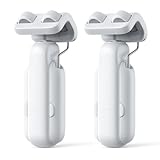
- Top Pick: SwitchBot 2025 Automatic Curtain Opener 3 Rod-Bluetooth Control, WiFi&APP Control, Upgraded High-Performance, Add Hub to Work with Alexa, Google Home, HomeKit via Matter(2025 Curtain Opener*2)
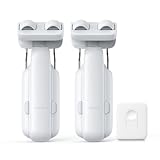
- Best Value: SwitchBot 2025 Automatic Curtain Opener 2 Packs with Remote, Bluetooth Remote Control, WiFi&APP Control, Upgraded High-Performance, Add Hub to Work with Alexa, Google Home, HomeKit
- Premium Choice: SwitchBot Automatic Curtain Opener – Bluetooth Remote Control Smart Curtain with App/Timer, Upgraded High-Performance Motor, Add Hub to Work with Alexa, Google Home, HomeKit
The best automatic curtain openers for most homes are SwitchBot Curtain 3 for the easiest retrofit, Aqara Curtain Driver E1 for a lower-cost smart-home setup, and a wired Somfy or Dooya motor for heavy curtains that open every day.
The right choice depends less on the app than on four measurements: your curtain hardware, the combined curtain weight, available power, and whether you want a quiet occasional opener or a motor designed for frequent use.
As an Amazon Associate we earn from qualifying purchases at no extra cost to you.


Best automatic curtain openers at a glance
| Product or system | Hardware compatibility | Approximate curtain capacity | Power | Smart-home control | Best for |
|---|---|---|---|---|---|
| SwitchBot Curtain 3 | Rod and U-rail versions; check wheel size and rail shape | Up to about 15 kg per motor, depending on installation | Rechargeable battery; optional solar panel | SwitchBot app; hub required for wider integrations | Most renters and standard curtains |
| Aqara Curtain Driver E1 | Rod or track variants; not interchangeable | Up to about 12 kg per motor | Rechargeable battery; optional solar charging accessory | Aqara app; Zigbee hub for Apple Home, Alexa and Google Home support | Homes already using Aqara sensors |
| Somfy curtain motor system | Usually installed with a compatible motorized track or rod | Often 15–30 kg, depending on motor and track | Wired or rechargeable, depending on model | TaHoma and selected third-party platforms | Quiet, permanent installations |
| Dooya motorized curtain track | Dedicated track; some systems support custom track lengths | Commonly 20–40 kg, depending on motor | Usually mains-powered; battery models also exist | Varies by controller, gateway and motor model | Large windows and heavy blackout curtains |
These are useful planning figures rather than universal guarantees. A curtain’s pleats, friction, track level, fabric stiffness and starting force can reduce practical capacity. Always match the exact motor, track and regional version before ordering.
Head-to-head: retrofit devices versus dedicated motorized tracks
Retrofit curtain openers: simplest installation
Retrofit openers attach to an existing rod or curtain track and pull the leading edge of the curtain. SwitchBot Curtain 3 and Aqara Curtain Driver E1 are the most recognizable choices in this category. They can usually be installed without removing the curtain rod, drilling into the wall or replacing the existing fabric.
This is especially useful in a rental, a bedroom with an awkwardly placed window, or a room where you want automation without rewiring. The trade-off is that compatibility is highly specific. A rod device needs the correct roller or wheel arrangement, while a track device needs the right channel dimensions. A motor that fits a round rod will not necessarily travel correctly on a U-shaped ceiling track.
Retrofit devices also pull from one point on the curtain. If the fabric is very wide, badly aligned or unusually heavy, the motor may stall even when the stated weight limit appears sufficient. For curtains that meet in the center, you normally need one motor on each moving panel, plus a way for the motors to coordinate.
Dedicated tracks: better for heavy or frequently used curtains
A Somfy or Dooya motorized track replaces more of the existing hardware. That makes installation more involved, but the load is distributed along the track rather than concentrated at one small drive unit. Dedicated systems are generally the better choice for tall blackout curtains, large living-room windows, hotel-style drapes, and curtains that open and close several times every day.
Wired systems avoid charging reminders and are usually the most dependable for high-frequency use. A rechargeable motor is more convenient where adding a power outlet would be disruptive, but its battery runtime depends on curtain weight, travel distance, temperature and the number of daily cycles.
Which opener fits your situation?
| Your situation | Recommended direction | Why |
|---|---|---|
| Renter, light curtains, no tools | Retrofit rod or track opener | Usually removable and battery-powered |
| Existing Aqara sensors or hub | Aqara Curtain Driver E1 | Simple automation with motion, light and temperature routines |
| Different curtain rods throughout the home | SwitchBot Curtain 3, after checking each fitting | Broad retrofit approach, but each window still needs a compatibility check |
| Heavy blackout fabric over a wide window | Dedicated Somfy or Dooya track | More suitable for sustained pulling force |
| Several daily cycles and no charging access | Wired motorized track | Removes battery maintenance and low-charge failures |
| Occasional guest-room use | Battery retrofit opener | Lower installation cost and adequate for infrequent movement |
Noise, speed and everyday usability
Motor noise matters more in bedrooms, nurseries and home offices than in a lounge. Retrofit devices commonly produce a soft mechanical whir, but the curtain itself may be louder than the motor when rings, hooks or track carriers scrape. A perfectly level rod and clean track can make a budget opener seem quieter than a premium motor installed on a binding rail.
Dedicated systems tend to offer smoother starts and stops. Some can be configured to move slowly, which reduces fabric sway and mechanical shock. Check the travel speed as well as the advertised noise level: a quieter motor that takes a long time to cross a wide window may be irritating during a morning routine.
For bedrooms, avoid placing the motor directly against a thin wall shared with another room. Use the slowest useful opening speed, keep carriers lubricated only with a lubricant approved for that hardware, and make sure the curtain is not dragging on the sill or floor.
Battery, solar and wired power
Battery-powered openers are attractive because they avoid an electrician and preserve the appearance of the window. Manufacturer claims commonly range from several months to roughly a year per charge under light or moderate use. Treat that as a best-case planning estimate rather than a guarantee.
Here is a practical runtime calculation. Suppose an opener is rated for 900 movement cycles and your curtains complete two cycles per day—opening in the morning and closing at night. The theoretical runtime is:
900 cycles ÷ 2 cycles per day = 450 days
That number can be misleading because a “cycle” may mean one direction, the curtain may be near the load limit, and battery capacity declines with age. If friction or heavy fabric effectively halves the usable capacity, the same installation may need charging about every seven months. A solar accessory can reduce charging, but it may not keep up with a shaded north-facing window or a window covered by a deep overhang.
Choose wired power for very tall windows, commercial-weight drapes, inaccessible motors, or routines that run many times a day. Choose battery power when the installation is temporary, the curtains are light, or preserving the wall is more important than eliminating maintenance.
Apps and smart-home integration
All of these systems can provide basic scheduling, but their wider automation capabilities differ. SwitchBot offers schedules, scenes and optional hub-based integrations. Aqara is particularly convenient when you already use its sensors: a light sensor can open curtains as daylight rises, while a door or motion sensor can trigger a privacy routine. Dedicated Somfy and Dooya installations vary considerably because the controller and regional gateway determine which platforms are available.
Before buying, confirm whether the feature you want requires a hub. Remote control, voice assistants, Matter support, geofencing and sensor-based automation may not be available from the motor alone. Also check whether the system can set a precise opening percentage, remember position after a power interruption, and operate locally when the internet is unavailable.
For a left-handed user, app layout is rarely the deciding issue. Physical access is more important: place a manual control or wall switch on the side you naturally reach, and avoid positioning a charging port behind furniture. If two curtains meet in the center, confirm that the app supports synchronized opening rather than merely sending two independent commands.
How to check compatibility before ordering
- Identify the hardware. Measure the rod diameter, track width, channel opening and the clearance around the curtain. Photograph the end caps and carriers.
- Measure the fabric. Weigh each moving panel, including lining and attached hooks. Do not rely only on width; dense velvet and blackout layers are much heavier than voile.
- Check the movement. Pull each panel by hand. If it catches, tilts or requires a hard tug, fix the rod or track before adding a motor.
- Choose one motor or two. A single panel that stacks to one side may need one motor. Center-opening curtains usually need two coordinated motors.
- Plan charging or wiring. Locate the motor’s charging socket and make sure a cable can reach it without crossing the window or becoming a trip hazard.
- Confirm the ecosystem. Verify hub requirements and support for your preferred voice assistant or smart-home platform in your country.
Ownership realities: what wears first
The motor is not always the first component to fail. Curtain rings, track carriers, clips, belts and rod joints often create extra resistance long before the electronics wear out. Dust collects in tracks, pet hair can wrap around wheels, and fabric hems may rub against a sill or radiator.
Every few months, vacuum the track or rod area, inspect the drive wheel, and check that mounting brackets remain tight. Keep the curtain evenly gathered so one side is not constantly dragging. Avoid forcing the fabric by hand while the motor is moving unless the model specifically supports manual override. Repeated stalls are a sign to reduce the load or repair the hardware, not simply to recharge the battery.
If you want the least installation work, choose SwitchBot Curtain 3 after measuring the rod or track. If you already use Aqara, the Curtain Driver E1 is a sensible ecosystem match. For heavy curtains, large spans and daily reliability, spend more on a compatible wired Somfy or Dooya track rather than asking a small retrofit motor to do a full-size track’s job.
Related Reviews & Guides


Best Copilot+ PCs for Everyday AI
Best Pedicure Spa Chairs for Salons