Last Updated: September 18, 2026
Choosing between an electric vs manual left handed can opener is less about which tool looks more modern and more about how you open cans every week. A left-handed user needs a handle and cutting mechanism that feel natural in the left hand, while every household also has to weigh storage, cleanup, reliability, and replacement cost. Electric models can reduce wrist effort and make repetitive opening easier, but they take counter space and depend on batteries or an outlet. Manual left-handed models are compact, inexpensive, and ready whenever you are, though they require more hand strength and coordination.
The best choice for your kitchen depends on who will use the opener, how often you open cans, and whether your priority is effortless operation or simple long-term ownership.
As an Amazon Associate we earn from qualifying purchases at no extra cost to you. Product prices and availability are accurate as of the date shown and are subject to change.



Quick Verdict
Choose an electric can opener if you open several cans per week, have arthritis or limited grip strength, or want a tool that does most of the work automatically. Typical countertop models cost about $20 to $50, use roughly 60 to 120 watts when plugged in, and often measure approximately 5 to 7 inches wide, 5 to 8 inches deep, and 8 to 11 inches tall.
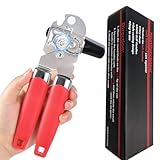
Choose a manual left-handed can opener if you value portability, low cost, and easy storage. Most cost about $12 to $25, weigh around 3 to 6 ounces, and fit in a drawer. The two manual products listed at $15.99 and $20.99 illustrate the typical price range for basic and more substantial left-handed designs.
For most left-handed households, a manual opener is the better value unless physical comfort is the deciding factor. An electric model becomes more compelling when reduced hand effort matters more than counter space and cord management.
Side by Side
| Factor | Electric | Manual Left Handed |
|---|---|---|
| Comfort | Minimal turning; useful for weak grip or hand pain | Requires repeated squeezing, gripping, and turning |
| Durability | Motor and gears add parts that can wear out | Fewer moving parts; quality steel can last many years |
| Price range | About $20–$50 | About $12–$25 |
| Maintenance | Wipe the body; remove and wash detachable cutting parts if permitted | Wipe or hand-wash the blade and handles; dry thoroughly |
| Space needed | Usually 5–7 inches wide and 8–11 inches tall | About 2–3 inches wide and easy to store in a drawer |
| Power | Electric cord or batteries, depending on model | No power required |
| Look | Appliance-like; often available in white, black, or stainless-style finishes | Simple utensil design with metal, plastic, or rubberized handles |
| Portability | Awkward for camping, travel, and small emergency kits | Works anywhere and weighs only a few ounces |
| Resale | Limited; used countertop appliances are harder to ship and sell | Limited, but inexpensive and easy to give away or replace |
| Best for | Frequent use, accessibility, and busy kitchens | Small spaces, occasional use, and low-cost ownership |
Where Electric Wins
The biggest advantage of an electric can opener is reduced effort. Once the can is positioned correctly, a motor turns it around the cutting wheel. That can be a meaningful improvement for people with arthritis, carpal tunnel symptoms, reduced dexterity, or an injury that makes twisting difficult. It also helps when a household opens several cans while preparing soups, sauces, pet food, or large meals.
Electric operation can be especially convenient for users who find manual tools tiring rather than technically difficult. Instead of maintaining pressure and turning a knob, you typically place the can under the cutting head and press a lever or button. Some designs stop automatically after the lid is cut, although operation varies by model. Read the instructions before assuming a particular unit can handle every can size or shape.
Many electric countertop openers are designed to leave a relatively smooth lid edge. That may reduce the chance of sharp metal cuts when removing the lid, though users should still handle the lid carefully. A smooth-edge feature does not mean the cut lid is safe to touch casually.
Electric models can also look tidier on an open counter than a loose utensil, particularly in a kitchen with coordinated black, white, or stainless-style appliances. The tradeoff is that the appliance becomes part of your visual landscape. A compact kitchen may not have an extra 5-by-7-inch footprint available.
Power needs are modest, but they are still a consideration. Corded models need a nearby outlet, while battery-operated models need replacement batteries. A power strip such as the HANYCONY 1080J model with a 5-foot braided cord may be useful for organizing a small appliance area, but it does not eliminate the need to keep the can opener away from spills and overloaded outlets. Keep unrelated countertop equipment, including a VOLPAM electric scooter charger, on an appropriate circuit and away from food-preparation surfaces.
Where Manual Left Handed Can Opener Wins
A true left-handed manual opener places the cutting wheel, turning mechanism, and handle orientation where a left-handed user can operate them naturally. That distinction matters. A standard opener may technically work in either hand, but forcing a left-handed person to reverse the tool or reach across the can can make the motion uncomfortable and less controlled.
Manual models are also easier to own. There is no motor to fail, cord to store, battery compartment to corrode, or electrical base to wipe around. A quality opener with a stainless-steel cutting wheel and sturdy handle can remain useful for years when it is kept dry and used on standard cans. The red-handle Left Handed Can Opener Manual, listed at $15.99, and Lefty’s black heavy-duty stainless-steel model, listed at $20.99, fit within the normal budget for dedicated left-handed tools.
Storage is another strong point. A manual opener usually takes up less than 20 cubic inches, so it can sit in a utensil drawer, camping box, or emergency kit. It also weighs little enough to pack for travel. If you lose it, replacement is relatively painless compared with replacing a countertop appliance.
The limitations are equally clear. Manual opening requires a firm grip and a repeated turning motion. Very large cans may take longer, and inexpensive mechanisms can slip, jam, or leave a rough edge. When shopping, look for a broad, comfortable handle, a smooth-turning knob, a securely mounted cutting wheel, and an orientation explicitly described as left-handed rather than merely “ambidextrous.”
Cost Over 5 Years
Up-front price favors manual models, but the difference is not enormous. A $16 manual opener used for five years costs about $3.20 per year, assuming it remains functional. A $21 model costs about $4.20 per year. Even replacing a $16 opener once during that period would bring the total to $32, or $6.40 per year.
An electric model priced at $30 costs about $6 per year over five years before batteries or replacement parts. A $50 model costs $10 per year. Battery-powered versions may add roughly $2 to $10 annually depending on battery type and use; corded models avoid that expense but consume a small amount of electricity and require outlet space.
These estimates do not predict service life. Motors, gears, switches, and plastic housings can fail earlier or last longer than expected, while a manual blade can eventually dull. The practical conclusion is that electric is usually worth the extra cost for comfort, not for financial savings.
Which One for Your Home
Small apartment
Pick a manual left-handed opener unless you have a specific accessibility need. Drawer storage preserves valuable counter space, and the tool does not compete for an outlet with a toaster, coffee maker, or microwave. A $15 to $21 model is usually enough for occasional meals.
Family with kids or pets
An electric model may be convenient for frequent meal preparation and pet-food cans, especially when an adult is opening multiple cans in succession. Store it where children cannot reach the cutting mechanism, and remove sharp lids immediately. If the household opens cans only occasionally, a manual model is simpler and easier to supervise.
Rental
Manual is the low-commitment choice. It needs no installation, takes almost no space, and moves easily when you relocate. An electric model can still work well in a rental if the kitchen has a clear, dry counter area and an accessible outlet, but avoid letting its cord create a snag or clutter point.
Long-term home
Consider buying based on the person who uses it most. If comfort and accessibility are priorities, reserve a permanent spot for an electric opener. If reliability and minimal maintenance matter more, choose a well-built manual left-handed design. In a large kitchen, owning both can be sensible: the manual opener serves as a power-free backup, while the electric unit handles routine use.
FAQ
Are electric can openers made for left-handed users?
Some are, but many countertop electric models are designed to accept a can without requiring a particular hand. Check the control placement, lid-lifting lever, and manufacturer’s instructions. A manual product labeled specifically for left-handed use provides more certainty about hand position.
Do manual left-handed can openers leave sharp edges?
They can. Traditional cutting wheels often leave a sharp lid and rim, particularly if the wheel is dull or the can is opened at an uneven angle. Use a steady motion, inspect the edge, and keep the lid away from children and pets. Some electric models use smooth-edge cutting systems, but the resulting lid still needs careful handling.
How often should a can opener be cleaned?
Clean it after each use or whenever food residue remains on the cutting wheel. Hand-wash parts unless the instructions clearly say they are dishwasher-safe, then dry them completely. Never submerge a motorized base or corded appliance.
Is an electric can opener worth it for one person?
Usually only if you open cans regularly or have difficulty with grip and wrist movement. For occasional use, a $15 to $25 left-handed manual opener is more economical and easier to store. For daily use or limited hand strength, the added $10 to $35 for an electric model can buy meaningful convenience.
Ready to decide? Our #1 pick for 2026 is the Comfort.
Live price & availability on Amazon.
Related Reviews & Guides


3 Best Left-Handed Gretsch Guitars for Style & Sound

Buy People on Amazon: 6 Picks Worth Ordering (2026)