Last Updated: September 18, 2026
Quick answer: Our top pick in 2026 is the Basic ambidextrous wired mouse — our #1 rated choice. See the full ranked comparison, alternatives and buying advice below.
The Short Answer
Yes, a vertical gaming mouse can be worth it for a left-handed player—but only if you choose a truly left-handed or ambidextrous design and accept that you may give up some competitive-gaming features. The main benefit is a more neutral wrist and forearm position, not automatically better aim, faster reaction time, or higher performance.
For left-handed users, the decision is harder than it is for right-handed buyers because the vertical-mouse market is heavily right-hand dominant. Many products described as “vertical” are sculpted for the right hand, with thumb rests, side buttons, and contours that cannot be comfortably mirrored. A mouse that is merely shaped like a handshake is not automatically left-handed.
What You Actually Get
A vertical mouse rotates your hand so your thumb points upward or slightly forward instead of resting flat against the desk. Depending on the angle, your palm may sit between roughly 50 and 90 degrees from the desktop. This reduces the amount of forearm rotation required to grip the mouse, which some people find more comfortable during long work or gaming sessions.
In practical terms, expect a taller and wider device than a conventional gaming mouse. Typical dimensions are about 4.5 to 5.2 inches long, 2.8 to 3.5 inches wide, and 3.0 to 4.0 inches tall. Weight commonly falls between 90 and 150 grams, while lightweight conventional gaming mice may weigh 60 to 80 grams. That extra height and mass can make broad movements feel slower and can require a larger mouse space.
A vertical gaming model may include a high-DPI optical sensor, adjustable polling rates, programmable buttons, RGB lighting, onboard profiles, and wired or wireless connectivity. However, the label “gaming” does not guarantee that every feature matches a standard esports mouse. Some vertical models use office-style sensors, have polling rates of 125 or 500 Hz rather than 1,000 Hz, or provide only two side buttons.
For everyday play, the sensor’s consistency matters more than an enormous DPI number. A sensor rated at 12,000 DPI is not necessarily more accurate for a typical player than one set to 1,600 or 3,200 DPI. Check whether the device supports the button layout you need, the operating system you use, and the connection type you prefer. A wired cable usually keeps cost and weight lower; wireless versions commonly cost $20 to $60 more and may weigh 10 to 30 grams extra because of the battery.
Pros
- Less forearm rotation: The handshake grip can reduce the feeling of twisting your palm downward, especially during long sessions.
- Potentially better comfort: Users with wrist fatigue or discomfort from a flat mouse may find the elevated grip easier to tolerate.
- Clear left-handed advantage when available: A proper left-handed design puts the thumb rest, buttons, and palm support on the correct sides instead of forcing your hand into a right-handed shell.
- Useful for mixed work and gaming: A vertical mouse can be comfortable for browsing, office work, strategy games, simulations, and slower-paced titles.
- More relaxed grip: The upright shape can encourage you to hold the mouse with your whole hand rather than pinching it with your fingertips.
- Less reliance on wrist-only movement: The shape often encourages larger forearm movements, which can be helpful when your desk and mouse pad provide enough room.
- Possible button customization: On models with software support, remapping side buttons for push-to-talk, reload, melee, or productivity shortcuts can make the unusual shape more useful.
Cons
- Left-handed choices are limited: Many vertical mice are right-handed only. A symmetrical mouse may be ambidextrous internally but still have buttons or contours that favor one hand.
- A learning period is unavoidable: Expect several days, and sometimes two to three weeks, before aiming, scrolling, and clicking feel natural.
- Less suitable for fast competitive games: First-person shooters, arena games, and other titles that demand rapid flicks can feel awkward with a tall 100-gram mouse.
- Reduced precision for some grip styles: Claw and fingertip players may dislike the large palm support and limited ability to make tiny finger adjustments.
- Fewer buttons than a typical gaming mouse: A vertical shell may have room for only five to seven useful inputs, which is a problem for massively multiplayer online games or complex creative software.
- More desk space required: The tall body and wider base can feel cramped on a small desk or narrow keyboard tray. A mouse pad at least 12 by 10 inches is a reasonable starting point; larger is better for low-sensitivity play.
- Higher prices for specialized designs: A basic vertical mouse may cost $25 to $50, while a left-handed or gaming-oriented wireless model can reach $70 to $130.
- Comfort is not a cure: A vertical grip cannot fix an overly high desk, poor chair height, excessive clicking, or an existing injury. Persistent pain deserves professional medical advice.
Who Should Buy It
Buy one if your priority is comfort during long sessions and you naturally prefer a palm or relaxed claw grip. It is especially worth considering if a conventional mouse leaves your forearm feeling twisted, your wrist tired, or your palm tense after several hours.
It can also make sense for players who split time between games and desk work. A vertical mouse is more compelling for turn-based strategy, role-playing games, management games, adventure titles, and casual play than for highly competitive shooters. If you are left-handed, prioritize the physical shape before the sensor specifications. Confirm that the mouse supports your hand without forcing your thumb or little finger against a hard edge.
Before buying, measure your hand from the wrist crease to the tip of your middle finger. A mouse around 4.5 inches long may suit smaller hands, while larger hands may prefer something near 5 inches or more. If possible, buy from a seller with a practical return period. Ten minutes of holding a mouse is not enough to predict comfort after a four-hour session.
Who Should Skip It
Skip a vertical gaming mouse if you play competitive FPS games and care more about fast, repeatable aim than wrist posture. The taller body, heavier weight, and different contact points can make rapid direction changes less familiar. It is also a poor fit if you use a fingertip grip, have very limited desk space, or need eight to twelve easily reachable buttons.
You should also skip right-handed vertical models simply because they are cheaper or more available. Left-handed users may be able to tolerate one for basic browsing, but the thumb support and button placement can create pressure and awkward reach. A flat ambidextrous mouse is usually safer than a right-handed vertical mouse for a left-handed buyer.
Cheaper Alternatives
| Option | Cost | Trade-off |
|---|---|---|
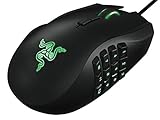
| Basic ambidextrous wired mouse | $15–$35 | Usually lighter and easier to find, but it does not provide the upright handshake position. |
| Left-handed ergonomic flat mouse | $25–$60 | Supports the correct hand and palm shape, though it may have fewer gaming controls. |
| Standard gaming mouse with adjustable DPI | $30–$70 | Better sensor, weight, and button selection, but your forearm remains in a more rotated position. |
| Lightweight ambidextrous gaming mouse | $35–$90 | Excellent for fast aim and left-handed use, but it may offer little palm support. |
| Wrist and forearm setup changes | $0–$40 | Lower the chair or raise the desk, keep the wrist neutral, and use a larger pad; results depend on your current setup. |
FAQ
Are vertical mice good for left-handed gamers?
They can be, but only when the mouse is designed for the left hand or is genuinely symmetrical. Most vertical options are right-handed, so inspect the thumb rest, side-button position, and palm contour carefully. For casual and comfort-focused gaming, a suitable vertical mouse can work well. For competitive aim, a lightweight ambidextrous mouse is often the better left-handed choice.
Does a vertical mouse improve aim?
Not by itself. It changes your grip and wrist angle, but it does not make your sensor more accurate or your reactions faster. Aim may initially get worse while you adapt. After the adjustment period, you may feel steadier if discomfort was causing you to tense your hand, but that is a comfort benefit rather than a guaranteed performance improvement.
How long does it take to get used to one?
Basic clicking and browsing may feel normal within a few days. Gaming can take one to three weeks, depending on the angle, weight, and your grip style. Start with slower-paced games and moderate sensitivity. Avoid judging the mouse after one short session, but stop using it if it creates sharp pain, numbness, or increasing discomfort.
What should a left-handed buyer check first?
Check hand compatibility, not RGB lighting or maximum DPI. Verify that the shape supports your left palm, that your thumb reaches the side buttons naturally, and that your little finger does not drag on the desk. Then compare weight, cable flexibility, wireless battery life, software compatibility, and return terms. For most buyers, a comfortable 100-gram mouse is a better choice than an uncomfortable 70-gram mouse with more impressive specifications.
Ready to decide? Our #1 pick for 2026 is the Basic ambidextrous wired mouse.
Live price & availability on Amazon.
Related Reviews & Guides

3 Best Left Handed Golf Gloves: Grip and Comfort Picks

4 Best Left Handed Ergonomic Mug Handles