

Last Updated: September 18, 2026
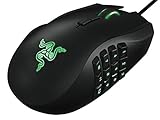
- Top Pick: Razer RZ01-01050100-R3M1 Naga Left-Handed – Ergonomic MMO Gaming Mouse with 12 Programmable Thumb Buttons – 8,200 Adjustible DPI
- Best Value: Razer Basilisk V3 Customizable RGB Wired Ergonomic Gaming Mouse, Black
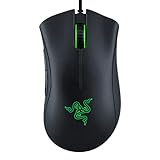
- Premium Choice: Razer DeathAdder Essential – Left-Handed Esports Ergonomic Gaming Mouse – 3,500 Adjustible DPI
Shopping for a left-handed gaming mouse is more complicated than simply choosing a high DPI number. The most common mistakes are buying a right-handed shape because it is cheaper, confusing an ambidextrous shell with a truly left-handed ergonomic design, and paying for a 20,000+ DPI sensor that does not suit the games or grip style you actually use. Button placement, shell width, switch feel, cable drag, and software support will affect daily comfort more than an extreme sensitivity rating.
This left handed gaming mouse buying guide sensor focuses on the details that make a mouse feel accurate and sustainable over long sessions. In 2026, truly left-handed ergonomic models remain a narrow category, so it is especially important to separate genuine left-hand designs from symmetric mice that merely have buttons on both sides.
As an Amazon Associate we earn from qualifying purchases at no extra cost to you. Product prices and availability are accurate as of the date shown and are subject to change.


Decide These 3 Things First
- Choose a true left-hand shape or an ambidextrous shell. A true left-handed ergonomic mouse has its thumb rest, contour, and side buttons on the right side of the body for use in the left hand. An ambidextrous mouse is symmetrical and can suit either hand, but may offer fewer convenient side buttons.
- Match the sensor to your sensitivity and games. For most players, a reliable optical sensor with a usable range of 400 to 3,200 DPI is enough. Competitive shooters often work well around 400 to 1,600 DPI; productivity and multi-monitor users may prefer 1,600 to 3,200 DPI.
- Set a realistic budget based on button needs. Basic wired left-friendly mice begin around $20 to $40. Purpose-built left-handed ergonomic or MMO mice commonly cost $80 to $150, while scarce discontinued models can be listed well above their original value.
Size and Hand Fit
Measure your hand from the tip of your middle finger to the crease at the base of your palm, then measure across the widest part of your palm without including the thumb. As a starting point, hands under 6.7 inches long usually do best with compact shells around 4.5 to 4.8 inches long. Medium hands, roughly 6.7 to 7.5 inches long, are often comfortable with mice measuring 4.8 to 5.1 inches. Larger hands over 7.5 inches typically need a body closer to 5.0 to 5.2 inches long and at least 2.7 inches wide.
For a left-handed ergonomic mouse, width matters as much as length. A narrow 2.4-inch shell can feel agile for fingertip grip but may force a larger hand to curl inward. A 2.7- to 2.9-inch body provides more palm support. MMO-focused left-hand models with a 12-button thumb grid are generally wider and heavier than simple shooter mice, so confirm that your thumb can reach the top and bottom rows without shifting your grip.
If possible, compare the listed dimensions to a mouse you already find comfortable. Do not assume that “ergonomic” means universally comfortable: it only means the shell is sculpted for a particular hand and grip orientation.
Material and Surface Finish
Most gaming mice use ABS plastic, which is durable, light, and easy to clean. The important difference is the finish. Matte plastic offers predictable control and tends to hide fingerprints. Soft-touch rubber coatings can feel secure at first, but they may become tacky or show wear after years of use, especially in humid rooms. Glossy shells can be easy to wipe down but are often slippery for dry hands and show smudges quickly.
Look for textured side grips or molded side panels rather than thin adhesive rubber if you play several hours at a time. Textured plastic is less likely to peel. If you prefer grip tape, check that the mouse’s side-button layout leaves enough flat surface for it; a 12-button panel or pronounced thumb contour limits placement options.
Feet are also part of the material decision. PTFE feet are the preferred option for smooth movement on cloth or hard pads. Large PTFE skates usually glide more consistently than small, thin strips. Replacement feet generally cost about $6 to $15, so it is useful when a mouse has standard, readily available shapes.
Construction and Button Layout
A well-built left-handed mouse should not creak when gently squeezed, and its main buttons should return crisply without side-to-side wobble. Check the scroll wheel, too: it should have distinct steps for weapon switching or ability selection, without feeling loose. For work and gaming combined, a wheel with a middle-click force that is neither overly stiff nor hair-trigger is easier on the hand.
Button count should follow your games. A straightforward FPS layout needs five to seven programmable inputs: left click, right click, wheel click, two side buttons, and optionally a DPI button or tilt-wheel commands. MMO and MOBA players may benefit from 10 to 20 programmable controls. A 12-button thumb grid can reduce keyboard reaches, but it takes time to memorize and may be excessive for shooters.
Be precise about which side holds the thumb buttons. On a mouse designed for left-hand use, the side buttons belong on the right side of the shell. A right-handed Razer Basilisk V3 or standard right-handed DeathAdder Essential may have strong sensors and good value, but their thumb controls and contour are not appropriate for a left-handed grip. A dedicated left-handed Naga-style model is built around the opposite layout; availability and pricing should be checked carefully because specialized versions can be limited.
Comfort and Sensor Performance
The sensor should track smoothly at your real playing sensitivity, not merely advertise a huge maximum DPI. Modern optical sensors are the safer choice for gaming because they avoid the acceleration and surface sensitivity associated with older laser designs. Look for adjustable DPI steps, onboard memory if you move between computers, and software that lets you set at least two useful sensitivity stages.
A practical setup might be 800 DPI and 1,600 DPI for most games, plus 2,400 or 3,200 DPI for desktop use on a large display. Extremely high settings such as 8,200 DPI, 18,000 DPI, or more are not automatically better. At high DPI, small hand movements become harder to control, particularly in tactical shooters.
Polling rate determines how often the mouse reports movement to the computer. A 1,000 Hz polling rate is a sensible baseline and is enough for nearly every player. Higher 2,000 Hz, 4,000 Hz, or 8,000 Hz options can increase CPU demand and are only worth considering if your system and display setup benefit from them. Do not choose a less comfortable mouse solely for a higher polling-rate figure.
Weight has a direct effect on fatigue and aiming style. A light FPS-oriented mouse often falls between 55 and 75 grams. A general-purpose wired mouse commonly weighs 80 to 105 grams. A left-handed MMO mouse with a large button array may weigh 110 to 135 grams. For low-sensitivity arm aiming, many players prefer under 85 grams; for productivity or button-heavy games, a heavier body can feel steadier.
Price Tiers
Budget: $20 to $45. Expect a wired mouse, a basic optical sensor, 3,500 to 8,500 DPI maximum settings, and five to seven buttons. This tier can be excellent for an ambidextrous model, but true left-handed ergonomic options are uncommon. It is the right range for buyers who prioritize a dependable wired backup or a simple everyday mouse.
Midrange: $45 to $90. Look for better PTFE feet, a 1,000 Hz polling rate, improved button switches, adjustable RGB lighting, and software profiles. Some ambidextrous models and occasional left-hand-specific designs appear here, particularly during promotions.
Premium: $90 to $160. This is the realistic range for a purpose-built left-handed MMO mouse, advanced wireless hardware, extensive button programming, or premium optical switches. The Razer Naga Left-Handed configuration, when available, has been positioned as a premium 12-button option. Be cautious with listings near $150 to $200 for older or hard-to-find left-handed models: scarcity can inflate the price beyond the practical value of the hardware.
Warranty and Software Support
A one-year limited warranty is common on gaming mice; two years is better, particularly for wireless models or mice with many side buttons. Read the warranty terms for switch failures, scroll-wheel issues, and battery coverage. Keep the receipt, serial number, and original packaging until you have tested every button.
Software support matters because a programmable mouse is only as useful as its remapping tools. Confirm that you can assign keyboard keys, media controls, macros where permitted, DPI stages, and onboard profiles. Onboard memory is valuable if you use a work computer, tournament PC, or console-compatible setup, since core settings can travel with the mouse. Avoid a model whose key features require cloud login or software that no longer receives operating-system updates.
Delivery and Assembly
Gaming mice require no furniture-style assembly, but setup still deserves attention. A wired mouse should arrive with a cable roughly 5.9 to 7.0 feet long, enough for most desk layouts. Route the cable behind the monitor stand or through a bungee so it does not catch on the desk edge. For wireless models, allow 2 to 4 hours for a full initial charge unless the manufacturer specifies otherwise.
When the package arrives, test left click, right click, wheel click, every side button, the sensor, and charging connection during the return window. Confirm that the shell is actually left-handed before removing protective films. This is important because product photos for ambidextrous and mirrored ergonomic models can be misleading.
Spec Checklist
| Spec | Budget | Mid | Premium |
|---|---|---|---|
| Typical price | $20–$45 | $45–$90 | $90–$160 |
| Connection | Wired USB | Wired or 2.4 GHz wireless | 2.4 GHz wireless, wired charging, sometimes Bluetooth |
| Sensor | Optical, 3,500–8,500 DPI | Optical, 8,000–20,000 DPI | Optical, 20,000+ DPI with onboard profiles |
| Polling rate | 125–1,000 Hz | 1,000 Hz | 1,000–4,000+ Hz |
| Weight | 80–110 g | 65–100 g | 55–135 g, depending on button count |
| Programmable buttons | 5–7 | 6–10 | 8–20 |
| Warranty target | 1 year | 1–2 years | 2 years preferred |
Red Flags
- A listing calls the mouse “left-handed” but photos show thumb buttons on the left side of the shell.
- The seller emphasizes 20,000+ DPI but does not identify the sensor type, polling rate, or software support.
- A rare left-handed model is priced above $180 with no return policy or warranty confirmation.
- The product description uses “ambidextrous” and “ergonomic left-handed” interchangeably. They are not the same design.
- There are no details about onboard memory, replacement feet, battery service, or wireless receiver storage.
- A 12-button grid is purchased for FPS play without considering the added width and 110+ gram weight common to MMO shells.
FAQ
Is a high-DPI sensor important for a left-handed gaming mouse?
Not by itself. A reliable optical sensor that performs well from 400 to 3,200 DPI is more useful than an enormous maximum DPI figure. Prioritize consistent tracking, comfortable shape, and accessible left-side controls first.
Can a left-handed player use an ambidextrous gaming mouse?
Yes. An ambidextrous mouse can be an excellent choice, especially for claw or fingertip grips and lighter FPS-focused setups. Choose a true left-handed ergonomic design if you want a palm-supporting contour and side buttons positioned specifically for your left thumb.
How many buttons should a left-handed MMO player buy?
A 12-button thumb grid is useful for players who regularly trigger many abilities, shortcuts, or push-to-talk commands. For casual games or shooters, five to seven total programmable buttons are usually easier to learn and less likely to cause accidental presses.
Should I pay extra for wireless?
Pay extra only if cable freedom matters to your desk setup. A good wired mouse remains responsive, costs less, and never needs charging. Wireless is worthwhile when it includes a stable 2.4 GHz connection, a sensible battery life of at least 50 hours without lighting, and the option to use it while charging.
Ready to decide? Our #1 pick for 2026 is the Typical price.
Live price & availability on Amazon.
Related Reviews & Guides




How to Disinfect Left Handed Pens (2026): Step-by-Step

6 Best Measuring Cups for Left-Handers: Top Picks Reviewed and Compared (2026)


