Last Updated: September 18, 2026
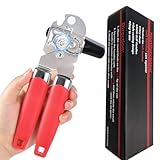
- Top Pick: Left Handed Can Opener Manual, Lefty Kitchen Tools Utensils (Red Handle)
- Best Value: Lefty’s Left Handed Can Opener – Premium Design Black Heavy duty Stainless Steel – Easy To Turn Sharp Blade – Smooth Edge – Great Gift for Left-Handed People, Adults, Men and Women
- Premium Choice: KYDLLF Left Handed Can Opener and bottle bottle openers (Black)
Choosing a left-handed can opener is not as simple as buying the first tool labeled “lefty.” Many shoppers make the same mistakes: they assume any ambidextrous model will feel natural, overlook the direction of the cutting wheel, or judge quality by handle color and price alone. Others buy a compact opener that requires excessive hand strength, or choose a smooth-edge model without checking whether it works on the can sizes they use most.
This guide explains what to look for in a left handed can opener, including the blade position, handle design, materials, turning action, safety features, and long-term value. Whether you are replacing an uncomfortable opener or buying a gift, the goal is a tool that cuts cleanly while keeping your wrist in a natural position.
As an Amazon Associate we earn from qualifying purchases at no extra cost to you. Product prices and availability are accurate as of the date shown and are subject to change.


Decide These 3 Things First
- Choose manual or electric. The examples covered here are manual openers, which usually cost about $13 to $21, take little storage space, and do not require batteries or an outlet. Electric models can be easier for users with limited grip strength, but they are larger, more expensive, and less convenient to clean.
- Confirm true left-handed operation. A genuine left-handed opener should be designed so the cutting wheel and turning mechanism work comfortably when operated with the left hand. Do not rely only on “ambidextrous” in the listing title. Look closely at product photos and read whether the handle, gear, and blade orientation are intended for left-handed use.
- Match the tool to your grip strength and can habits. If you regularly open large 28- to 32-ounce cans, choose a longer handle and a geared mechanism. If you mainly open 6- to 15-ounce cans, a lighter model may be sufficient. People with arthritis or reduced hand strength should prioritize leverage, a large turning knob, and a smooth, low-resistance action.
Size and Storage
Size affects both leverage and convenience. Most manual can openers are approximately 6 to 9 inches long, 2 to 3 inches wide, and less than 3 inches high. A longer handle generally gives you more leverage, while a smaller body is easier to store in a shallow drawer.
For everyday use, look for handles at least 4 inches long and a turning knob roughly 1 to 1.5 inches across. Very small knobs can be difficult to rotate with wet or slippery fingers. If drawer space is limited, check the total length rather than assuming a compact opener will be easier to use.
Weight is another useful comparison. A basic opener may weigh around 3 to 5 ounces; a sturdier stainless-steel model may be closer to 6 to 10 ounces. More weight can indicate thicker components, but it is not automatically better. A heavy opener may be tiring for someone with a weak grip, so balance matters as much as the number on the package.
Material and Corrosion Resistance
The cutting wheel should be made from stainless steel or another corrosion-resistant metal. Stainless steel is preferable because the blade is exposed to food residue and frequent washing. Look for wording such as “stainless-steel cutting wheel,” not merely “stainless-steel handle.” A metal handle with a low-quality blade will still produce disappointing results.
Handles may be stainless steel, coated metal, plastic, or a combination. Coated or molded plastic can be comfortable and lightweight, while stainless steel tends to offer a more durable feel. For a tool expected to last for years, favor a metal gear and a firmly mounted blade over decorative finishes.
Do not assume that every stainless-steel opener is dishwasher-safe. Some products have food-safe stainless components but plastic or coated parts that can discolor, loosen, or corrode in a dishwasher. If dishwasher use is important, verify that the manufacturer specifically permits it. Otherwise, hand-wash, rinse away food residue, and dry the opener thoroughly.
Construction and Blade Design
Construction determines whether the opener stays aligned as you turn it. Inspect the connection between the handles, the cutting wheel, and the rotating gear. There should be little visible wobble, and the wheel should meet the gear evenly rather than at an angle.
A traditional cutting wheel opens the lid near the inside rim and may leave a sharp edge. A smooth-edge or safety-cut design cuts along the side of the lid instead, which can reduce the chance of cuts and allows the lid to be replaced temporarily. However, safety-cut openers can require a more precise fit on the rim and may not suit every can shape.
For a conventional model, look for a hardened, sharply defined wheel and a gear with clearly formed teeth. The mechanism should engage a standard 2.5- to 4-inch can rim without slipping. Avoid listings that promise a “sharp blade” but provide no information about the blade material, cutting style, or cleaning instructions.
Comfort and Performance
Left-handed comfort begins with the operating direction. Hold the opener as you would during use and check whether your left thumb and fingers can maintain a relaxed grip while the turning knob moves naturally. The handle should not force your wrist to bend sharply inward or require you to reach across the lid.
Look for handles about 1 to 1.5 inches thick, with rounded edges and a surface that remains secure when damp. A textured rubber or soft-touch grip can improve control, but deep ridges may be uncomfortable during longer use. The best handle shape depends on hand size; people with smaller hands may prefer a slimmer grip, while larger hands benefit from wider, longer handles.
Performance should also include the finished edge. The opener should move around the can without repeated resets, crushing the rim, or leaving metal shards. No manual opener will be silent, but excessive squeaking, grinding, or slipping suggests poor alignment or a worn gear. If the product is described as easy to turn, look for customer comments mentioning large cans and repeated use rather than only small cans.
Price Tiers and Overall Value
Price is a useful starting point, but it should not replace checking the mechanism. In the current market, budget left-handed manual openers generally cost about $10 to $15. They may have lighter construction, plastic handles, and fewer comfort features. These can be good for occasional use or a secondary kitchen.
Midrange models typically cost about $16 to $22. This is where many shoppers will find the best balance of a stainless-steel blade, stronger gearing, more comfortable handles, and better finish quality. The example products priced at $15.99, $17.99, and $20.99 fit roughly within this practical range, while the $12.99 model represents the lower-cost tier.
Premium manual openers usually cost about $23 to $35, although premium pricing should come with a meaningful improvement: smoother gearing, stronger materials, a safer cutting edge, or a more substantial warranty. A higher price for a black finish or gift packaging alone is not a strong reason to upgrade.
Warranty and Replacement Support
Many basic kitchen tools have limited warranty information, so check the product page before ordering. A one-year warranty is a reasonable baseline for a manual opener. Longer coverage, such as two years or a lifetime limited warranty, can add value if the manufacturer clearly explains what is covered.
Pay attention to exclusions. Warranties often do not cover rust from improper drying, accidental damage, or normal blade wear. A company that lists a customer-service email, replacement policy, and return window is generally easier to deal with than one that provides only a vague “quality guaranteed” statement.
Because can openers are inexpensive, a simple return policy may matter more than an elaborate warranty. Aim for at least 30 days to test the handle, left-handed orientation, and performance on several can sizes.
Delivery and Assembly
Manual can openers normally arrive fully assembled, so assembly should not be a deciding concern. If a listing says the handle or blade requires installation, confirm that the included instructions and hardware are provided. A loose blade or incorrectly fitted gear can create a safety problem.
Before ordering, check the expected delivery window, especially when buying a gift. Confirm that the package contains one left-handed opener rather than a mixed utensil set or a right-handed version with similar photographs. Inspect the tool immediately after delivery for a bent handle, loose rivet, chipped coating, or misaligned wheel. Do not test a visibly damaged blade on food.
Spec Checklist
| Spec | Budget | Mid | Premium |
|---|---|---|---|
| Typical price | $10–$15 | $16–$22 | $23–$35 |
| Overall length | 6–8 inches | 7–9 inches | 7.5–10 inches |
| Approximate weight | 3–6 ounces | 5–9 ounces | 6–12 ounces |
| Blade material | Stainless steel preferred | Stainless-steel cutting wheel | Hardened or high-grade stainless steel |
| Handle features | Basic molded grip | Textured, rounded grip | Ergonomic grip with stronger leverage |
| Cutting style | Traditional top cut | Top cut or safety cut | Reliable safety-cut or refined top-cut mechanism |
| Warranty target | Return window | At least 1 year | 1–2 years or longer |
Red Flags
- The title says “lefty,” but the description never explains left-handed operation or shows the mechanism from multiple angles.
- The listing identifies a stainless-steel body but does not state what the cutting wheel is made from.
- Reviews mention slipping, crushed rims, sharp fragments, or the need to restart the cut repeatedly.
- The handles are shorter than 4 inches and the turning knob is very small, especially if you have limited grip strength.
- The opener arrives with a loose rivet, visible rust, a bent wheel, or a gear that does not engage the rim evenly.
- The product claims dishwasher safety without clear care instructions.
- Premium pricing is based only on color, packaging, or the word “heavy duty,” with no details about materials or warranty.
FAQ
What should I look for in a left handed can opener?
Prioritize a confirmed left-handed mechanism, a stainless-steel cutting wheel, handles at least 4 inches long, and a turning knob around 1 to 1.5 inches wide. The tool should rotate smoothly without forcing your wrist into an awkward angle.
Are manual left-handed can openers better than electric models?
Manual models are smaller, less expensive, and work without batteries or electricity. Electric models may be preferable for someone with significant hand pain or limited strength. For most shoppers, a well-geared manual opener is the more portable and affordable choice.
Can a left-handed person use an ambidextrous can opener?
Sometimes, but “ambidextrous” does not guarantee equal comfort for both hands. Check the blade position and turning direction, and look for reviews from left-handed users. A purpose-built left-handed model is usually the safer choice when comfort is the main concern.
How much should I spend on a left-handed can opener in 2026?
Plan on about $13 to $22 for a dependable everyday manual model. Spend up to $35 only when the opener offers stronger construction, a smoother mechanism, a safer cutting design, or better warranty support. Price alone does not prove that an opener will be comfortable or durable.
Ready to decide? Our #1 pick for 2026 is the Typical price.
Live price & availability on Amazon.
Related Reviews & Guides




How to Choose Left-Handed Pen: Complete Buying Guide (2026)

Are Left Handed Pens Worth It? An Honest Answer (2026)