Last Updated: October 8, 2026
- Best Speed Rail for a Home Bar Counter
- Quick picks by home-bar situation
- Rail length and realistic bottle capacity
- Head-to-head: 18, 24, 36, or 48 inches?
- Mounting method matters more than the finish
- Stainless steel, chrome, or black finish?
- Check the fit beneath your counter before buying
- Ownership realities: what wears first
- The final buying decision
Best Speed Rail for a Home Bar Counter
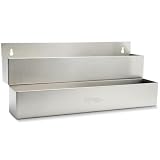
The best speed rail for a home bar counter is usually a 24-inch, single-tier rail made from stainless steel, with four solid mounting points and enough clearance to keep bottles from touching the counter edge or cabinet doors.
That size is the most useful compromise for a home setup: it holds the spirits used most often without consuming the entire working area. Choose an 18-inch rail for a compact bar, a 36-inch rail for frequent entertaining, and a 48-inch rail only when the counter is deep, strongly supported, and used like a small commercial bar.
As an Amazon Associate we earn from qualifying purchases at no extra cost to you.



Quick picks by home-bar situation
| Situation | Best rail choice | Why | Typical market range |
|---|---|---|---|
| Small counter or apartment bar | 18-inch single rail | Uses little counter space and holds the core bottles | $25–$60 |
| Most home bars | 24-inch stainless-steel rail | Good capacity without making the counter crowded | $35–$85 |
| Frequent hosting | 36-inch rail, preferably 304 stainless steel | Provides room for a broader spirit and mixer selection | $55–$130 |
| Large built-in bar with heavy framing | 48-inch rail or two shorter rails | Maximum storage, but requires careful structural mounting | $80–$180 |
| Temporary or rented setup | Short rail with removable bracket mounting | Less permanent, although generally less rigid | $30–$90 |
Rail length and realistic bottle capacity
Manufacturers often describe a rail by its outside length, but the usable capacity depends on the end brackets, bottle diameter, and whether the bottles are standard 750 ml shapes or wider liqueur and whiskey bottles. A practical planning figure is about 3.5 to 4 inches of rail space per bottle.
| Nominal rail length | Usable storage estimate | Typical 750 ml bottle capacity | Recommended use |
|---|---|---|---|
| 18 inches | 14–15 inches | 3–4 bottles | Compact essentials rail |
| 24 inches | 20–21 inches | 5–6 bottles | Gin, vodka, rum, tequila, whiskey, and one extra |
| 36 inches | 31–32 inches | 7–9 bottles | Regular entertaining and cocktail variety |
| 48 inches | 42–44 inches | 10–12 bottles | Large, frequently used home bar |
For example, if your six most-used bottles average 3.7 inches in diameter, they need about 22.2 inches of linear space before allowing for the brackets. That makes a 24-inch rail workable, but a 36-inch rail more comfortable if you want room to remove bottles without disturbing the others.
Do not size the rail based only on bottle count. A squat whiskey bottle or a wide cream liqueur bottle may occupy the space of one and a half standard bottles. Leave at least one spare position if your collection includes unusually shaped bottles.
Head-to-head: 18, 24, 36, or 48 inches?
18-inch rails
An 18-inch rail is the best fit for a shallow counter, bar cart, or narrow cabinet. It normally accommodates three or four bottles and keeps frequently used spirits within reach. Its shorter span also puts less leverage on the mounting screws.
The limitation is organization. Once the rail is full, adding one more bottle usually means moving several others. Choose this size when space matters more than variety.
24-inch rails
A 24-inch rail is the strongest all-purpose choice for a home bar counter. It can hold a compact working selection while leaving room for tools, a mixing glass, and a cutting board on the counter. It is also easier to mount securely than a long rail on a lightweight cabinet.
For many households, one 24-inch rail is better than a 36-inch rail filled with bottles that are rarely opened. Keep premium or infrequently used bottles in a cabinet and reserve the rail for daily-use spirits.
36-inch rails
A 36-inch rail makes sense when the bar is used several times a month for guests or when two people prepare drinks together. It gives bottles more separation and reduces the need to search through a crowded line.
Its extra length increases the load on the wall or cabinet face. A rail this long should be fastened into solid wood, a properly installed backing board, or structural framing—not just thin decorative paneling.
48-inch rails
A 48-inch rail offers commercial-style capacity but is often excessive for a home counter. It can dominate the visual space, collect more dust, and encourage overloading. Consider two 24-inch rails instead if you want separate sections for spirits and mixers or need more flexible mounting locations.
Mounting method matters more than the finish
Most speed rails use end brackets secured with screws. The important question is what those screws are entering.
- Solid wood or cabinet blocking: the preferred mounting surface. Use screws long enough to achieve firm engagement without piercing the cabinet interior.
- Stud-backed wall: a good option for a wall-mounted rail. Locate studs before drilling and use suitable wood or structural screws.
- Drywall alone: acceptable only for a lightly loaded, short rail with appropriate rated anchors. It is a poor choice for a full rail of glass bottles.
- Thin laminate or hollow cabinet panels: reinforce the back with a wood cleat, through-bolts, or an interior backing plate.
- Adhesive mounting: avoid it for bottle storage. Adhesive can weaken with heat, moisture, cleaning chemicals, and repeated impact.
A full 750 ml bottle often weighs roughly 2.5 to 3.5 pounds including the glass and contents. Six bottles can therefore place 15 to 21 pounds on the brackets, before accounting for sideways force when a bottle is removed. Mounting for the expected load—not merely the rail’s empty weight—is essential.
Stainless steel, chrome, or black finish?
304 stainless steel
304 stainless steel is the best finish for a bar that sees frequent spills and wiping. It resists ordinary household corrosion better than plated steel and does not depend on a surface coating remaining intact. Look for a smooth, cleanable surface and rounded edges.
Chrome-plated steel
Chrome-plated rails are often less expensive and can look polished beside traditional bar hardware. The weak point is damage to the plating. Scratches, chips, and standing moisture can eventually expose the underlying steel. Dry the rail after wet cleaning and avoid abrasive pads.
Black powder-coated steel
Black powder coating suits modern or industrial interiors and hides minor fingerprints. It can chip if bottles are dropped onto the rail or if metal tools strike it. Inspect the coating around screw holes and bracket edges, where damage is most likely.
For a damp basement bar, outdoor-adjacent entertaining area, or household that rarely dries surfaces, stainless steel is worth the added cost. For occasional use in a dry indoor room, chrome or powder-coated steel can be perfectly serviceable.
Check the fit beneath your counter before buying
A speed rail should not make bottles collide with cabinet doors, your knees, or the counter’s front edge. Measure these dimensions first:
- Available width: measure between side walls, trim, and appliances. Leave at least 1 inch of clearance at each end if the brackets are bulky.
- Available depth: measure from the mounting surface to the nearest obstruction. Allow roughly 4.5 to 6 inches for the rail and the widest bottle.
- Vertical clearance: account for the tallest bottle, the bottle neck, and your hand. A practical minimum is about 13 inches from the rail’s bottle-support level to the underside of an upper cabinet.
- Door swing: open every nearby cabinet and appliance door. A rail that fits when closed may block a door handle.
- Counter overhang: if the rail is mounted below the front edge, confirm that bottles will not project into walking space or contact stools.
Use cardboard to make a mock-up of the rail and a typical bottle. Tape it in place and open nearby doors before drilling. This inexpensive check catches fit problems that a dimension listing cannot show.
Ownership realities: what wears first
The rail tube usually lasts longer than its hardware. Screws can loosen from repeated bottle movement, bracket holes can enlarge if the rail is overloaded, and rubber or plastic bottle rests—when included—can crack or become sticky after years of exposure to alcohol and cleaning products.
Inspect the fasteners every few months. Tighten them carefully without stripping the cabinet material. If a screw no longer grips, do not simply use a larger screw in the same damaged hole; install a wood plug, backing block, or through-bolt solution.
Clean spills promptly, especially sugary liqueurs and citrus-based mixers. Use warm water and mild dish soap, then dry completely. Avoid steel wool, chlorine bleach, and harsh scouring powder. For stainless steel, wipe with the grain to reduce visible marks.
The final buying decision
Choose the 24-inch stainless-steel rail if you want one dependable answer for a normal home bar counter. Move down to 18 inches when the counter or cabinet is tight. Choose 36 inches for regular entertaining, but reinforce the mounting surface. Reserve 48 inches for a structurally supported bar where the extra capacity will actually be used.
Whichever length you select, prioritize solid mounting, usable clearance, and easy cleaning over a decorative finish. A shorter rail that stays rigid and accessible is a better home-bar upgrade than a longer rail that overloads the cabinet or blocks the workspace.
Related Reviews & Guides



Best Bertello Pizza Ovens for Backyard Cooking

How to Make the Perfect Old Fashioned