Last Updated: September 18, 2026
- Top Pick: Fiskars 8" Left-Handed All-Purpose Scissors for Fabric & Crafts, Red
- Best Value: Fiskars 7" Petite Original Orange-Handled Fabric Scissors, Sewing & Crafts
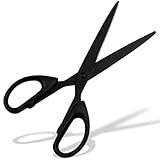
- Premium Choice: Black All-Purpose Office Scissors – Sharp Stainless Steel Blade Shears with Straight ABS Handle for Home, School & Craft Use
Choosing between left handed bent scissors and straight scissors is less about finding the “best” blade and more about matching the tool to the way you work. A left-handed user may need a blade that cuts cleanly without forcing the wrist into an awkward angle, while a right-handed household may value a simple, familiar pair that anyone can pick up. The bent-versus-straight shape also matters: bent handles can keep fabric, paper, or packaging flatter against a work surface, while straight scissors are often easier to store and share.
For a home, the real decision is whether you want a specialized pair that improves comfort and control for one regular user or a versatile pair that works for many people and tasks. The answer can affect everything from sewing and gift wrapping to opening packages and trimming household materials.
As an Amazon Associate we earn from qualifying purchases at no extra cost to you. Product prices and availability are accurate as of the date shown and are subject to change.


Quick Verdict
Choose left handed bent scissors if a left-handed person regularly cuts fabric, thread, paper, or crafts and wants a more natural wrist position. The offset shape can make repeated cutting feel smoother, particularly on a table or cutting mat. Look for blades around 7 to 8 inches long, a comfortable grip, and a genuinely left-handed blade arrangement rather than simply a handle labeled “ambidextrous.”
Choose straight scissors if you want the lowest-cost, most flexible option for general household use. Straight scissors are usually easier for different family members to share, simpler to keep in a drawer, and widely available in sizes from small grooming shears to 8-inch office scissors. They are the safer default when sewing or precision cutting is occasional rather than routine.
Side by Side
| Factor | Left Handed Bent Scissors | Straight Scissors |
|---|---|---|
| Comfort | Usually better for left-handed, table-based cutting; the offset can reduce wrist bending. | Comfort depends heavily on handle shape; familiar, but may twist in a left-handed grip. |
| Cutting control | Excellent for fabric, sewing, and long cuts along a flat surface. | Reliable for paper, packaging, thread, light fabric, and mixed household tasks. |
| Durability | Often built with 7- to 8-inch stainless-steel blades; quality varies by hinge and edge. | Available in everything from inexpensive 5- to 8-inch models to heavier professional shears. |
| Price range | About $9 to $30 for practical home and craft models. | About $5 to $35 for general-purpose, office, sewing, and grooming sizes. |
| Maintenance | Wipe dry, keep the pivot clean, and store closed; sharpening may require a specialist. | Simple to wipe and store; replacement is often inexpensive when sharpening is not worthwhile. |
| Space needed | Typically 7 to 8 inches long, with an offset profile that may use slightly more drawer depth. | Usually easier to fit into narrow drawers, bins, and standard desk organizers. |
| Look | Distinctive, purpose-built, and often associated with sewing or craft stations. | Familiar and understated, with more handle colors and styles available. |
| Resale | Limited audience, but desirable to buyers specifically seeking left-handed craft tools. | Broader appeal, though inexpensive pairs generally have little resale value. |
| Best for | Left-handed sewing, fabric cutting, quilting, crafts, and repeated precision work. | Shared household chores, paper, mail, boxes, schoolwork, grooming, and occasional crafts. |
Where Left Handed Bent Scissors Wins
The biggest advantage is alignment. A true left-handed pair is designed so the blades meet properly when pressure comes from the left hand. That can make it easier to see the cutting line instead of having the upper blade block it. With a bent handle, the hand can remain above or slightly behind the material while the blades stay flatter on a table.
That position is particularly useful when cutting fabric. A straight pair can force a left-handed user to rotate the wrist or lift the material, especially during a long cut. An offset design helps maintain a consistent angle, which can make cutting several yards of fabric, felt, or paper more manageable. It is also useful for trimming patterns and making controlled cuts close to a cutting mat.
Ergonomics become more important with repetition. If you sew weekly, wrap a large number of gifts, or help with frequent classroom and craft projects, a few minutes of improved hand positioning can matter more than saving a few dollars. A cushioned grip and a moderate weight—often roughly 3 to 6 ounces for household shears—can further reduce fatigue.
A dedicated left-handed tool also prevents the common compromise of turning a right-handed pair upside down. That workaround may produce a rougher cut, pinch the material, or make the handles uncomfortable. The red Fiskars 8-inch Left-Handed All-Purpose Scissors for Fabric & Crafts, listed at $9.43, is the kind of product category to consider when left-handed fabric and craft use is the priority.
Where Straight Scissors Wins
Straight scissors are the better all-around household tool because they accommodate more situations. One pair can open mail, trim loose threads, cut tape, handle school projects, and break down light packaging. A straight profile is also intuitive for people who are not particular about hand orientation.
They are especially practical in a shared home. A child, right-handed partner, guest, or sitter can generally use a straight pair without needing to understand a specialized design. For occasional tasks, the difference in wrist angle may be too small to justify buying and storing a second pair.
Storage is another advantage. Straight handles and blades tend to slide neatly into a kitchen utility drawer, desk caddy, or sewing box. Smaller 5- to 7-inch scissors are convenient for drawers, while 8-inch versions provide more leverage for cardboard and fabric. The $5.24 Black All-Purpose Office Scissors with a straight ABS handle illustrates the budget end of this category.
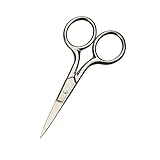
Straight scissors also offer more specialized choices. A compact 7-inch fabric pair can be useful for sewing without the bulk of larger shears; the Fiskars 7-inch Petite Original Orange-Handled Fabric Scissors, priced at $16.99, falls into that type of home craft tool. For personal care rather than household cutting, a small straight grooming shear such as the $5.99 Motanar Professional Grooming Scissors for Men Facial Hair Removal is a separate, task-specific option. Do not substitute grooming scissors for fabric or packaging shears: their smaller blades and intended use are different.
Cost Over 5 Years
Up-front price is only part of the calculation. For a realistic five-year comparison, assume one practical pair, normal home use, and no professional sharpening. A budget straight pair at $5 to $10 may last one to three years before the blades become dull, the pivot loosens, or the handles crack. Replacing it once during five years puts the total around $10 to $20.
A better-made straight or left-handed bent pair in the $15 to $30 range may last the full five years with dry storage and occasional cleaning. Its five-year cost is therefore about $15 to $30, or roughly $3 to $6 per year. If you use scissors heavily and pay approximately $8 to $15 for sharpening once or twice, the total can rise to $23 to $60, depending on the original price.
For a left-handed sewer, the extra cost can still be economical if better control prevents ruined fabric. Wasting even one $20 to $40 cut of material can outweigh the difference between a $9 pair and a $25 pair. For occasional mail and packaging, however, a $5 to $10 straight pair is usually the more sensible buy. Keep dedicated fabric scissors away from paper and cardboard to extend their edge.
Which One for Your Home
Small Apartment
Choose straight scissors if storage is tight and one tool must handle the widest range of chores. A 7- or 8-inch pair can fit a utility drawer and manage paper, tape, thread, and light packaging. Choose left-handed bent scissors only if a left-handed resident sews or crafts regularly; otherwise, the specialized shape may take up space without adding enough value.
Family With Kids or Pets
Use a straight pair as the shared household option, and add left-handed bent scissors only for an adult’s supervised craft station. A straight pair is simpler for children to understand, though scissors of any type should be stored closed and out of reach when not in use. For pet-related tasks, do not use household shears to cut fur near the skin; grooming requires tools and techniques intended for that purpose.
Rental
A budget straight pair is usually the best rental-home choice. It handles moving-day tape, mail, labels, and minor repairs without a significant investment. If you sew in a rental, a left-handed bent pair is worthwhile because it travels easily and can protect your comfort regardless of the kitchen or craft area available in the next home.
Long-Term Home
Buy both when the budget allows. Keep straight scissors in a central utility drawer for shared chores and a left-handed bent pair at the sewing or craft station. Label the fabric scissors so they are not used on cardboard. This two-tool setup costs roughly $15 to $55 for practical models and gives each job a better-matched blade.
FAQ
Are left-handed bent scissors better than straight scissors?
They are better for a left-handed person who frequently cuts fabric or performs other precision work on a flat surface. Straight scissors are better for shared, occasional, and mixed household tasks. “Better” depends on hand orientation, material, and cutting frequency.
Can a left-handed person use straight scissors?
Yes, but many standard straight scissors are optimized for right-handed pressure. A left-handed user may have less visibility of the cutting line or may need to twist the wrist. An ambidextrous pair can help, but it may not provide the same blade alignment as a true left-handed model.
What size scissors should I buy for home use?
Seven to 8 inches is a useful general range for fabric and household cutting. Choose 5 to 7 inches for compact drawers, paper, thread, and detail work. Larger shears offer more leverage but need more storage space and can feel tiring during delicate cuts.
How can I make scissors last longer?
Use each pair only on suitable materials, wipe the blades dry, keep the pivot free of debris, and store scissors closed. Do not cut wire, staples, thick plastic, or grit-covered material unless the manufacturer specifically permits it. Have quality shears sharpened when the edge dulls; replace very inexpensive pairs when repair costs approach the purchase price.
Ready to decide? Our #1 pick for 2026 is the Comfort.
Live price & availability on Amazon.
Related Reviews & Guides




4 Best Left Handed Playing Cards Decks

3 Best Left-Handed Banjos for Beginners and Beyond