

Last Updated: September 18, 2026
- Decide These 3 Things First
- Size and Shape: Match the Shell to Your Hand
- Materials and Surface Finish: Prioritize Grip Over Gloss
- Construction and Controls: Check the Parts You Touch Every Day
- Comfort and Performance: Sensor Numbers Need Context
- Price Tiers: Spend on Fit Before Features
- Warranty and Software Support: Read Beyond the Headline
- Delivery, Setup, and Desk Compatibility
- Spec Checklist
- Red Flags
- FAQ
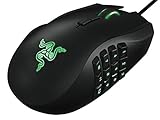
- Top Pick: Razer RZ01-01050100-R3M1 Naga Left-Handed – Ergonomic MMO Gaming Mouse with 12 Programmable Thumb Buttons – 8,200 Adjustible DPI
- Best Value: Logitech G305 Lightspeed Wireless Gaming Mouse – Black
- Premium Choice: Razer DeathAdder Essential – Left-Handed Esports Ergonomic Gaming Mouse – 3,500 Adjustible DPI
Shopping for a left-handed gaming mouse is less straightforward than it should be. The most common mistake is assuming an “ambidextrous” mouse is automatically equally good for left-handed use. Many symmetrical mice place their extra side buttons only on the left side, where they are easy for a right thumb to reach but awkward—or unusable—for a left-handed player. Another mistake is buying based on maximum DPI, RGB lighting, or a low sale price before checking shape, button access, and grip compatibility.
When researching what to look for left handed gaming mouse options, start with the physical design rather than the sensor specification. A comfortable, truly left-handed shape with reachable controls will improve accuracy and reduce fatigue far more than an extreme DPI number you may never use. In 2026, the market still offers fewer dedicated left-handed models than right-handed ones, so it pays to compare details carefully before ordering.
As an Amazon Associate we earn from qualifying purchases at no extra cost to you. Product prices and availability are accurate as of the date shown and are subject to change.


Decide These 3 Things First
- Do you need a true left-handed shape or an ambidextrous shell? A dedicated left-handed ergonomic mouse mirrors the contour of a right-handed ergonomic design. It supports the left palm more naturally, but it is not shareable with right-handed users. A symmetrical shell can work for either hand, provided its side buttons are accessible or configurable for left-hand use.
- What games do you play most? Fast shooters usually favor low weight, a reliable optical sensor, and two easy-to-reach side buttons. MMO, strategy, and productivity-heavy players may prefer 6 to 12 programmable thumb buttons, even if that adds weight and a learning curve.
- How do you grip the mouse? Palm-grip users generally need a longer, taller body. Claw-grip users often prefer a raised center hump and shorter overall length. Fingertip players typically do best with a compact mouse under about 70 grams.
Size and Shape: Match the Shell to Your Hand
Mouse dimensions matter more than marketing labels such as “large” or “esports.” Measure your hand from the crease of your wrist to the tip of your middle finger, then measure across the widest part of your palm without your thumb.
- Small hands: under 6.7 inches long. Look for a mouse around 4.5 to 4.8 inches long and 2.3 to 2.5 inches wide.
- Medium hands: about 6.7 to 7.5 inches long. A body roughly 4.8 to 5.1 inches long and 2.4 to 2.7 inches wide is a practical starting point.
- Large hands: over 7.5 inches long. Consider models at least 5.0 inches long, especially for a palm grip.
For left-handed buyers, inspect the photos of the mouse’s right side—the side under your left thumb. That is where useful navigation buttons should sit. A true left-handed model places thumb controls there. On an ambidextrous mouse, check whether buttons appear on both sides or whether the right-side buttons can be enabled independently.
Do not force a small shell to work because it is lightweight. A mouse that makes your fingers curl tightly or leaves part of your palm unsupported can cause hand fatigue during long sessions. Conversely, an oversized ergonomic body can feel slow and difficult to lift for players who use a high-sensitivity setup.
Materials and Surface Finish: Prioritize Grip Over Gloss
Most gaming mice use an ABS plastic shell, which is durable, light, and easy to clean. The difference is in the finish. Matte plastic is usually the safest choice because it resists fingerprints and stays manageable when hands get warm. Glossy finishes can feel slick with dry hands and sticky with sweaty hands.
Rubber side grips improve control, especially on a mouse weighing 75 grams or more, but they need occasional cleaning. Over time, soft-touch coatings can become shiny or tacky, particularly if exposed to heat, hand lotion, or cleaning products containing strong solvents. Textured matte plastic tends to age more predictably.
Look for PTFE feet, sometimes called virgin-grade PTFE skates, on the bottom. Larger, smooth feet help the mouse glide more consistently across a cloth or hard pad. Replacement feet are a useful bonus because skates are wear items. Avoid models with tiny, thin pads that are difficult to replace or have uneven edges.
Construction and Controls: Check the Parts You Touch Every Day
A good left-handed gaming mouse should feel solid without being unnecessarily heavy. Gently held, it should not creak, flex at the side panels, or rattle when moved. Weight targets depend on game type:
- 60 to 75 grams: excellent range for competitive shooters and quick, low-sensitivity movement.
- 75 to 95 grams: a balanced range for general gaming, wireless hardware, and additional buttons.
- 95 to 130 grams: common for MMO mice with button grids, larger batteries, or pronounced ergonomic shells.
Check the main click switches as well as the number of buttons. Mechanical switches can provide a crisp, familiar click, while optical switches use light-based actuation and are designed to avoid the double-click behavior associated with worn mechanical contacts. Neither type is automatically better in feel; the important point is that left and right clicks should be consistent, without excessive pre-travel or side-to-side wobble.
The scroll wheel should turn in clear increments without scraping. For gaming, a wheel with defined steps is usually easier to control for weapon changes and ability selection. Confirm that the DPI button, if present, is not placed where your ring finger will hit it accidentally.
Comfort and Performance: Sensor Numbers Need Context
Do not choose solely by maximum DPI. Most players use roughly 400 to 1,600 DPI, and many competitive players remain within that range. A mouse advertised at 8,000 DPI can be perfectly capable, but so can a model rated at 3,500 DPI if its tracking is stable at the settings you actually use.
Instead, look for an optical sensor, adjustable DPI steps, and a polling rate of at least 1,000 Hz for responsive modern gaming. A 1,000 Hz polling rate means the mouse reports its position up to 1,000 times per second. Higher options, such as 2,000 Hz, 4,000 Hz, or 8,000 Hz, can be worthwhile for some high-refresh-rate setups, but they may reduce wireless battery life and are not a substitute for a comfortable shape.
Wireless mice should offer a 2.4 GHz USB receiver rather than Bluetooth alone. Bluetooth is convenient for laptops and casual work, but 2.4 GHz wireless is generally the better choice for gaming. Expect approximately 40 to 100 hours of use per charge depending on lighting, polling rate, and battery size. RGB lighting can noticeably shorten runtime, so buyers who value endurance should use lighting sparingly or choose a mouse without it.
A wired model remains a sensible value choice. Look for a flexible cable around 5.9 to 7.2 feet long. A soft braided or paracord-style cable creates less drag than a stiff rubber cable, particularly on a large desk mat.
Price Tiers: Spend on Fit Before Features
Budget: $15 to $40. At this level, expect wired designs, basic optical sensors, RGB lighting on some models, and 5 to 8 programmable buttons. The Redragon M612, at about $16.99, illustrates the kind of low-cost wired option that can deliver adjustable DPI and remapping. However, confirm handedness carefully: many inexpensive ergonomic gaming mice are shaped specifically for right-handed use.
Mid-range: $40 to $90. This range is often the sweet spot for players who want a dependable sensor, better feet, a lighter shell, and either a strong wired cable or 2.4 GHz wireless. The Logitech G305, commonly around $29.99, is a compact wireless option with a symmetrical silhouette, though buyers should verify whether its button layout suits their left thumb before purchasing.
Premium: $90 to $200. Premium pricing may bring dedicated left-handed ergonomics, lower weight, optical switches, more sophisticated software, or MMO button arrays. A left-handed Razer Naga configuration with 12 programmable thumb buttons may cost around $149, while dedicated left-handed editions of ergonomic designs can approach $194.99. Pay more only if the shape, button placement, and game-specific controls solve a real need.
Warranty and Software Support: Read Beyond the Headline
A one-year limited warranty is common for gaming mice. Two years is preferable, especially for a wireless model with a built-in rechargeable battery. Before buying, check whether the warranty covers switches, scroll-wheel failure, receiver issues, and battery defects, not just obvious manufacturing damage.
Software matters because left-handed users may need to remap buttons more extensively than right-handed users. Look for onboard memory that stores at least one profile directly on the mouse. This lets your button assignments and DPI settings travel with the device, even when you use another computer. Ensure the software allows individual side-button remapping rather than only preset functions.
Delivery, Setup, and Desk Compatibility
A mouse does not require assembly, but setup can still affect the experience. Wired models should be plug-and-play, with optional software for remapping. Wireless models may need a USB-A receiver, a USB-C adapter, or one free port for charging. If your laptop has USB-C ports only, budget $8 to $15 for a dependable adapter if one is not included.
When your mouse arrives, test it during the return window. Use it for at least two or three gaming sessions of 60 to 90 minutes each. Check whether your thumb reaches every button without shifting your grip, whether the rear of the mouse presses into your palm, and whether the cable or receiver placement causes interruptions. Keep all packaging until you are satisfied with the fit.
Spec Checklist
| Spec | Budget | Mid | Premium |
|---|---|---|---|
| Typical price | $15-$40 | $40-$90 | $90-$200 |
| Connection | Wired USB | Wired or 2.4 GHz wireless | 2.4 GHz wireless, often wired-capable |
| Weight target | 80-110 g | 65-95 g | 55-95 g; heavier for MMO layouts |
| Polling rate | 500-1,000 Hz | 1,000 Hz | 1,000-8,000 Hz |
| Programmable buttons | 5-8 | 6-10 | 8-20, depending on genre |
| Battery expectation | Not applicable for wired | 40-100 hours | 60-150 hours without heavy lighting |
| Best buyer | Casual or first-time gaming setup | Most players | Dedicated left-handed, wireless, or MMO needs |
Red Flags
- “Ambidextrous” labeling with side buttons only on the left side of the shell.
- A right-handed ergonomic contour presented as suitable for all users.
- Very high DPI claims with no clear information about sensor type, polling rate, or software support.
- Wireless-only Bluetooth connection for a mouse intended primarily for fast-paced gaming.
- No stated warranty period or unclear return policy.
- Heavy RGB lighting, numerous buttons, and a low price paired with no information about weight or build quality.
- Software that cannot remap the buttons your left thumb actually uses.
FAQ
Are ambidextrous gaming mice good for left-handed players?
They can be, but inspect the button placement. A truly symmetrical mouse with usable buttons on both sides is left-hand friendly. A symmetrical shell with buttons only on the left side may be physically usable in the left hand but functionally inconvenient.
What weight should a left-handed gaming mouse be?
For shooters and fast movement, aim for roughly 60 to 75 grams. For general gaming, 75 to 95 grams is comfortable for many users. MMO mice with 12-button thumb panels often weigh 95 grams or more because of their extra controls.
Is wired or wireless better for a left-handed gaming mouse?
Wireless is cleaner on the desk and avoids cable drag, while wired offers dependable performance at a lower cost. A quality 2.4 GHz wireless connection is suitable for gaming; Bluetooth-only models are better reserved for casual use and travel.
How many side buttons do I need?
Two side buttons are enough for most FPS, action, and everyday tasks. Six to 12 buttons are useful for MMO, MOBA, strategy, and productivity shortcuts, but only if you can reach them without changing your grip. For left-handed users, accessible placement matters more than the total button count.
Ready to decide? Our #1 pick for 2026 is the Typical price.
Live price & availability on Amazon.
Related Reviews & Guides




Quick Picks: Left-Handed Bevel Squares for Woodworking

How to Clean Left Handed Can Opener (2026): Step-by-Step


