Last Updated: October 8, 2026
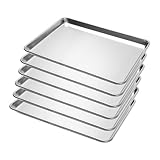
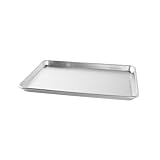
- Top Pick: BIEAMA 6 Pack Half Size Baking Sheet Pan, Aluminum Commercial Pan 18" x 13"
- Best Value: BIEAMA 12 Pack Half Size Baking Sheet Pan, Aluminum Commercial 18" x 13"
- Premium Choice: Nordic Ware Naturals Half Sheet – USA Made Aluminum Commercial Quality Sheet Pan for Baking or Roasting, Encapsulated Galvanized Steel Rim Prevents Warping, 2-Pack
The best half sheet pans for everyday baking are usually uncoated aluminum pans for even heating and easy release, while aluminized-steel pans are the better choice when rim strength and resistance to warping matter most.
As an Amazon Associate we earn from qualifying purchases at no extra cost to you.


Quick picks
- Best all-rounder: Nordic Ware Naturals Half Sheet, an uncoated aluminum pan with reliable heat response and a simple surface that is easy to maintain.
- Best for heavy, frequent use: USA Pan Half Sheet Pan, made from aluminized steel with a reinforced rim and a silicone-based nonstick coating.
- Best budget-style choice: a plain, uncoated 18-by-13-inch commercial aluminum half sheet from a reputable restaurant-supply brand.
- Best for people who dislike scrubbing: a coated aluminized-steel pan, provided you are willing to use silicone or wooden utensils and avoid abrasive cleaners.
There is no single winner for every kitchen. Aluminum is lighter, heats quickly, and is particularly forgiving for cookies and pastries. Aluminized steel is heavier and generally better at holding its shape, especially when a pan is moved in and out of a hot oven several times a week.
Aluminum versus aluminized steel
Aluminum conducts heat efficiently and responds quickly when the oven temperature changes. Most plain commercial half sheet pans use a relatively thick aluminum body, often around 18 gauge, or approximately 1.3 mm. They are light enough to handle with one hand and tend to brown cookies predictably without a long preheating period.
The trade-off is softness. Aluminum can dent if dropped, and a thin or poorly formed rim may twist after repeated heating. It can also discolor in a dishwasher. That discoloration is cosmetic, but harsh detergents can leave the surface dull or chalky.
Aluminized steel combines a steel core with an aluminum-silicon surface layer. Steel gives the pan greater rigidity, while the aluminum coating improves heat distribution and protects much of the steel from corrosion. These pans are usually heavier than bare aluminum and may take slightly longer to heat, but they are less likely to flex when carrying a full batch of brownies or roasted vegetables.
Aluminized steel does not mean “indestructible.” The coating can be damaged by aggressive scouring, metal tools, or deep scratches. If the exposed steel begins to rust, replacement is preferable to trying to restore the cooking surface.
Head-to-head comparison
| Feature | Uncoated aluminum | Aluminized steel |
|---|---|---|
| Typical half-sheet footprint | 18 by 13 inches; usable interior commonly about 16½ by 11½ inches | 18 by 13 inches; usable interior commonly about 16 by 11 inches |
| Typical body thickness | About 1.0–1.5 mm for quality household or commercial pans | About 0.8–1.2 mm steel body, often with a reinforced rim |
| Typical empty weight | About 1.5–2.5 lb | About 2.0–3.5 lb |
| Heating behavior | Fast response and strong heat conductivity | Stable heating with more thermal mass |
| Warp resistance | Good when thick and rimmed; weaker in thin pans | Usually very good because of the steel structure |
| Surface options | Usually bare aluminum; some versions have ceramic or nonstick coatings | Often bare, silicone-coated, or PTFE-coated |
| Best match | Cookies, biscuits, pastry, and general baking | Frequent baking, roasting, bar cookies, and loaded foods |
A standard half sheet is nominally 18 by 13 inches, but outside dimensions are not interchangeable between brands. The rolled rim, corner radius, and wall angle can reduce the flat cooking area by an inch or more in each direction. Check the interior dimensions if you use silicone mats, parchment templates, or a compact oven.
What matters more than the material label
Rim construction
Look for a rolled or reinforced rim that stays level when you lift one corner. A wide wire-reinforced rim is especially useful for heavy foods because it prevents the pan from bowing while you carry it. A narrow, flat edge may look tidy but can be less comfortable and less rigid.
For left-handed cooks, rim shape also affects handling: a pan with a continuous, rounded edge is easier to grip from either side, while a sharply folded edge can press into the fingers when the pan is rotated or passed across a counter.
Warp resistance
Warping usually comes from rapid temperature changes, not simply from high oven temperatures. Do not place a hot pan under cold water, on a wet stone counter, or in a freezer. A thick body and strong rim help, but they cannot fully compensate for thermal shock.
A pan that rocks on a flat counter is no longer ideal for cookies or poured batters. Minor bowing may be harmless for roasting, but it can cause oil to pool on one side and can make a silicone mat sit unevenly.
Coatings
Uncoated aluminum is the least complicated surface. Parchment paper or a silicone baking mat handles sticking, and there is no coating to wear through. It is often the best long-term value for people who bake frequently.
Coated pans can release sticky foods more easily, particularly caramelized vegetables and bar cookies. Their weakness is maintenance: use nonmetal utensils, hand-wash them, and avoid scouring powders. A coating that is chipped, peeling, or extensively scratched should be retired.
Dimensions and oven fit
Measure the oven rack, not only the interior width. A nominal 18-inch pan may need at least 19 inches of side-to-side clearance once you allow for the rim and the rack rails. Leave space around the pan so hot air can circulate; squeezing it against the oven walls can produce uneven browning.
If your oven is narrower than a standard range oven, choose a quarter sheet or a smaller “jelly roll” style pan rather than assuming every half sheet will fit. Two smaller pans can also be easier to rotate and lift than one fully loaded half sheet.
Best half sheet pans by situation
| Your situation | Best choice | Why |
|---|---|---|
| You bake cookies and pastries several times a week | Thick, uncoated aluminum | Quick heating, light weight, and predictable browning |
| You roast vegetables or meal-prep heavy portions | Reinforced aluminized steel | More rigid when loaded and less prone to flexing |
| You are new to baking | Uncoated aluminum with parchment | Simple, affordable, and less vulnerable to coating damage |
| You have limited storage | One standard-size pan with a low-profile rim | More useful than several specialty sizes and easier to stack |
| You want minimal cleanup | Coated aluminized steel or parchment-lined aluminum | Both reduce stuck-on residue, but parchment is easier to replace than a worn coating |
| You carry full pans frequently | Heavy-gauge aluminized steel with a strong rolled rim | Better grip and less flex under a heavy load |
Product types worth considering
Nordic Ware Naturals Half Sheet
This is a strong choice if you want traditional bare aluminum rather than a coating. Its standard half-sheet format works with common parchment and silicone liners, and the bright aluminum surface is responsive for cookies, biscuits, and sheet-pan dinners. Expect some darkening with use; that does not automatically mean the pan is unsafe or unusable. Hand-washing preserves the finish better than repeated dishwasher cycles.
USA Pan Half Sheet Pan
USA Pan’s half-sheet designs are aimed at durability, with aluminized-steel construction, a substantial rim, and a textured silicone-based nonstick surface on many versions. The added weight can be an advantage when spreading thick batter or lifting roasted food. Treat the coating as a consumable surface: it may outlast many inexpensive nonstick pans, but it will not remain perfect if scraped with knives or scoured with steel wool.
Commercial uncoated aluminum half sheets
Restaurant-supply versions from brands such as Vollrath are practical when you want several identical pans or need a sturdy workhorse without decorative features. Pay attention to the gauge and rim design. A heavy-gauge pan with a reinforced edge is worth choosing over a cheaper, visibly flimsy pan even when both are labeled 18 by 13 inches.
Cleaning and maintenance that extend service life
- Let the pan cool until it is warm rather than hot. This reduces thermal shock and makes residue easier to loosen.
- Soak briefly in warm water with dish soap. Use a soft sponge or nylon brush, especially on coated surfaces.
- For baked-on sugar or grease, cover the residue with a damp, soapy cloth for 15 to 30 minutes before wiping. Avoid scraping with a knife.
- Dry the rim and corners completely. Water trapped in a folded rim can encourage corrosion on damaged aluminized-steel pans.
- Store pans vertically or stack them with a thin towel or liner between surfaces to reduce scratching.
Never use a half sheet as a cutting board, and do not put a cold pan into a fully preheated broiler unless the manufacturer specifically permits it. Those habits create scratches, distortion, and abrupt temperature changes that shorten the pan’s useful life.
Value over time
Suppose a $20 uncoated aluminum pan lasts eight years and is used twice a week. That is about 832 uses, or roughly 2.4 cents per use before parchment and energy. A $35 coated aluminized-steel pan that lasts five years at the same frequency costs about 8.1 cents per use. The coated pan may still be the better purchase if its easier release saves cleanup time, but the calculation shows why a plain aluminum pan is often the economical default.
Choose thick uncoated aluminum for the best balance of heating performance, price, and repair-free ownership. Choose aluminized steel when you value rigidity, carry heavy loads, or regularly roast and bake at high volume. Whichever material you buy, prioritize a strong rim, verified interior dimensions, and cleaning habits that match the surface.
Related Reviews & Guides
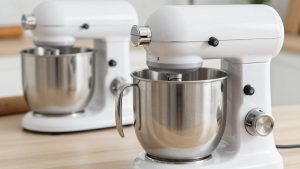

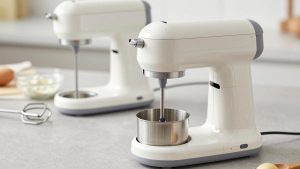
Best Electric Mixers for Baking & Everyday Use
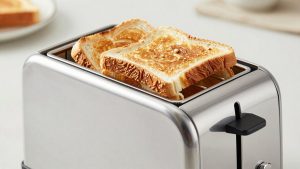
Best 2-Slice Toasters for Even, Fast Toasting