Last Updated: September 18, 2026
Choosing between a left handed can opener and an ambidextrous can opener is less about which label sounds more inclusive and more about how the tool feels in your hand. A left-handed opener is designed around a specific grip and turning direction, while an ambidextrous model is intended to work comfortably from either side. That difference affects wrist position, counter space, cleanup, and how easily other people in the household can use the opener.
The right choice also depends on whether you open cans occasionally or several times a week, whether children or guests may use the tool, and whether you prefer a compact utensil or a multipurpose gadget. Most manual openers measure roughly 6 to 8 inches long, weigh about 5 to 12 ounces, and need no electricity. The comparison below looks at the practical trade-offs a buyer faces in 2026.
As an Amazon Associate we earn from qualifying purchases at no extra cost to you. Product prices and availability are accurate as of the date shown and are subject to change.


Quick Verdict
Choose a left handed can opener if you are left-handed, live alone, and want the most natural control possible. The handles, cutting wheel, and turning mechanism are arranged for a left-handed grip, so the opener can feel steadier and require less wrist twisting. A dedicated left-handed model is especially useful for someone who opens cans often or finds standard openers awkward and tiring.
Choose an ambidextrous can opener if more than one person will use it, if you regularly switch hands, or if flexibility matters more than a perfectly tailored grip. These models are generally easier to share and may combine can opening with bottle or jar opening. The trade-off is that some multipurpose designs are bulkier, and a few may feel less specialized in either hand.
For most shared households, an ambidextrous opener is the safer general recommendation. For a left-handed individual who values comfort above all else, a dedicated left-handed tool is usually worth the modest extra attention when shopping.
Side by Side
| Factor | Left Handed Can Opener | Ambidextrous Can Opener |
|---|---|---|
| Comfort | Excellent for left-handed users; grip and turning action match the dominant hand | Good for either hand, though it may not feel perfectly tailored to one side |
| Durability | Often simple, with fewer parts; stainless steel cutting wheels can last for years | Ranges from simple steel models to more complex 2-in-1 or 3-in-1 designs |
| Price range | About $10 to $25 for a manual model | About $12 to $30 for a manual model, depending on added functions |
| Maintenance | Usually hand-wash and dry; exposed wheels need occasional food removal | May require extra cleaning around jar, bottle, or soft-edge mechanisms |
| Space needed | Typically 6 to 8 inches long and easy to store in a drawer | Typically 6 to 9 inches long; combination tools may need more drawer space |
| Look | Often has a clearly shaped handle or left-handed labeling | Usually has a neutral, streamlined appearance suited to shared kitchens |
| Resale | Narrower appeal because it is made for left-handed users | Broader appeal if sold with other kitchen tools or during a move |
| Best for | Left-handed cooks, frequent use, and precise personal control | Families, couples, guests, and homes where users switch hands |
Where Left Handed Can Opener Wins
The main advantage is hand alignment. A left-handed opener lets the user hold the handles and turn the knob in a direction that feels natural instead of forcing the wrist into an unfamiliar angle. That can make a noticeable difference when opening tall, wide, or tightly sealed cans.
Control is another benefit. A dedicated left-handed design can make it easier to keep the cutting wheel aligned with the rim and maintain steady pressure. This is useful for users with limited grip strength, hand fatigue, or mild wrist discomfort, although a can opener should never be treated as a medical aid. If the tool causes pain, stop using it and consider an electric or easier-grip alternative.
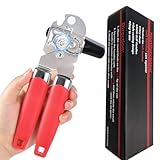
Left-handed models are also often straightforward. A tool such as the Left Handed Can Opener Manual, Lefty Kitchen Tools Utensils (Red Handle), listed at $15.99, represents the basic category: a dedicated manual opener with a visible, easy-to-identify grip. The KYDLLF Left Handed Can Opener and bottle bottle openers (Black), priced at $12.99, illustrates how a left-handed design may also include a bottle-opening function.
There are limitations. Other household members may need a short learning period, and some guests may instinctively use the tool incorrectly. Left-handed openers can also be less common in local stores, so replacement shopping may take more effort. Before buying, check whether the cutting wheel is genuinely configured for left-handed operation rather than simply sold with a left-friendly handle.
Where Ambidextrous Can Opener Wins
An ambidextrous opener is the most convenient choice when several people share one kitchen. A right-handed partner, left-handed roommate, visiting relative, or babysitter can pick it up and use it without searching for a different tool. This flexibility is especially valuable in busy kitchens where utensils are shared constantly.
Ambidextrous models can also be helpful for people who alternate hands. You may prefer one hand for stabilizing a can, switch hands when opening a large container, or keep the opener in a different drawer depending on your workspace. A neutral design accommodates those habits better than a strongly directional tool.
Many ambidextrous openers add other functions. The Bartelli Soft Edge 3-in-1 Ambidextrous Safety Can Opener Jar Opener and Bottle Opener is priced at $18.95 and combines several common tasks in one utensil. A soft-edge approach can also be appealing if you want to reduce sharp exposed rims, although no can opener eliminates the need to handle opened cans carefully.
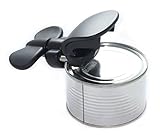
For shoppers who want a more conventional single-purpose option, the Starfrit MightiCan Can Opener, Safe Smooth-Cut, Comfort Grip, Black is listed at $17.99. Its name highlights features many buyers look for in a broadly usable design: a comfortable grip and a smoother cutting style. Whether a particular model is truly ambidextrous depends on its mechanism, so read the manufacturer’s instructions before assuming it works equally well in both hands.
Cost Over 5 Years
The purchase price is only part of the cost. A basic manual opener generally costs $10 to $20, while a more specialized or multipurpose model commonly falls between $18 and $30. At that price, either type can be inexpensive over five years if it is cleaned, dried, and stored properly.
Consider two simple scenarios:
- One purchase: A $15 left-handed opener used for five years costs about $3 per year, before tax.
- Replacement after three years: Two $15 openers over five years cost $30 total, or about $6 per year.
- Multipurpose option: An $18.95 ambidextrous opener used for five years costs about $3.79 per year.
A cheaper opener is not automatically the better value if it slips, rusts, or becomes difficult to turn. Conversely, paying more for extra functions only makes sense if you will actually use the jar or bottle opener. Manual models have no wattage or battery cost, unlike electric openers, so the largest long-term variable is replacement frequency. Hand-washing and thoroughly drying the cutting area can help prevent corrosion and unpleasant buildup.
Which One for Your Home
Small apartment
Choose the model that fits your drawer and matches the person who cooks most often. A compact left-handed opener is ideal for a solo left-handed renter, especially when counter space is limited. For a shared apartment, an ambidextrous model is more practical. Look for a length under about 8 inches and avoid paying for attachments you will not store or use.
Family with kids or pets
An ambidextrous opener is usually the better household choice because adults with different dominant hands can use it easily. Select a model with a secure, comfortable grip and follow the manufacturer’s cleaning instructions. Keep any opener, opened can, and discarded lid out of reach of children and pets; even “smooth-cut” designs can leave edges that are unsafe to touch or chew.
Rental
Renters benefit from a durable, inexpensive manual tool that can move easily to the next kitchen. If you are left-handed and regularly frustrated by standard openers, a $12 to $20 dedicated model is a sensible upgrade. If roommates or short-term guests will share the kitchen, choose an ambidextrous design to avoid explaining a directional tool.
Long-term home
Buy for the person who will use the opener most. A dedicated left-handed can opener is worthwhile when it improves daily comfort and control. If the home will include changing household members, frequent guests, or aging users with different grip preferences, an ambidextrous comfort-grip model offers more lasting flexibility. A stainless steel cutting wheel and sturdy handles are more important than decorative color.
FAQ
What is the difference between a left-handed and ambidextrous can opener?
A left-handed opener is arranged for operation with the left hand, including the direction and position of the turning mechanism. An ambidextrous opener is designed to function with either hand, usually through a neutral or reversible mechanism. Product descriptions can use these terms loosely, so check the operating instructions and user photos when available.
Are left-handed can openers harder to find?
They are less common than standard or ambidextrous models, particularly in physical stores. Online kitchen and specialty-tool sections usually offer more choices. Prices are not necessarily higher; many left-handed manual openers fall between $10 and $25.
Is an ambidextrous can opener safer?
Not automatically. Safety depends on the cutting mechanism, the condition of the blade, the stability of the grip, and careful handling. A smooth-cut or soft-edge design may reduce a sharply exposed rim, but users should still avoid touching the lid edge and should dispose of lids promptly.
Should I buy a manual or electric can opener?
Manual openers are smaller, quieter, less expensive, and do not need batteries or an outlet. Electric models may be easier for people with significant hand weakness, but they occupy more space and cost more. Between a left-handed and ambidextrous manual opener, choose based on who uses it most often and whether shared access matters.
Ready to decide? Our #1 pick for 2026 is the Comfort.
Live price & availability on Amazon.
Related Reviews & Guides



Left Handed Ice Skate Blade Sharpener Review

Do Left Handed Notebooks Prevent Ink Smearing? An Honest Answer (2026)