Last Updated: September 18, 2026
Choosing between left handed fabric scissors vs dressmaking scissors is less about picking a winner and more about matching the tool to the way you cut. A left-handed sewer may need blades designed to keep the cutting line visible from the left side, while a dressmaker may prioritize long blades, a comfortable handle, and clean cuts through several layers. These categories can overlap: a pair of left-handed dressmaking shears is both left-handed and suitable for dressmaking.
The real buying decision is whether your home projects require handed comfort, maximum cutting length, or a versatile everyday tool. Before comparing prices and appearances, check the blade orientation, handle fit, cutting capacity, and the amount of storage space available. The right pair should feel controlled rather than merely sharp.
As an Amazon Associate we earn from qualifying purchases at no extra cost to you. Product prices and availability are accurate as of the date shown and are subject to change.



Quick Verdict
Choose left-handed fabric scissors if you cut with your left hand, need to see the fabric edge clearly, or regularly work with quilting cotton, felt, paper patterns, and lightweight craft materials. Their reversed blade arrangement helps the upper blade stay on the appropriate side of the cutting line for a left-handed user.
Choose dressmaking scissors if your priority is cutting long, smooth lines through fabric for clothing, curtains, upholstery accents, or larger sewing projects. Look for a left-handed model if you sew left-handed; “dressmaking” describes the intended use and shape, not necessarily the blade orientation.
For many homes, the best answer is a left-handed pair with a 9- to 10.5-inch overall length and blades around 4 to 5 inches long. Right-handed users can generally choose standard dressmaking shears in the 8- to 10-inch range.
Side by Side
| Factor | Left-Handed Fabric Scissors | Dressmaking Scissors |
|---|---|---|
| Primary purpose | Controlled cutting for left-handed fabric and craft work | Long, accurate cuts for garment and home sewing projects |
| Comfort | Best for left-handed users; handle shape is often offset for that grip | Comfort varies; many are right-handed, but left-handed versions are available |
| Cutting length | Commonly about 8 to 10.5 inches overall | Commonly about 8 to 12 inches overall, with longer blades |
| Durability | Good for fabric and crafts when used only on suitable materials | Usually stronger for repeated fabric cutting and multiple layers |
| Price range | About $9 to $19 for common home-use options | About $9 to $30 or more, depending on steel and construction |
| Maintenance | Wipe clean, keep dry, and occasionally lubricate the pivot | Same basic care; professional sharpening may be worthwhile |
| Space needed | Usually fits in a 10- to 12-inch drawer or sewing case | May need a deeper drawer, especially in 10- to 12-inch sizes |
| Look | Often practical, colorful, and craft-oriented | More traditional tailor-shear appearance, often with metal handles |
| Resale and versatility | Appeals to a smaller left-handed market but can handle general crafts | Recognized by sewers and may be easier to pass along if handedness is neutral |
| Best for | Left-handed home sewers, quilting, crafts, and daily fabric trimming | Garment construction, curtains, larger pieces, and frequent sewing |
Where Left Handed Fabric Scissors Wins
The biggest advantage is visibility. On ordinary right-handed shears, a left-handed user may find that the upper blade blocks the cut line or that the fabric shifts away from the desired path. Left-handed fabric scissors reverse the blade arrangement, making the edge easier to follow while cutting from left to right.
That change can reduce awkward wrist rotation. It is particularly noticeable when cutting curves, notches, armholes, and pattern outlines. Better visibility also helps when trimming close to a seam allowance, where removing an extra eighth of an inch can affect the finished piece.
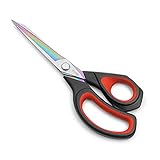
These scissors are also a sensible choice for mixed craft use. A pair around 8 inches may be easier to control than very long shears when cutting felt, cotton, fleece, paper patterns, ribbon, or small fabric pieces. The Fiskars 8″ Left-Handed All-Purpose Scissors for Fabric & Crafts, Red, for example, sits in the accessible end of this category at $9.43. A 10.5-inch left-handed tailor option priced at $18.59 is more suitable when you want greater reach for fabric panels.
Hand comfort matters in a home environment. If you are cutting for an hour at a time, a handle that fits your fingers and does not press sharply into the thumb joint may matter more than a slightly harder steel grade. Test the opening width if possible. A large handle can be helpful for larger hands, but too much room can reduce control for smaller hands.
Where Dressmaking Scissors Wins
Dressmaking scissors are built around efficient fabric cutting. Their longer blades make fewer strokes across a skirt panel, shirt front, curtain length, or folded yardage. Fewer strokes can mean a smoother line and less disruption to the fabric, provided the shears are sharp and the material is supported on a flat surface.
Traditional dressmaking shears are often heavier than general-purpose craft scissors. That weight can help the blades stay aligned through woven fabric and several layers. It can also become tiring if you hold the scissors above the work surface or make many small cuts. For that reason, a 9-inch pair is often a useful middle ground for home sewing.
There is also a broader selection. The LIVINGO Fabric Scissors 9.5″ Professional Tailor Heavy Duty Sewing Shears are listed at $13.99, while a Professional Tailor Scissors 9 Inch model for fabric, leather, and craft use is priced at $8.99. These price points show why comparing construction and fit is important: “professional” and “heavy duty” labels do not by themselves establish comfort, blade quality, or left-handed compatibility.
Dressmaking scissors win when you regularly cut large, uninterrupted sections of fabric. They are less compelling if most of your projects involve small patches, appliqué, thread trimming, or paper templates. Never use fabric shears on paper unless the manufacturer specifically allows it; paper fibers can dull a fabric edge quickly.
Cost Over 5 Years
For a realistic home budget, expect to spend approximately $9 to $19 for a basic pair in either category. The four reference options range from $8.99 to $18.59, with the $9.43 left-handed all-purpose model and the $13.99 9.5-inch tailor shears near the lower and middle portions of that range.
Assume one pair costs $14, receives basic care, and lasts five years. That works out to $2.80 per year, or about 23 cents per month. Even a $19 pair costs only $3.80 per year over the same period. If you cut fabric weekly, the cost per use can become just a few cents.
Replacement is more likely when scissors are used on cardboard, wire, plastic packaging, or upholstery materials beyond their capacity. Professional sharpening may cost roughly $10 to $25, depending on your area and the service. Sharpening can be economical for well-made dressmaking shears, but not always for inexpensive stamped scissors. A simple case or blade guard may add $5 to $15 and can prevent damage in a crowded drawer.
The lowest five-year cost is therefore not always the cheapest purchase. A comfortable pair that stays dedicated to fabric is less likely to be replaced than an inexpensive multipurpose pair used for every household task.
Which One for Your Home
Small apartment
Choose compact left-handed fabric scissors if you are left-handed and have limited sewing space. An 8- to 9-inch pair fits most sewing boxes and is easier to store in a kitchen or bedroom drawer. If you sew full garments regularly, select 9-inch shears rather than buying both short craft scissors and long dressmaking scissors.
Family with kids or pets
Prioritize secure storage over appearance. A pair with a blade cover, locking handle, or dedicated lidded container reduces the chance of accidental contact. Left-handed users should still choose a true left-handed design rather than accepting a right-handed pair that feels awkward. Keep fabric scissors separate from school and household scissors so children do not use them on paper or packaging.
Rental home
A versatile, reasonably priced pair is usually enough. Choose scissors that can handle clothing repairs, hemming, curtains, and small crafts without requiring a permanent sewing station. A 9- to 10-inch model offers useful reach while remaining easy to store. Avoid paying for specialized industrial shears unless you actually cut leather, canvas, or upholstery fabric frequently.
Long-term home
Invest in the scissors that match your dominant hand and your most common projects. A left-handed sewer who makes clothing should look for left-handed dressmaking shears with a durable pivot and comfortable handle. Someone who alternates between repairs and quilting may prefer an 8- to 9-inch fabric model for control, plus a rotary cutter for long straight cuts. Label the scissors “fabric only” and have them sharpened when the blades begin pushing fabric instead of slicing it.
FAQ
Are left-handed fabric scissors the same as dressmaking scissors?
No. “Left-handed” describes blade orientation and handle suitability, while “dressmaking” describes the intended sewing use and usually the longer shear design. A pair can be both left-handed and dressmaking scissors. Always confirm the product specification rather than relying on the product photo.
Can a left-handed person use regular dressmaking scissors?
Yes, but the experience may be less comfortable and the cut line harder to see. Regular right-handed shears can also encourage awkward wrist pressure or cause the fabric to lift away from the blade. For frequent sewing, true left-handed shears are generally the better choice.
What size fabric scissors should a beginner buy?
An 8- to 9-inch pair is a practical starting point for most homes. It offers enough blade length for apparel and quilting without the extra weight of 10- to 12-inch shears. Choose longer scissors if you regularly cut large fabric panels or multiple layers.
How can fabric scissors last five years or longer?
Use them only on fabric, thread, and approved craft materials. Wipe lint from the blades, keep the pivot dry, store them closed or covered, and avoid dropping them. If they begin chewing or folding fabric, stop forcing the cut and have quality shears professionally sharpened.
Ready to decide? Our #1 pick for 2026 is the Primary purpose.
Live price & availability on Amazon.
Related Reviews & Guides


Is a Vertical Gaming Mouse Worth It Left Handed? An Honest Answer (2026)

7 Best Desks for Left-Handers: Top Picks Reviewed and Compared (2026)