Last Updated: September 12, 2026
- Handedness Is a Spectrum, Not a Switch
- Key Terms to Know
- The Do-It-Yourself Hand Dominance Test
- Beyond the Hands: Eye, Foot, and Ear Dominance
- Quick Foot and Ear Checks
- What If You Are Mixed-Handed?
- What Influences Where You Fall on the Spectrum
- Retesting and Confirming Your Result
- What Your Result Does Not Mean
- Why Knowing Your Dominance Helps
- Top-Rated Picks
- Frequently Asked Questions
- Conclusion
- Related Articles
⚡ Key Takeaways
- Researchers estimate that around 10% of people are left-handed, roughly 88 to 90% are right-handed, and a small percentage are mixed-handed or ambidextrous.
- Go through each task and note which hand you instinctively use.
- Handedness is only one form of lateral preference.
- Mixed-handedness is more common than people think and is not a problem.
Most people assume handedness is obvious: you write with one hand, so that is your dominant hand, end of story. But reality is more nuanced, and many people genuinely wonder whether they are truly left-handed, right-handed, or somewhere in between. If you have ever searched for an “am I left handed test,” you have probably discovered that hand dominance is a spectrum, not a simple switch. This guide explains what hand dominance actually means and gives you a practical, do-it-yourself test to find out where you fall.
As an Amazon Associate we earn from qualifying purchases at no extra cost to you.


Related: best label maker tapes.
By the end, you will understand the difference between writing hand and true dominance, recognize the signs of mixed-handedness and ambidexterity, and have a clear set of tasks to assess yourself.
🛒 Best Price Today on Amazon
Prime members get fast, free shipping on everything above, plus member-only deals. New members get a 30-day free trial — cancel anytime.
Handedness Is a Spectrum, Not a Switch
Researchers estimate that around 10% of people are left-handed, roughly 88 to 90% are right-handed, and a small percentage are mixed-handed or ambidextrous. But within those groups, dominance varies in strength. Some right-handers are so strongly right-dominant that their left hand is nearly useless for fine tasks. Others use different hands for different jobs, a pattern called mixed-handedness. True ambidexterity, where both hands perform equally well, is rare.
This matters because the hand you write with is not always your most coordinated hand for everything. Some people were nudged toward writing right-handed in childhood while remaining left-dominant for almost everything else.
Key Terms to Know
| Term | Meaning |
|---|---|
| Right-handed | Right hand dominant for most fine-motor tasks |
| Left-handed | Left hand dominant for most fine-motor tasks |
| Mixed-handed | Different hands preferred for different tasks |
| Ambidextrous | Both hands perform tasks roughly equally well |
| Cross-dominant | Dominant hand differs from dominant eye or foot |
The Do-It-Yourself Hand Dominance Test
This informal test is inspired by the principles behind formal handedness inventories used in research. Go through each task and note which hand you instinctively use. Do not overthink it; the first reaction is the most honest.
- Writing: Which hand do you write with?
- Throwing: Pick up a ball and throw it. Which hand throws?
- Toothbrushing: Which hand holds the toothbrush?
- Using scissors: Which hand controls the cutting?
- Holding a spoon: Which hand do you eat soup with?
- Striking a match: Which hand holds the match?
- Threading a needle: Which hand moves the thread?
- Holding a knife (without a fork): Which hand cuts?
- Using a computer mouse: Which hand feels natural?
- Dealing cards: Which hand deals?
Scoring Your Results
Count how many tasks you do with each hand:
- 8 to 10 left: You are strongly left-handed.
- 8 to 10 right: You are strongly right-handed.
- A clear majority but not all: You are predominantly one-handed with some mixed tendencies, which is very common.
- Roughly split: You are mixed-handed or possibly ambidextrous.
Beyond the Hands: Eye, Foot, and Ear Dominance
Handedness is only one form of lateral preference. You also have a dominant eye, foot, and even ear. To find your dominant eye, extend both arms, form a small triangle with your hands, and frame a distant object. Close one eye, then the other. The eye that keeps the object centered is your dominant eye. Many people are cross-dominant, meaning their dominant hand and eye are on opposite sides, which is perfectly normal and sometimes even advantageous in sports.
Quick Foot and Ear Checks
- Foot: Imagine kicking a ball. Which foot steps up to strike it? That is usually your dominant foot.
- Ear: When you press a phone to your head or lean toward a faint sound, which ear do you use? That is your dominant ear.
What If You Are Mixed-Handed?
Mixed-handedness is more common than people think and is not a problem. It simply means your brain has distributed motor preferences across both hands. Many mixed-handers learned one task with a particular hand by circumstance, such as using right-handed tools at school. If you find you are mixed-handed, you may benefit from left-handed tools for the tasks where your left hand leads, even if you write with your right.
What Influences Where You Fall on the Spectrum
Your position on the handedness spectrum is shaped by a mix of biology and early experience. Genetics play a partial role, but there is no single gene that decides the matter. Instead, many genes each nudge the odds slightly, and prenatal development adds an element of chance. This is why two right-handed parents can have a strongly left-handed child, and why identical twins sometimes have opposite handedness despite sharing their genes.
Early childhood experience can also blur the picture. Some people who are naturally left-dominant were encouraged, subtly or directly, to write with their right hand. They may score “right” on the writing task but “left” on nearly everything else, which is a classic mixed-handed result. If your test results feel contradictory, ask yourself whether anyone ever steered your writing hand when you were young. That history often explains a surprising score.
Retesting and Confirming Your Result
A single run through the task list gives a good snapshot, but handedness self-assessment is most reliable when you repeat it and look for consistency. Try the test on a different day, ideally when you are relaxed and not thinking about which hand “should” do each job. You can also have a friend or family member observe you during ordinary daily tasks without telling you what they are watching for, since people sometimes perform differently when they know they are being assessed.
Pay special attention to spontaneous, unplanned actions. Which hand do you throw out to catch a falling object? Which hand reaches first for a doorknob or a cup? These reflexive movements often reveal true dominance more honestly than tasks you have consciously practiced. When your deliberate and reflexive results agree, you can be confident in where you sit on the spectrum.
What Your Result Does Not Mean
It is worth being clear about the limits of any handedness test, including this one. A self-assessment tells you about your motor preferences, nothing more. It does not measure intelligence, creativity, or aptitude, despite the popular myths that swirl around left-handers. A strongly left-handed score and a mixed-handed score are equally normal and equally healthy. There is no “better” result to hope for.
Likewise, discovering that you are mixed-handed is not a sign that something went wrong in your development. Mixed-handedness is a common, natural pattern that simply reflects how your particular brain distributed its motor preferences. The only practical purpose of pinning down your dominance is comfort: knowing which hand leads helps you pick tools and arrange your space so daily tasks feel easier. Treat the result as useful information, not a label that defines you.
Why Knowing Your Dominance Helps
Understanding your true dominance helps you choose the right tools and set up your environment for comfort. If the test reveals you are more left-dominant than you realized, you might find that left-handed pens, a left-handed desk layout, or even a left-handed can opener suddenly make daily tasks easier. Many lefties spend years using right-handed tools without realizing how much friction that adds.
Top-Rated Picks




| Product | Brand | Rating | Reviews | Price |
|---|---|---|---|---|
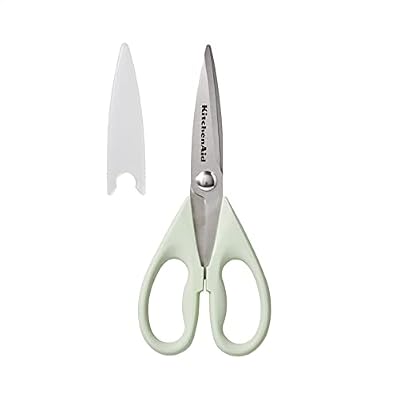
| KitchenAid All Purpose Kitchen Shears with Protective… | — | ★ 4.8 | 70.9k | $7.59 |
| KitchenAid All Purpose Kitchen Shears with Protective… | — | ★ 4.8 | 70.9k | $10.99 |
| KitchenAid All Purpose Kitchen Shears with Protective… | — | ★ 4.8 | 70.9k | $13.99 |
| Bostitch Office Premium 3 Hole Punch, 12 Sheet Capaci… | BostitchOfficeProducts | ★ 4.7 | 64.4k | $12.99 |
| 3M Littmann Classic III Monitoring Stethoscope, 5910C… | Littmann®Stethoscopes | ★ 4.8 | 50k | $112.16 |
Frequently Asked Questions
Can I be left-handed but write with my right hand?
Yes. Some people were encouraged to write right-handed in childhood while remaining left-dominant for most other tasks. This is one form of mixed-handedness and is quite common.
Is ambidexterity real?
True ambidexterity, where both hands perform equally well at all tasks, is rare. Most people who call themselves ambidextrous are actually mixed-handed, favoring different hands for different jobs.
Does handedness ever change?
Your underlying dominance is generally stable, but you can train your non-dominant hand to become more capable. Injury or necessity sometimes pushes people to develop their weaker hand significantly.
What is cross-dominance?
Cross-dominance is when your dominant hand and dominant eye are on opposite sides, such as being right-handed but left-eye dominant. It is common and can even help in activities like shooting or batting.
Is this test scientifically accurate?
This is an informal self-assessment based on the principles of established handedness inventories. It gives a reliable general picture but is not a clinical diagnosis. For research-grade results, formal inventories are used.
Conclusion
Hand dominance is a spectrum, and the simple task-based test above gives you a solid sense of where you fall. Whether you turn out to be strongly left-handed, mixed-handed, or cross-dominant, knowing your true preference helps you choose tools and arrange your space for genuine comfort. If the results surprise you, it may finally explain why certain everyday tools have always felt just a little bit off.
Related Reviews & Guides




Left-Handed Sewing Basics: Tools and Techniques

Left-Handed Knitting for Beginners: Methods and Tips