Last Updated: September 12, 2026
- Should a Left-Hander Play a Left-Handed Guitar?
- Comparing Your Three Main Options
- Choosing Your First Left-Handed Guitar
- Reading Chord Diagrams as a Left-Hander
- Your First Chords and Practice Routine
- Building Finger Strength and Dexterity
- Strumming and Rhythm for Left-Handers
- Setting Up a Left-Friendly Practice Space
- Staying Motivated as a Beginner
- Top-Rated Picks
- Frequently Asked Questions
- Conclusion
- Related Articles
⚡ Key Takeaways
As an Amazon Associate we earn from qualifying purchases at no extra cost to you.


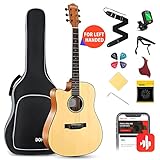

- The first and most important question is whether to learn on a left-handed guitar or simply learn the standard right-handed way.
- Most beginning left-handed guitarists choose between three setups.
- Once you've decided to go lefty, focus on getting a playable instrument rather than chasing the perfect one.
- When you play a true left-handed guitar, your fretboard is a mirror image of the diagrams you see.
If you’ve ever picked up a guitar and felt like everything was backwards, you’re not imagining it. Learning how to play guitar left-handed means navigating a world built almost entirely for right-handed players, from the instruments on the wall at your local music shop to the chord diagrams in beginner books. The good news is that thousands of southpaws have become brilliant guitarists, and with the right approach you can too. This guide walks you through the decisions, gear, and practice habits that will set a left-handed beginner up for success.
🛒 Best Price Today on Amazon
Prime members get fast, free shipping on everything above, plus member-only deals. New members get a 30-day free trial — cancel anytime.
Should a Left-Hander Play a Left-Handed Guitar?
The first and most important question is whether to learn on a left-handed guitar or simply learn the standard right-handed way. There is no single correct answer, and plenty of famous lefties have gone both directions. Paul McCartney and Jimi Hendrix played left-handed instruments, while other left-dominant players learned right-handed and never looked back.
Your strumming hand is doing the rhythmic, expressive work, while your fretting hand handles precise finger placement. For many left-handers, having their dominant hand on the strumming side feels natural and powerful. For others, the practical advantages of playing right-handed, like cheaper instruments and easier access to lessons, outweigh that comfort.
Quick Self-Test
Before you buy anything, borrow or rent a guitar and try holding it both ways. Notice which hand wants to do the strumming and which feels more comfortable forming shapes on the neck. Trust that instinct, because you’ll be practicing for years, and fighting your natural orientation every day gets exhausting.
Comparing Your Three Main Options
Most beginning left-handed guitarists choose between three setups. Each has clear trade-offs.
| Option | Pros | Cons |
|---|---|---|
| True left-handed guitar | Natural feel, dominant hand strums, proper ergonomics | Fewer models, higher cost, harder to borrow |
| Learn right-handed | Huge selection, cheaper, easy lessons, can play any guitar | Dominant hand frets instead of strums, may feel awkward early on |
| Restrung right-handed guitar | Affordable, uses common instruments | Controls and cutaway are reversed, nut and bracing not ideal |
If you can afford it and you’ve confirmed that playing lefty feels right, a purpose-built left-handed guitar is the cleanest path. Restringing a right-handed guitar is a budget workaround, but the body shape, control knobs, and internal bracing were all designed for the opposite orientation, so it’s a compromise.
Choosing Your First Left-Handed Guitar
Once you’ve decided to go lefty, focus on getting a playable instrument rather than chasing the perfect one. A guitar that stays in tune and has comfortable action will keep you motivated far better than an expensive model that intimidates you.
- Acoustic or electric? Acoustics need no extra gear and build finger strength. Electrics have thinner necks and lighter strings that are gentler on beginner fingertips.
- Action height. Ask the shop to check the action, the distance between strings and fretboard. Lower action is easier to press down.
- Scale and size. Smaller-bodied guitars and shorter scale lengths suit younger or smaller players.
- Set up properly. Have any new guitar professionally set up so it plays as easily as possible.
If music is part of a broader creative life, you may already own other left-handed tools. The same comfort-first thinking that guides choosing a guitar applies to a smooth left-handed crochet hook or any tool built for your dominant hand, removing friction so you can focus on the craft itself.
Reading Chord Diagrams as a Left-Hander
Here’s where left-handed players hit a wall: nearly every chord chart, video, and book shows a right-handed fretboard. When you play a true left-handed guitar, your fretboard is a mirror image of the diagrams you see.
You have two practical solutions. First, you can mentally flip each diagram, imagining it reflected in a mirror. This is tough at first but becomes second nature. Second, you can use left-handed chord charts, which are widely available online and in dedicated left-handed instruction books. Many apps now offer a setting to flip diagrams automatically, which removes the guesswork entirely.
A Practice Tip for Mirrored Learning
When watching a right-handed teacher on video, try positioning yourself so you feel like you’re looking in a mirror. Some learners flip the video horizontally using their player’s settings so the instructor appears to play left-handed, making finger positions directly copyable.
Your First Chords and Practice Routine
Start with a handful of beginner-friendly open chords: E minor, C, G, D, and A. These five unlock hundreds of songs. Practice transitioning between two chords slowly and cleanly before adding speed. Muscle memory comes from repetition, not from rushing.
- Warm up with finger stretches for two minutes.
- Practice one new chord shape until each string rings clearly.
- Drill transitions between two chords for five minutes.
- Play along to a simple song you love.
- Cool down by repeating your cleanest chord.
Short, daily sessions of fifteen to twenty minutes beat marathon weekend practices. Consistency builds the calluses and coordination you need.
Building Finger Strength and Dexterity
Both hands need conditioning, but in different ways. Your fretting hand develops strength and independence between fingers, while your strumming hand builds rhythmic control and accuracy. Left-handers sometimes have an early advantage in strumming dynamics because their dominant hand handles that expressive work, but fretting still demands patient practice.
Spend a few minutes each session on simple finger exercises. Press each fingertip down on a single fret, one finger at a time, then lift and repeat. Chromatic exercises, where you play four consecutive frets with four fingers and move up the neck, build coordination quickly. Don’t worry about speed at first; clean, buzz-free notes matter far more than fast sloppy ones.
Caring for Beginner Fingertips
New guitarists of any handedness develop sore fingertips before calluses form. This is normal and temporary. Keep early sessions short, take breaks when your fingers ache, and let the calluses build over a couple of weeks. Lighter-gauge strings on an electric or a properly set-up acoustic ease this transition considerably.
Strumming and Rhythm for Left-Handers
Because your dominant hand strums, you may find rhythm comes naturally. Start with simple downstrokes in time with a metronome or a backing track, then add upstrokes to create patterns. A relaxed wrist is the secret to smooth strumming, so avoid tensing your arm. Let the motion come from your wrist rather than your whole forearm.
- Downstroke practice: Strum down on each beat, keeping even timing.
- Down-up patterns: Add upstrokes between beats for a fuller groove.
- Use a light pick grip: Hold the pick firmly enough not to drop it but loose enough to glide.
- Mute and accent: Practice lightly muting strings with your palm for dynamic control.
Setting Up a Left-Friendly Practice Space
Comfort matters more than people realize. A supportive chair, a stable footstool, and good lighting reduce fatigue and let you practice longer. If you also write or study music at the same spot, consider organizing your desk for left-handed comfort, the same principles that make a great left-handed desk apply to a music corner. Keep your tuner, capo, and a left-handed-friendly notebook within easy reach of your dominant hand. When you jot down chord changes or song notes, a smudge-free left-handed pen keeps your practice journal clean.
Staying Motivated as a Beginner
The first few weeks of guitar are the hardest, and many beginners quit before the fun starts. Stack the odds in your favor by learning songs you genuinely love, even simplified versions. Nothing motivates practice like playing real music. Set small, achievable goals, like mastering one chord transition this week, and celebrate each win. Record yourself occasionally so you can hear your progress, which is often more dramatic than it feels day to day. Joining an online community of left-handed players also helps, since you can share tips on flipped charts and lefty gear with people who understand the journey.
Top-Rated Picks




| Product | Brand | Rating | Reviews | Price |
|---|---|---|---|---|
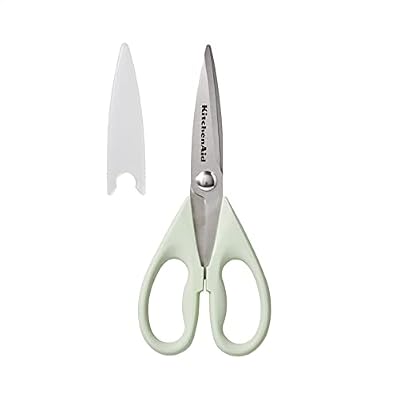
| KitchenAid All Purpose Kitchen Shears with Protective… | — | ★ 4.8 | 70.9k | $7.59 |
| KitchenAid All Purpose Kitchen Shears with Protective… | — | ★ 4.8 | 70.9k | $10.99 |
| KitchenAid All Purpose Kitchen Shears with Protective… | — | ★ 4.8 | 70.9k | $13.99 |
| Bostitch Office Premium 3 Hole Punch, 12 Sheet Capaci… | BostitchOfficeProducts | ★ 4.7 | 64.4k | $12.99 |
| 3M Littmann Classic III Monitoring Stethoscope, 5910C… | Littmann®Stethoscopes | ★ 4.8 | 50k | $112.16 |
Frequently Asked Questions
Is it harder to learn guitar as a left-hander?
Not inherently. The main challenges are finding instruments and flipping right-handed chord diagrams. Once you solve those, learning is no more difficult than it is for right-handers.
Can I just flip a right-handed guitar over and restring it?
You can, and many beginners do, but the controls, cutaway, and internal bracing will be backwards. It works as a budget starting point but isn’t ideal long-term.
Why do some left-handed people learn to play right-handed?
Mostly for practicality. Right-handed guitars are cheaper, far more available, and let you pick up any instrument anywhere. Some lefties also find their dominant hand handles fretting well.
Are left-handed guitars more expensive?
Often slightly, because they’re made in smaller quantities and you’ll have fewer models to choose from. The price gap has shrunk in recent years as more brands offer lefty versions.
Do I need left-handed chord charts?
They make life much easier when you play a true left-handed guitar. Many apps now flip diagrams automatically, so you can use mainstream learning tools with one setting change.
Conclusion
Learning how to play guitar left-handed is entirely achievable once you make a few smart early decisions. Pick the orientation that feels natural, get a properly set-up instrument, and solve the chord-diagram challenge with flipped charts or apps. Then commit to short, regular practice. The world of guitar belongs to lefties just as much as anyone, so tune up and start strumming.
Related Reviews & Guides




Best Deodorant for Men: 7 Antiperspirant and Aluminum-Free Sticks

Best Laptops Under $1300 for Work and Gaming