Last Updated: September 12, 2026
- First, Confirm the Hand Preference
- Why Left-Handed Writing Is Mechanically Different
- Step-by-Step: Setting Up for Success
- Choosing the Right Tools
- Letter Formation Tips for Lefties
- Building Confidence and Avoiding Frustration
- Practice Activities That Build Skill
- Helping the Teacher Help Your Child
- When to Seek Extra Support
- Top-Rated Picks
- Frequently Asked Questions
- Conclusion
- Related Articles
⚡ Key Takeaways
- Most children show a clear hand preference between ages two and four, though it can solidify a bit later.
- In English and most Western languages, writing moves from left to right.
- The tools matter more than most parents expect.
- Some letters cause particular trouble for left-handers because of the pushing motion.
Watching a left-handed child pick up a crayon for the first time is a small milestone, but it can also stir a little worry. How do you teach a left-handed child to write when so much of handwriting instruction assumes a right hand? The encouraging truth is that lefties learn to write beautifully every day. They just need a few adjustments to paper position, grip, and tools, plus a parent or teacher who understands that the mechanics are genuinely different and not a sign that anything is wrong.
As an Amazon Associate we earn from qualifying purchases at no extra cost to you.




Related: best label maker tapes.
This guide walks you through everything, step by step, from setting up the page to choosing the right pen and avoiding the dreaded smudge and hook grip.
🛒 Best Price Today on Amazon
Prime members get fast, free shipping on everything above, plus member-only deals. New members get a 30-day free trial — cancel anytime.
First, Confirm the Hand Preference
Most children show a clear hand preference between ages two and four, though it can solidify a bit later. Avoid pushing a child toward either hand. Forcing a natural lefty to write with the right hand is outdated and can cause frustration and even fine-motor confusion. Offer crayons at the child’s midline and watch which hand consistently reaches for them. If your child is still switching at age five or six, that is normal too.
Why Left-Handed Writing Is Mechanically Different
In English and most Western languages, writing moves from left to right. A right-hander pulls the pen away from the body and toward the side they have already written, so their hand never covers fresh ink. A left-hander, by contrast, pushes the pen across the page and their hand naturally trails over the words just written. This single fact explains two of the most common struggles: smudging and the curled-over “hook” grip many lefties adopt to keep their hand above the line of writing.
The fix is not to fight this reality but to set up the page and the hand so the child can write left-to-right comfortably without smearing.
Step-by-Step: Setting Up for Success
- Tilt the paper clockwise. For a lefty, the top of the paper should angle to the right, roughly 30 to 45 degrees. This lets the wrist stay straight and keeps the hand below the writing line, which dramatically reduces smudging and discourages the hook grip.
- Position the paper to the left of center. Place the page slightly left of the child’s body midline so the arm can move freely.
- Teach a relaxed tripod grip. The pencil rests between thumb and index finger, supported by the middle finger. Encourage the child to hold the pencil a little higher up the shaft (about an inch and a half from the tip) so they can see what they are writing.
- Keep the wrist below the line. Remind the child to write with the hand under the words, not curled above them.
- Anchor with the other hand. The right hand should hold the paper steady at the angle that feels natural.
Choosing the Right Tools
The tools matter more than most parents expect. The wrong pencil or pen turns every writing session into a smear-filled battle. Here is what to look for.
| Tool | What to Look For | Why It Helps Lefties |
|---|---|---|
| Pencils | Triangular barrel, soft lead | Encourages correct grip, less pressure needed |
| Pens | Quick-dry gel ink | Dries before the hand passes over it |
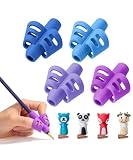
| Grips | Left-handed molded grips | Positions fingers naturally |
| Paper | Slightly textured, matte | Holds ink faster, reduces smearing |
Quick-drying ink is the single biggest upgrade for a young lefty learning cursive or print. Our roundup of the best left-handed pens highlights options specifically engineered to dry fast and resist smudging.
Letter Formation Tips for Lefties
Some letters cause particular trouble for left-handers because of the pushing motion. A few targeted habits help enormously.
- Practice push strokes early. Letters with horizontal strokes (like t, f, and the crossbar of A) feel different when pushed rather than pulled. Practice them slowly.
- Encourage lifting, not dragging. Teach the child to lift the pencil between strokes rather than dragging across wet ink.
- Use lined paper with a clear baseline. Consistent letter height builds confidence.
- Model letters from the left side. When you demonstrate, sit on the child’s left or mirror their angle so they can copy what they see.
Building Confidence and Avoiding Frustration
Handwriting is as much emotional as mechanical for a young child. Lefties sometimes notice they are “different” from classmates and internalize that as being slower or worse. Counter this directly. Point out famous left-handers, celebrate progress, and never describe left-handedness as a problem. Keep practice sessions short and playful, and praise effort over neatness in the early stages.
If the child develops a hook grip despite your setup, gently revisit the paper angle rather than scolding. The hook is almost always a response to a flat page that forces the hand above the writing.
Practice Activities That Build Skill
Formal handwriting drills can feel tedious for a young child, so it helps to disguise practice as play. The underlying goal is to strengthen the fine-motor muscles and reinforce correct movement patterns without pressure. Try weaving these into your routine:
- Tracing and dot-to-dots: These build control over the pencil while keeping the activity light and fun.
- Drawing big shapes on a vertical surface: Taping paper to a wall or using an easel encourages a strong, relaxed wrist position that carries over to writing.
- Playdough and clay: Squeezing, rolling, and pinching strengthen the exact hand muscles that handwriting relies on.
- Chalk on the sidewalk: Large, sweeping letters help a lefty learn movement direction without worrying about smudging.
- Air writing: Have your child trace giant letters in the air with their whole arm before committing them to paper.
Keep sessions short, ideally five to ten minutes for younger children, and always end on a success. A child who finishes practice feeling capable will come back willingly; one who finishes frustrated will resist.
Helping the Teacher Help Your Child
Not every classroom teacher has been trained in the specifics of left-handed instruction, and a well-meaning teacher may unknowingly seat a lefty in a way that causes problems. A common one is placing a left-handed child to the right of a right-handed child at a shared desk, so their elbows collide. Politely ask that your child be seated on the left of any deskmate, with enough room for their writing arm to move freely.
It is also worth gently mentioning the paper-angle technique to the teacher, since a child who tilts their page clockwise at home but is corrected to keep it straight at school will receive confusing mixed messages. Most teachers welcome a short, friendly note explaining what works for your child. When home and school use the same approach, progress is faster and far less frustrating for everyone involved.
When to Seek Extra Support
Most left-handed writing struggles resolve with the right setup and patience. However, consider talking to a teacher or occupational therapist if the child shows persistent pain while writing, extreme reluctance well past the early grades, or fine-motor difficulties that affect other tasks like buttoning or using utensils. These are about motor development, not handedness itself, but a professional can help.
Top-Rated Picks




| Product | Brand | Rating | Reviews | Price |
|---|---|---|---|---|
| KitchenAid All Purpose Kitchen Shears with Protective… | — | ★ 4.8 | 70.9k | $7.59 |
| KitchenAid All Purpose Kitchen Shears with Protective… | — | ★ 4.8 | 70.9k | $10.99 |
| KitchenAid All Purpose Kitchen Shears with Protective… | — | ★ 4.8 | 70.9k | $13.99 |
| Bostitch Office Premium 3 Hole Punch, 12 Sheet Capaci… | BostitchOfficeProducts | ★ 4.7 | 64.4k | $12.99 |
| 3M Littmann Classic III Monitoring Stethoscope, 5910C… | Littmann®Stethoscopes | ★ 4.8 | 50k | $112.16 |
Frequently Asked Questions
Should I ever force my left-handed child to use their right hand?
No. Forcing a hand switch can cause frustration, confusion, and even emotional distress. Let your child use their dominant hand and support them with the right setup instead.
Why does my left-handed child smudge everything?
Because their hand trails over the ink they just wrote. Tilting the paper clockwise and using quick-dry ink solves most of this. Keeping the wrist below the writing line also helps.
What is the hook grip and is it bad?
The hook grip is when a lefty curls their wrist above the line to avoid smudging. It is not dangerous, but it can be tiring and less efficient. The best prevention is angling the paper correctly from the start.
At what age should my child write neatly?
Legible handwriting typically develops over several years. Early elementary children are still building fine-motor control. Focus on comfort and correct setup first, and neatness will follow.
Are special left-handed pencils worth it?
Triangular pencils and left-handed grips genuinely help young children position their fingers correctly. They are inexpensive and worth trying if your child struggles with grip.
Conclusion
Teaching a left-handed child to write is mostly about setup, not struggle. Tilt the paper clockwise, position it to the left, encourage a relaxed grip with the hand below the line, and choose quick-dry tools. Add a generous dose of patience and encouragement, and your young lefty will be writing with comfort and confidence in no time.
Related Reviews & Guides




Left-Handed Knitting for Beginners: Methods and Tips

How to Hold a Pen Left-Handed Without Smudging