Last Updated: September 12, 2026
- The Right-Handed World We Live In
- What Actually Changes in a Left-Handed Product?
- Common Products That Genuinely Differ
- The Ergonomic Cost of Using the Wrong Tool
- How to Tell If You Need a Left-Handed Version
- Where Left-Handed Design Is Heading
- The History Behind the Right-Handed Default
- Quality Matters as Much as Handedness
- Top-Rated Picks
- Frequently Asked Questions
- Conclusion
- Related Articles
⚡ Key Takeaways
- Between 10% and 12% of people worldwide are left-handed, a figure that has stayed remarkably stable across cultures and centuries.
- Left-handed products are not simply mirror images slapped together for marketing.
- Not every product needs a left-handed version, but many do.
- Using a right-handed tool as a lefty is not just inconvenient.
Have you ever picked up a tool, struggled with it, and wondered why it felt so awkward in your hand? If you are part of the roughly 10% of the population who are left-handed, you have probably asked yourself why left-handed products are designed differently from their standard counterparts. The short answer is that most everyday objects are built for a right-handed majority, and that quiet bias creates real friction for lefties. The longer answer is more interesting, involving ergonomics, mechanics, safety, and decades of manufacturing habits that simply never accounted for the left hand.
As an Amazon Associate we earn from qualifying purchases at no extra cost to you.




Related: best label maker tapes.
In this guide, we will unpack exactly what makes left-handed design distinct, why it matters more than most people realize, and which products are genuinely worth seeking out in a left-handed version.
🛒 Best Price Today on Amazon
Prime members get fast, free shipping on everything above, plus member-only deals. New members get a 30-day free trial — cancel anytime.
The Right-Handed World We Live In
Between 10% and 12% of people worldwide are left-handed, a figure that has stayed remarkably stable across cultures and centuries. Because the overwhelming majority of people use their right hand, manufacturers historically designed products for that majority. From spiral notebooks to power tools, the default assumption baked into industrial design is that the user’s dominant hand is the right one.
This is not usually malicious or even intentional. It is the result of designing for the largest customer base. The trouble is that “designed for most people” quietly means “harder to use for one in ten people.” When you multiply that across the thousands of objects a person touches in a lifetime, the cumulative inconvenience adds up.
What Actually Changes in a Left-Handed Product?
Left-handed products are not simply mirror images slapped together for marketing. The best ones are re-engineered so that the mechanics, ergonomics, and visual layout all favor the left hand. Here are the main categories of change:
Mechanical Reversal
Some tools physically work backward for lefties. Scissors are the classic example: the blades are reversed so the cutting line is visible to the left hand and the natural squeezing motion pushes the blades together rather than apart. Can openers, corkscrews, and certain kitchen gadgets follow the same principle, flipping the gears or threading so they engage correctly when turned by the left hand.
Ergonomic Shaping
Contoured grips, finger molds, and thumb rests are often sculpted for one hand. A right-handed ergonomic pen or knife handle can feel genuinely wrong in the left hand. Left-handed versions reshape these contours so pressure lands where a lefty actually grips.
Layout and Orientation
Measuring cups with markings on only one side, rulers that count from the wrong end, and notebooks with the binding on the left all create small daily annoyances. Left-handed versions reposition these elements so they are readable and reachable.
Safety Considerations
This is the part people underestimate. Power tools, circular saws, and even some firearms eject debris, hot air, or shell casings toward the right by default. For a left-handed user, that can mean hazards directed toward the body. Left-handed designs reroute these to protect the user.
Common Products That Genuinely Differ
Not every product needs a left-handed version, but many do. The table below shows where the difference is real and meaningful versus where it is mostly cosmetic.
| Product | What Changes | Impact for Lefties |
|---|---|---|
| Scissors | Reversed blades and handle | High — clean cuts, visible line |
| Can opener | Reversed cutting wheel and turning knob | High — usable with left hand |
| Pens | Quick-dry ink, contoured grip | Medium-high — less smudging |
| Corkscrew | Reversed thread direction | Medium — natural turning motion |
| Notebooks | Binding on right, top-spiral | Medium — no wrist obstruction |
| Guitars | Mirrored body and string order | High — comfortable playing |
| Desks | Reversed drawer and monitor layout | Medium — better workflow |
The Ergonomic Cost of Using the Wrong Tool
Using a right-handed tool as a lefty is not just inconvenient. Over time, it can contribute to muscle strain, awkward wrist angles, and reduced precision. Writers who drag their hand across wet ink develop a hooked grip to avoid smudging. Cooks who fight a right-handed can opener apply uneven force. Guitarists who learn on a flipped instrument compensate in ways that limit their progress.
The goal of left-handed design is to remove that compensation entirely so the tool works with your body, not against it. When a lefty finally uses a properly designed tool, the relief is often immediate and a little surprising.
How to Tell If You Need a Left-Handed Version
Use this simple checklist when deciding whether to buy left-handed:
- Does the tool have a cutting action? Scissors, knives, and can openers almost always benefit.
- Is there a contoured grip? Molded handles favor one hand.
- Does it have directional markings? Rulers, measuring cups, and gauges may read backward.
- Is there a safety mechanism that ejects something? Power tools deserve close attention.
- Will you use it daily? The more often you use a tool, the more a left-handed version pays off.
If you are setting up a whole workspace, it is worth thinking holistically. Our guide to the best left-handed desks walks through how layout choices ripple across your entire day.
Where Left-Handed Design Is Heading
The good news is that awareness is growing. More brands now offer ambidextrous or specifically left-handed lines, and online specialty retailers have made these products far easier to find than they were a generation ago. Whether you need a smudge-free pen, a left-handed can opener, or a corkscrew that turns the right way, the options keep improving.
The History Behind the Right-Handed Default
To understand why left-handed products are still relatively scarce, it helps to look at how this bias became baked into our objects. For most of human history, the left hand carried negative cultural associations. The Latin word for left, sinister, became a byword for something untrustworthy, while dexter, meaning right, gave us “dexterity.” In many cultures, left-handed children were actively discouraged or forced to switch hands, sometimes harshly. As a result, manufacturers had little incentive to design for a population that was being pressured to behave right-handed anyway.
When mass production took hold during the industrial era, factories standardized on right-handed designs because that was the assumed default. Tooling, molds, and assembly lines were built once and reproduced millions of times. Creating a left-handed variant meant new tooling and smaller production runs, both of which raised costs. That economic reality, layered on top of centuries of cultural bias, is why even today a lefty often has to seek out specialty retailers for tools a right-hander finds on any shelf.
The encouraging shift is that this is changing. As stigma faded through the twentieth century, more people openly used their left hands, demand grew, and online distribution finally made small-run products viable. Specialty stores can now serve a global audience of lefties rather than just whoever walks into a single shop, which has expanded the range of available products dramatically.
Quality Matters as Much as Handedness
One caution worth repeating: not every product marketed as “left-handed” is genuinely well made. Because the niche is smaller, it occasionally attracts low-effort products that flip a label without re-engineering the mechanics. Before buying, it is worth reading reviews from other left-handers, checking whether the cutting action or gearing is actually reversed, and confirming that contoured grips are shaped for the left hand rather than simply recolored. A well-designed left-handed tool should feel obviously better the moment you hold it. If it feels the same as the right-handed version, the maker probably did not do the real work.
Top-Rated Picks




| Product | Brand | Rating | Reviews | Price |
|---|---|---|---|---|
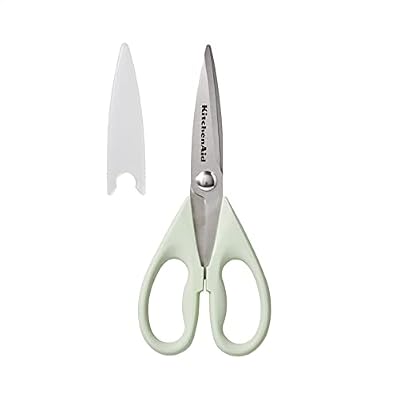
| KitchenAid All Purpose Kitchen Shears with Protective… | — | ★ 4.8 | 70.9k | $7.59 |
| KitchenAid All Purpose Kitchen Shears with Protective… | — | ★ 4.8 | 70.9k | $10.99 |
| KitchenAid All Purpose Kitchen Shears with Protective… | — | ★ 4.8 | 70.9k | $13.99 |
| Bostitch Office Premium 3 Hole Punch, 12 Sheet Capaci… | BostitchOfficeProducts | ★ 4.7 | 64.4k | $12.99 |
| 3M Littmann Classic III Monitoring Stethoscope, 5910C… | Littmann®Stethoscopes | ★ 4.8 | 50k | $112.16 |
Frequently Asked Questions
Are left-handed products just mirror images of regular ones?
Sometimes, but the best ones are genuinely re-engineered. Reversing blade orientation, gear direction, or grip contours requires real design work, not just flipping a template. Cosmetic-only “left-handed” products do exist, so it pays to check reviews.
Do I really need left-handed scissors?
If you cut frequently, yes. Right-handed scissors force lefties to bend their wrist and push the blades apart, which produces ragged cuts. Properly reversed left-handed scissors cut cleanly and let you see the cutting line.
Why are left-handed products often more expensive?
They are produced in smaller quantities, so manufacturers lose the economies of scale that keep right-handed versions cheap. The price gap has narrowed as demand and online distribution have grown.
Can left-handed people just learn to use right-handed tools?
Many do out of necessity, but it often means adopting awkward compensations that reduce comfort and precision. Using a tool designed for your dominant hand removes that strain entirely.
Are there products where handedness does not matter?
Yes. Symmetrical objects like most computer keyboards, doorknobs, and standard cups work equally well for both hands. Handedness mainly matters for tools with cutting actions, directional mechanics, or molded grips.
Conclusion
Left-handed products are designed differently because the standard world was built for the right-handed majority, often without anyone noticing the gap. From reversed scissor blades to safer power tools and smudge-free pens, thoughtful left-handed design removes the daily friction that lefties have long accepted as normal. If a tool involves cutting, gripping, or directional mechanics and you use it often, a left-handed version is usually worth every penny.
Related Reviews & Guides





Left-Handed Writing Tips: A Smudge-Free Guide

Best Power Recliners for Comfort and Support