Last Updated: September 12, 2026
- Do Left-Handers Really Need a Different Method?
- Getting Set Up: Tools That Help
- The Mirror Method, Step by Step
- Common Beginner Mistakes and How to Fix Them
- Understanding Tension, the Heart of Good Knitting
- The Knit and Purl Foundation
- Your First Project: Start Simple
- Joining the Left-Handed Knitting Community
- Top-Rated Picks
- Frequently Asked Questions
- Conclusion
- Related Articles
⚡ Key Takeaways
As an Amazon Associate we earn from qualifying purchases at no extra cost to you.



- Not always, and that surprises many new knitters.
- Before your first stitch, gather beginner-friendly supplies.
- If you've decided mirror knitting feels right, here's the essential idea.
- Every new knitter wrestles with the same handful of issues.
Knitting is one of the most rewarding crafts you can learn, but most patterns, videos, and teachers assume you’re right-handed. If you’ve felt clumsy or discouraged trying to follow along, you’re not doing anything wrong, you simply need an approach built for your hand. This beginner’s guide to left-handed knitting for beginners walks you through the methods, tools, and mindset that make casting on, knitting, and purling feel natural for southpaws.
🛒 Best Price Today on Amazon
Prime members get fast, free shipping on everything above, plus member-only deals. New members get a 30-day free trial — cancel anytime.
Do Left-Handers Really Need a Different Method?
Not always, and that surprises many new knitters. Knitting is a two-handed craft, so even right-handed instructions use both hands constantly. Some left-handers learn the standard “right-handed” way without much trouble because the dominant hand still does plenty of work. Others find mirror knitting, a true left-handed reflection of the technique, far more intuitive.
The best approach depends on you. Before committing, it’s worth understanding the main options so you can pick the one that clicks.
Three Paths for Left-Handed Knitters
| Method | How It Works | Best For |
|---|---|---|
| Standard (English/Continental) | Learn the usual way; both hands stay busy | Lefties who don’t find it awkward; easy to follow most tutorials |
| Mirror (left-handed) knitting | Stitches worked as a mirror image, right to left | Lefties who feel the standard method is backwards |
| Continental held lefty | Yarn managed in the left hand for efficiency | Those who want speed and less hand strain |
Getting Set Up: Tools That Help
Before your first stitch, gather beginner-friendly supplies. The right materials make learning dramatically easier.
- Smooth, light-colored worsted yarn. It’s easy to see your stitches and forgiving of mistakes.
- Medium wooden or bamboo needles. Around US size 8, these grip the yarn so stitches don’t slide off.
- A mirror, if learning mirror-style. Watching a right-handed tutorial reflected in a mirror shows you the lefty version directly.
- A row counter and stitch markers. These keep beginners oriented and reduce frustration.
If you also enjoy crochet, you’ll find that left-handed comfort carries across crafts, and choosing the right left-handed crochet hook follows the same logic as picking comfortable knitting needles. When you sketch patterns or jot row counts, a smudge-free left-handed pen keeps your project notes clean.
The Mirror Method, Step by Step
If you’ve decided mirror knitting feels right, here’s the essential idea. In standard knitting, stitches move from the left needle to the right. In mirror knitting, you flip that, working stitches from the right needle to the left, so everything is reversed.
- Cast on using a mirrored long-tail or backward-loop method, building stitches onto the right-hand needle.
- Knit stitch: insert the left needle, wrap the yarn in the mirrored direction, and pull through, sliding the new stitch onto the left needle.
- Purl stitch: reverse the purl motion the same way, keeping the yarn in front.
- Read patterns in reverse where shaping is asymmetric, or use the mirror-in-a-mirror trick for tutorials.
Using a Mirror to Learn from Any Tutorial
One of the cleverest tricks for mirror knitters is to prop a mirror beside your screen and watch a right-handed instructor’s reflection. The reflected hands move exactly the way yours should, turning every right-handed video into a left-handed lesson.
Common Beginner Mistakes and How to Fix Them
Every new knitter wrestles with the same handful of issues. Knowing them in advance saves frustration.
- Stitches too tight: Relax your grip and let the yarn flow. Tight stitches are hard to work and slow you down.
- Accidental yarn-overs: Make sure your working yarn sits in the right position before each stitch to avoid adding unwanted loops.
- Dropped stitches: Use bamboo needles that grip, and count your stitches at the end of each row.
- Twisted stitches: Check that each stitch sits correctly on the needle before working it.
Understanding Tension, the Heart of Good Knitting
Tension, sometimes called gauge, is how tightly or loosely you hold the working yarn, and it determines whether your finished fabric looks even and professional. New knitters of every handedness struggle here, but left-handers learning the mirror method have an extra reason to pay attention, since they’re building entirely new muscle memory.
The goal is consistency rather than a particular tightness. Some knitters wrap the yarn around a finger to maintain steady tension, while others let it run freely through their hand. Experiment to find what gives you even stitches without straining your hands. If your fabric looks lumpy, with some stitches large and others small, that’s a tension issue that smooths out naturally with practice.
How to Practice Tension Deliberately
- Knit a practice swatch of twenty stitches across several rows and study its evenness.
- Relax your grip. Beginners almost always knit too tightly, which makes the next row hard to work.
- Keep a steady rhythm. Consistent pacing produces consistent stitches.
- Don’t yank the yarn. Let it flow rather than pulling each stitch tight.
The Knit and Purl Foundation
Nearly all of knitting builds from two stitches: knit and purl. Once you can do both comfortably in your chosen left-handed method, an enormous range of patterns opens up. The knit stitch creates a smooth V on the front, while the purl stitch creates a bump. Combining them produces ribbing, seed stitch, stockinette, and countless textures.
Spend real time getting comfortable with both before moving on. Many beginners rush past purling because it feels harder, then struggle later. A solid foundation in knit and purl, worked the way that suits your hand, makes everything that follows far easier and more enjoyable.
Your First Project: Start Simple
Resist the urge to begin with something ambitious. A simple garter-stitch scarf, knitting every row, lets you build rhythm and confidence without complex shaping. Once your tension is even and transitions feel smooth, graduate to a dishcloth with basic stitch patterns, then a beanie or simple cowl. Each project layers one new skill onto a solid foundation.
Set up a comfortable spot with good light and a supportive chair, much like a well-arranged left-handed desk, so your hands and posture stay relaxed during longer sessions.
Joining the Left-Handed Knitting Community
One of the most encouraging steps you can take is connecting with other left-handed knitters. For years, lefties felt isolated in a craft dominated by right-handed instruction, but that has changed dramatically. Online communities, video channels, and dedicated left-handed knitting resources now make it easy to find tutorials filmed specifically for southpaws, removing the need to mentally flip everything.
These communities also share invaluable tips, recommend lefty-friendly tools, and offer encouragement when a stitch just won’t cooperate. Knowing that thousands of accomplished knitters work exactly the way you do is a powerful motivator. Don’t struggle alone when a welcoming community of fellow lefties is ready to help you grow.
Resources Worth Seeking Out
- Left-handed video tutorials that demonstrate stitches in mirror form.
- Beginner pattern books written or adapted for left-handed makers.
- Online forums and groups where lefties troubleshoot together.
- Apps with diagram-flipping features that adapt standard instructions.
Top-Rated Picks




| Product | Brand | Rating | Reviews | Price |
|---|---|---|---|---|
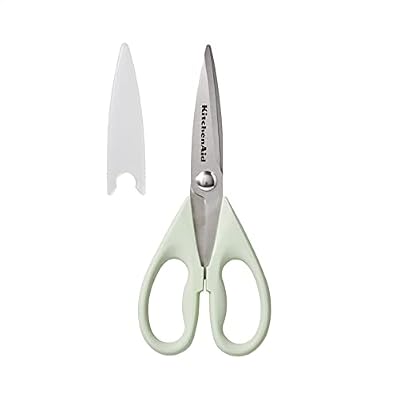
| KitchenAid All Purpose Kitchen Shears with Protective… | — | ★ 4.8 | 70.9k | $7.59 |
| KitchenAid All Purpose Kitchen Shears with Protective… | — | ★ 4.8 | 70.9k | $10.99 |
| KitchenAid All Purpose Kitchen Shears with Protective… | — | ★ 4.8 | 70.9k | $13.99 |
| Bostitch Office Premium 3 Hole Punch, 12 Sheet Capaci… | BostitchOfficeProducts | ★ 4.7 | 64.4k | $12.99 |
| 3M Littmann Classic III Monitoring Stethoscope, 5910C… | Littmann®Stethoscopes | ★ 4.8 | 50k | $112.16 |
Frequently Asked Questions
Is knitting harder for left-handers?
Not necessarily. Because knitting uses both hands, many lefties learn the standard method comfortably. Those who feel it’s backwards can use mirror knitting, which reflects the technique for a natural left-handed flow.
Should I learn standard or mirror knitting?
Try the standard method first, since most tutorials use it. If it feels persistently awkward, switch to mirror knitting. The best choice is whichever lets you knit relaxed and consistently.
Can I follow right-handed patterns as a left-handed knitter?
Yes. Most patterns work regardless of method, though asymmetric shaping may need to be reversed in mirror knitting. Symmetrical beginner projects require no changes at all.
What’s the mirror trick for learning?
Place a mirror beside your screen and watch a right-handed tutorial’s reflection. The reflected hands move exactly as yours should, instantly converting any video into a left-handed lesson.
What should my first knitting project be?
A simple garter-stitch scarf is ideal. Knitting every row builds rhythm and even tension without complicated shaping, giving you a confidence-boosting finished piece.
Conclusion
Left-handed knitting for beginners is far more approachable than it first appears. Decide whether the standard or mirror method suits you, gather grippy needles and smooth yarn, and start with a simple scarf. Use the mirror trick to unlock any tutorial, and be patient with your tension. Before long, the needles will feel like an extension of your hands, and a whole world of cozy projects will open up.
Related Reviews & Guides




Best Power Recliners for Comfort and Support
How to Teach a Left-Handed Child to Write