Last Updated: September 12, 2026
⚡ Key Takeaways
- Handwriting is where most lefties first feel the friction.
- The kitchen is full of tools with built-in directional bias.
- Office environments are quietly right-handed too.
- Beyond writing, kitchen, and office, plenty of small objects favor right-handers:
Living in a world built for the right-handed majority means lefties navigate dozens of small frustrations every single day, most of which right-handers never even notice. From smudged ink to awkward kitchen gadgets to that maddening spiral notebook, the everyday left-handed struggles are real, cumulative, and surprisingly fixable. The trick is recognizing them for what they are: design mismatches, not personal failings. Once you name the problem, the solution is usually straightforward.
As an Amazon Associate we earn from qualifying purchases at no extra cost to you.


Related: best label maker tapes.
This guide runs through the most common challenges left-handers face, grouped by part of daily life, and offers a practical fix for each one.
🛒 Best Price Today on Amazon
Prime members get fast, free shipping on everything above, plus member-only deals. New members get a 30-day free trial — cancel anytime.
Writing and School Struggles
Handwriting is where most lefties first feel the friction. Because English is written left to right, a lefty’s hand drags across the ink they just laid down.
The Smudge Problem
The classic gray smear across the page and the side of the hand. Fix: Angle your paper clockwise so your hand stays below the line, and switch to quick-dry gel ink. Together these eliminate most smudging.
The Hook Grip
Many lefties curl their wrist above the line to avoid smearing, which causes fatigue. Fix: Tilt the page correctly so you never need to hook in the first place.
Spiral Notebooks
The metal coil digs into the left wrist. Fix: Use top-bound or right-bound notebooks, or simply flip a standard notebook over.
Kitchen Struggles
The kitchen is full of tools with built-in directional bias. Lefties often adapt without realizing how much harder the tool is making the job.
| Tool | The Struggle | The Fix |
|---|---|---|
| Can opener | Cutting wheel and knob favor the right hand | Left-handed can opener with reversed mechanism |
| Corkscrew | Thread turns awkwardly for the left wrist | Left-handed corkscrew with reversed thread |
| Measuring cups | Markings face the wrong way | Cups with dual-side or wrap-around markings |
| Ladles and spouts | Pouring spout on the wrong side | Dual-spout or left-handed ladles |
| Knives (serrated) | Bevel angled for right-hand cutting | Left-handed or symmetrical-edge knives |
A left-handed can opener and a left-handed corkscrew are two of the highest-impact kitchen upgrades a lefty can make, because they reverse the mechanics rather than just the appearance.
Workspace and Desk Struggles
Office environments are quietly right-handed too. Desks with drawers on the right, computer mice positioned for the right hand, and ring binders that open the wrong way all add friction.
- Mouse placement: Move the mouse to the left and swap the button settings in your operating system.
- Desk layout: Arrange supplies and lighting on the left so your writing arm is unobstructed.
- Ring binders: The rings can press into the left forearm. Use folders or left-opening binders where possible.
- Notepads: Keep a notepad to your left so you do not reach across your body.
Reorganizing your entire setup is easier than it sounds. Our guide to the best left-handed desks covers layout choices that remove these daily annoyances.
Everyday Object Struggles
Beyond writing, kitchen, and office, plenty of small objects favor right-handers:
- Scissors: Right-handed blades push apart for lefties, causing ragged cuts. Use true left-handed scissors.
- Can-style soda tabs and ergonomic mugs: Mugs with images or measurements often face away from a lefty’s view when held naturally.
- Power tools: Circular saws and drills can direct debris or air toward a left-handed user. Look for left-handed or ambidextrous models for safety.
- Cameras: Shutter buttons and grips are built for the right hand, though this is harder to work around.
The Hidden Emotional Struggle
One of the least discussed left-handed struggles is psychological. Children especially may internalize repeated small failures, concluding they are clumsy or bad at tasks when the tools are simply wrong for them. Naming the real cause is powerful: it reframes “I’m bad at cutting” into “these scissors were made for the wrong hand.” For adults, recognizing that decades of minor frustration were design problems, not personal shortcomings, can be genuinely freeing.
Musical Instrument Struggles
Stringed instruments deserve a special mention. A standard guitar is strung and shaped for a right-hander who strums with the right hand. Left-handed players face a choice: learn on a standard instrument, restring a standard guitar, or buy a properly built left-handed model. A true left-handed guitar mirrors the body and string order so the dominant left hand strums comfortably, which many lefties find far more natural.
Out-and-About Struggles
Many left-handed frustrations follow you out the door, into public spaces designed entirely around right-handed assumptions. Recognizing them helps you adapt quickly rather than fumbling.
- Right-armed school desks: The classic combined chair-and-desk has the writing surface on the right, forcing lefties to twist their whole body. Seek out left-handed desks or, at minimum, sit at the end of a row.
- Ladles and serving spoons at buffets: Many have a single pouring spout on the side that suits right-handers, leading to spills when a lefty serves.
- Card readers and signature pads: Checkout terminals and pens on chains are positioned and tethered for right-handed signing.
- Turnstiles and ticket slots: Card slots and scanners almost always sit on the right, requiring an awkward cross-body reach.
- Drinking fountains and ATMs: Buttons and trays are typically placed for the right hand.
None of these are dealbreakers, but together they explain the low-level “the world wasn’t built for me” feeling many lefties carry. Simply naming them turns a vague annoyance into something you can plan around.
Turning Struggles Into Strengths
It would be unfair to frame left-handedness as nothing but a list of obstacles, because it carries genuine advantages too. Lefties tend to excel in interactive sports such as baseball, boxing, fencing, and tennis, where facing an unfamiliar left-handed opponent gives them an edge. Some research also associates left-handedness with strengths in divergent thinking, the kind of flexible, novel problem-solving that fuels creativity. Navigating a right-handed world from childhood may even build adaptability, since lefties constantly improvise solutions that right-handers never have to think about.
The healthiest mindset treats the daily friction as solvable design problems while embracing the real upsides. Equip yourself with the right tools, arrange your environment thoughtfully, and the struggles shrink to minor footnotes in an otherwise advantageous trait. Generations of accomplished lefties, from artists to athletes to world leaders, are proof that being part of the 10% is something to celebrate, not merely endure.
If you are just starting to tackle your own left-handed struggles, resist the urge to fix everything at once. Pick the single annoyance that bothers you most, whether that is smudged handwriting, a stubborn can opener, or an aching mouse wrist, and solve it properly. The quick win builds momentum and proves how much difference the right tool makes. From there you can work through the rest at your own pace, swapping one frustrating object for a well-designed one whenever the opportunity arises. Within a few months, most lefties find that the chronic background irritation they had simply accepted as normal has quietly faded away.
Top-Rated Picks




| Product | Brand | Rating | Reviews | Price |
|---|---|---|---|---|
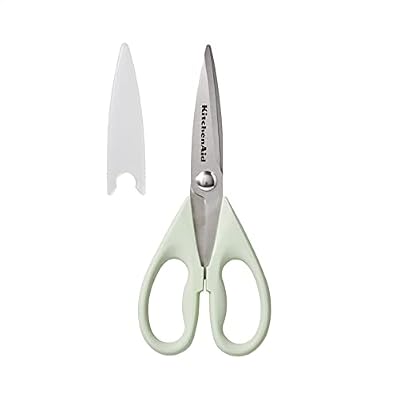
| KitchenAid All Purpose Kitchen Shears with Protective… | — | ★ 4.8 | 70.9k | $7.59 |
| KitchenAid All Purpose Kitchen Shears with Protective… | — | ★ 4.8 | 70.9k | $10.99 |
| KitchenAid All Purpose Kitchen Shears with Protective… | — | ★ 4.8 | 70.9k | $13.99 |
| Bostitch Office Premium 3 Hole Punch, 12 Sheet Capaci… | BostitchOfficeProducts | ★ 4.7 | 64.4k | $12.99 |
| 3M Littmann Classic III Monitoring Stethoscope, 5910C… | Littmann®Stethoscopes | ★ 4.8 | 50k | $112.16 |
Frequently Asked Questions
Why do lefties smudge their writing?
Because the writing hand moves across the ink just laid down. Angling the paper clockwise and using quick-dry ink solves it for most people.
Are left-handed kitchen tools really necessary?
For tools with a directional mechanism, like can openers and corkscrews, yes. They reverse the gearing so your left hand engages them correctly, which makes the task genuinely easier rather than a daily fight.
How do I set up a left-handed computer mouse?
Move the mouse to the left of your keyboard and swap the primary and secondary buttons in your operating system settings. Both Windows and macOS support this in a few clicks.
Do left-handed children struggle more in school?
They can, mainly because of right-handed tools and instruction. With the right setup, such as angled paper, quick-dry pens, and left-handed scissors, those struggles largely disappear.
Is being left-handed an advantage anywhere?
Yes. Lefties often have an edge in sports like baseball, tennis, boxing, and fencing because opponents face them less often. Some research also links left-handedness with strengths in divergent thinking.
Conclusion
The struggles of being left-handed are real, but nearly every one of them has a practical fix. From angled paper and quick-dry pens to reversed-mechanism kitchen tools and properly built instruments, the solutions exist and keep getting easier to find. The most important shift is mental: these are design mismatches, not personal flaws. Equip yourself with the right tools, and the left-handed world becomes a far smoother place to live in.
Related Reviews & Guides



Famous Left-Handed People and Surprising Facts

Left-Handed Sewing Basics: Tools and Techniques